
In 2017, Samsung released two flagship devices within months of each other: the Galaxy S8 Plus and the Galaxy Note 8. On paper, they shared nearly identical hardware—similar processors, screen quality, and camera systems. Yet, years later, forums, Reddit threads, and tech communities still debate which was the superior device. Was the Note 8 truly a significant upgrade, or did branding and ecosystem loyalty drive the conversation? The answer isn’t just technical—it’s psychological, practical, and deeply tied to how users interact with their devices.
Hardware: More Than Just Specs
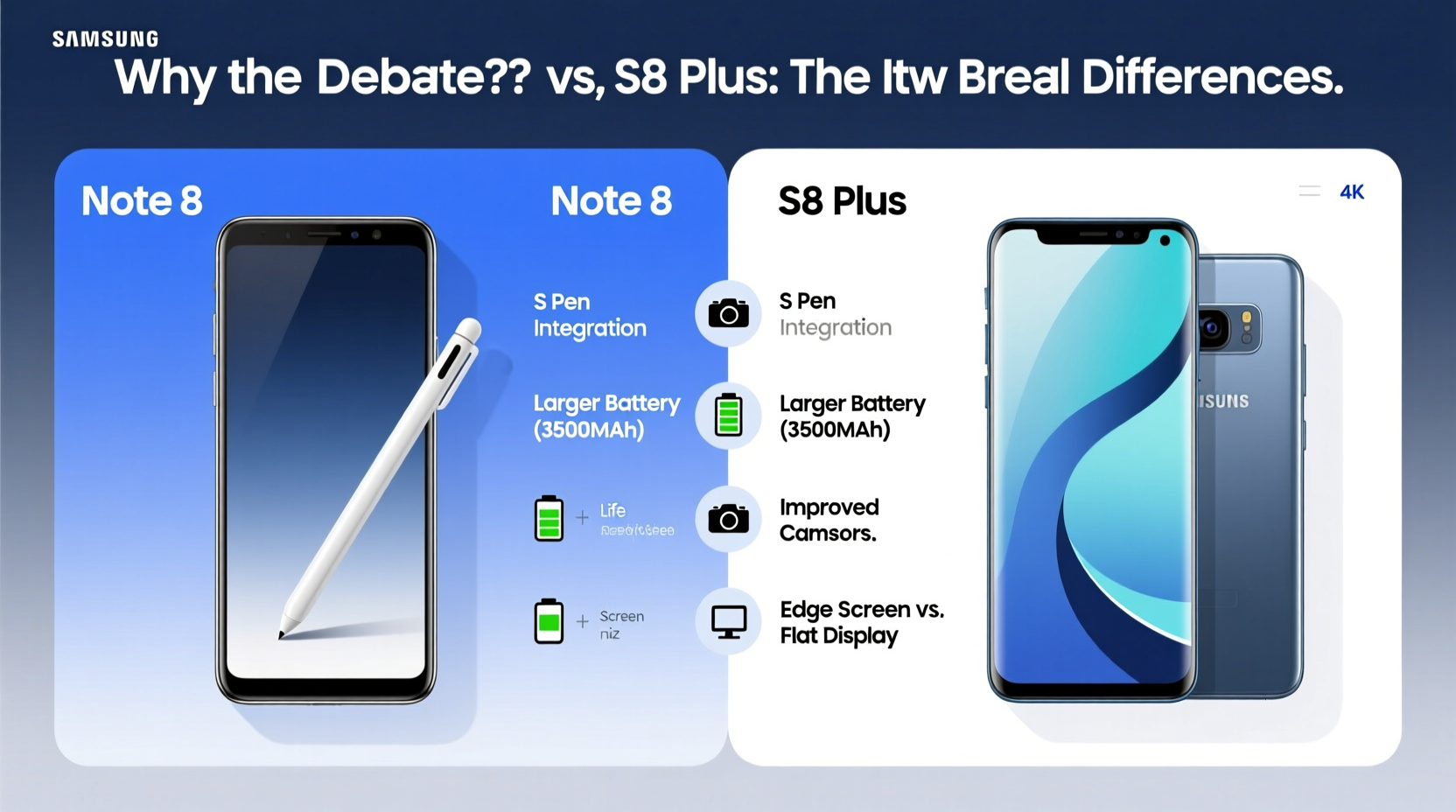
At first glance, the S8 Plus and Note 8 appear almost indistinguishable. Both feature 6.2-inch Quad HD+ AMOLED displays, IP68 water resistance, and either Snapdragon 835 or Exynos 8895 chipsets depending on region. RAM and storage configurations were also similar. However, subtle but meaningful hardware differences set them apart.
| Feature | Samsung Galaxy S8 Plus | Samsung Galaxy Note 8 |
|---|---|---|
| Rear Cameras | Single 12MP (f/1.7) | Dual 12MP (f/1.7 + f/2.4 telephoto) |
| Front Camera | 8MP (f/1.7) | 8MP (f/1.7) |
| Battery | 3,500 mAh | 3,300 mAh |
| S Pen Support | No | Yes |
| Weight | 173g | 195g |
| Expandable Storage | Yes (microSD) | Yes (microSD) |
The Note 8 introduced Samsung’s first dual rear camera system, enabling 2x optical zoom and improved portrait mode performance. While the S8 Plus had a strong single-lens setup, photography enthusiasts valued the added flexibility. However, the trade-off was a slightly smaller battery and increased weight—practical considerations for daily use.
The S Pen Factor: Utility vs. Niche Appeal
The most defining difference between the two phones is the S Pen. While the S8 Plus offered premium design and performance, the Note 8 delivered functionality that no other mainstream Android phone could match at the time. The S Pen wasn’t just a stylus; it enabled features like Air Command, screen-off memos, translation, and precise input for artists and note-takers.
For students, professionals, and creatives, the ability to jot down ideas without unlocking the phone or sketch directly on the display added tangible value. This wasn’t about specs—it was about workflow integration.
“The S Pen transformed my phone into a digital notebook. I used it for meeting notes, quick sketches, and even editing PDFs. It’s not a gimmick—it’s productivity.” — David Lin, UX Designer and long-time Note series user
Yet, many users never removed the stylus from its slot. For general consumers focused on social media, browsing, and calls, the S Pen offered little benefit. This dichotomy fuels part of the ongoing debate: Was the Note 8 better because it offered more tools, or only better for those who actually used them?
User Experience and Software: Refinements That Mattered
Both devices launched with Android 7.0 and Samsung Experience UI. Over time, software updates brought improvements, but the Note 8 benefited from additional Note-specific optimizations. Features like split-screen multitasking, pop-up view for apps, and enhanced DeX support made the larger screen feel more purposeful.
The S8 Plus, while powerful, often felt like an oversized version of the standard S8. Its large display was great for videos and games, but lacked the intentional design focus of the Note line. Without the S Pen, some of its screen real estate went underutilized by average users.
Real-World Example: A Teacher's Workflow
Sarah, a high school educator, owned both phones during their release cycle. She used the S8 Plus as her personal device but switched to the Note 8 for work. “I grade papers on the bus ride home,” she explained. “With the S Pen, I can circle errors, write comments, and save annotated versions directly. The S8 Plus couldn’t do that without third-party apps, and even then, it wasn’t as smooth.”
This scenario illustrates how the same hardware capabilities can yield vastly different experiences based on use case. For Sarah, the Note 8 wasn’t marginally better—it was fundamentally more useful.
Why the Debate Still Exists
Even though both phones are now outdated by modern standards, the discussion persists in retro-tech circles and among loyal Samsung fans. There are several reasons why:
- Nostalgia: These were peak-era Samsung flagships before the foldable shift.
- Philosophical Divide: Purists argue that the S8 Plus represents minimalist excellence, while Note fans champion versatility.
- Resale and Longevity: Some users kept these phones running for five years or more, leading to deep personal attachments.
- Upgrade Dilemmas: People still reference them when comparing current S Ultra and Note successors.
The argument isn't really about which phone \"won.\" It's about what users value: elegance and efficiency versus functionality and expandability.
Actionable Checklist: Choosing Between Them (Even Today)
If you're considering buying one secondhand or understanding their legacy, here’s how to decide:
- Evaluate your need for handwriting or drawing input.
- Determine if optical zoom and dual cameras matter for your photo usage.
- Consider battery life priorities—S8 Plus has a slight edge.
- Assess comfort with heavier devices (Note 8 is noticeably bulkier).
- Check software compatibility—neither receives updates, so security is a concern.
- Decide whether resale value or sentimental appeal influences your choice.
Frequently Asked Questions
Was the Note 8 worth the extra cost over the S8 Plus?
For professionals, creatives, or anyone using the S Pen regularly, yes. The added features justified the price bump. For casual users, the S8 Plus offered comparable performance at a lower entry point.
Can the S8 Plus use an S Pen?
No. The Note 8 has built-in hardware and software support for the S Pen, including pressure sensitivity and air command. The S8 Plus lacks the internal digitizer required for active stylus functionality.
Which phone lasted longer in real-world use?
Despite the smaller battery, the Note 8’s software optimizations helped balance efficiency. However, the S8 Plus generally provided slightly longer screen-on time due to its 3,500 mAh capacity. Real-world longevity depended heavily on usage patterns.
Final Verdict: Better Depends on Your Definition
The Samsung Galaxy Note 8 wasn’t universally “better” than the S8 Plus—it was different. It catered to a specific audience that valued precision, multitasking, and creative freedom. The S8 Plus remained a sleek, powerful phablet ideal for media consumption and everyday tasks.
People still argue because the comparison reflects broader questions about smartphone design: Should all phones aim for maximum utility, or is there virtue in simplicity? The Note 8 said yes to everything. The S8 Plus said less is more. Neither answer is wrong.




 浙公网安备
33010002000092号
浙公网安备
33010002000092号 浙B2-20120091-4
Comments
No comments yet. Why don't you start the discussion?