
The lowercase 'm' is one of the most frequently used letters in the English language, yet its elegance and clarity are often overlooked. Whether you're practicing cursive, print, or modern calligraphy, mastering how to write an 'm' can elevate your entire handwriting style. A well-formed 'm' contributes to legibility, rhythm, and visual harmony in your writing. This guide breaks down the anatomy of the letter, explores common pitfalls, and provides actionable techniques to refine your approach—ensuring your 'm' is both functional and beautiful.
Anatomy of the Lowercase 'm'
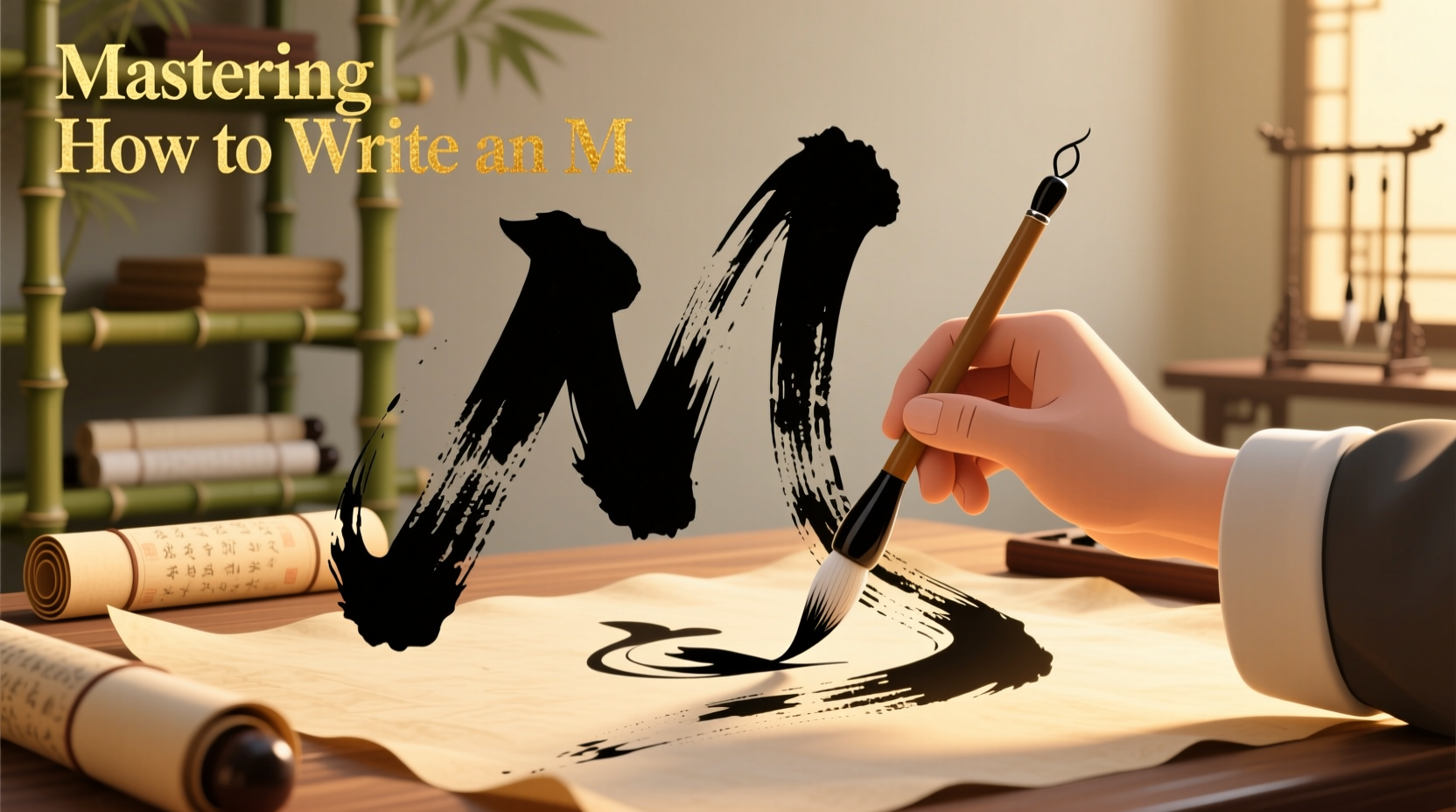
To master any letter, it's essential to understand its structure. The lowercase 'm' consists of three main strokes: two humps and a baseline stem. In most script styles, it begins with a downward stroke from the top line, loops into the first hump, rises to form the second hump, and concludes with a slight tail that connects to the next letter. In print, the 'm' features three vertical strokes joined at the base, creating two rounded valleys between them.
Proper proportions are key. The height should align with other lowercase ascenders (like 'b', 'd', 'l'), typically reaching the cap line. The width should be balanced—not so narrow that it appears pinched, nor so wide that it disrupts word spacing. Each hump should be symmetrical and smoothly connected, with consistent curvature.
Step-by-Step Guide to Writing a Stylish 'm'
Whether you're using a pencil, fountain pen, or brush marker, follow this sequence to develop precision and flair:
- Start at the top line: Begin with a light downward stroke, slightly slanted if working in cursive.
- Form the first hump: Curve your stroke upward and around, returning toward the baseline.
- Ascend into the second hump: Without breaking momentum, rise again to match the height of the first.
- Complete the third stroke: Bring the pen down to the baseline, maintaining consistent pressure.
- Add a subtle exit stroke: If connecting to the next letter, extend a small loop or curve to the right.
Repeat this process slowly at first, focusing on smooth transitions between strokes. Speed will come with control, not the other way around.
Common Mistakes and How to Fix Them
Even experienced writers fall into habits that compromise the elegance of the 'm'. Recognizing these errors is the first step toward correction.
| Mistake | Why It’s a Problem | Solution |
|---|---|---|
| Uneven humps | Creates visual imbalance and disrupts rhythm | Use lined paper with guide dots to maintain consistent height |
| Overly wide spacing | Wastes space and slows reading speed | Practice compressing the letter while preserving shape |
| Heavy start strokes | Draws unwanted attention and looks clumsy | Lighten initial pressure; focus on graceful entry |
| Poor connections | Breaks flow in cursive writing | Drill transition strokes between 'm' and common followers like 'a', 'n', 'e' |
Expert Insight: The Rhythm of Repetition
Handwriting is as much about motion as it is about form. Experts emphasize that letters like 'm' benefit greatly from rhythmic repetition. When writing words such as \"summer,\" \"moment,\" or \"abundant,\" the repeated humps train the hand to move fluidly and consistently.
“Repetition isn’t just practice—it’s conditioning. The 'm' teaches your hand coordination through symmetry and timing.” — Dr. Lydia Chen, Handwriting Specialist and Educator
She recommends writing lines of 'm' sequences ('mmmm', 'mama', 'mommy') for five minutes daily. Over time, this builds neuromuscular precision and enhances overall handwriting fluency.
Tips for Different Writing Styles
The ideal 'm' varies slightly depending on the script. Here’s how to adapt across major styles:
- Cursive: Focus on seamless connections. The final stroke should glide effortlessly into the next letter. Keep humps rounded and open to avoid crowding.
- Print (Manuscript): Prioritize vertical alignment and clean angles. Use a ruler or grid paper initially to ensure straight stems.
- Calligraphy (e.g., Copperplate): Emphasize contrast between thick downstrokes and thin upstrokes. The 'm' should reflect the style’s elegance through precise modulation.
- Modern Brush Lettering: Exaggerate the second hump slightly for dynamic flair, but maintain balance so the letter doesn’t tilt visually.
Mini Case Study: From Clumsy to Confident
Jamal, a college student, struggled with messy notes due to inconsistent letterforms. His 'm's were often too wide, with jagged humps that made his writing hard to read. After consulting a study skills tutor, he began practicing the 'm' in isolation using dotted midline paper. He focused on uniform hump height and practiced connecting the letter to 'a' and 'i'. Within three weeks, his lecture notes showed marked improvement. Peers noticed the cleaner layout, and Jamal reported feeling more confident during group work. The change started with one letter—but it transformed his entire written output.
Checklist for Perfecting Your 'm'
Use this checklist each time you practice to ensure steady progress:
- ✅ Align the top of the 'm' with the cap line
- ✅ Maintain equal height and curvature in both humps
- ✅ Keep the baseline strokes vertical and evenly spaced
- ✅ Connect smoothly to the following letter (in cursive)
- ✅ Write slowly and deliberately during practice sessions
- ✅ Use lined or grid paper for accuracy
- ✅ Review your work critically—ask: Is it balanced? Is it legible?
Frequently Asked Questions
How can I make my 'm' look more stylish without sacrificing legibility?
Begin by refining basic form—clean lines and consistent proportions are the foundation of style. Once mastered, introduce subtle flourishes on the exit stroke or vary pen pressure in calligraphic styles. Always prioritize readability; elegance should enhance, not obscure.
Why does my 'm' look different when I write fast?
Speed amplifies ingrained habits. If your 'm' collapses under pressure, it means muscle memory hasn’t fully developed. Slow down and retrain with deliberate practice. Over time, your fast writing will mirror your controlled form.
Should the 'm' be taller than other lowercase letters?
No. The 'm' is an ascender letter and should match the height of 'b', 'd', 'f', 'h', 'k', and 'l'. Consistency in x-height and ascender length creates visual harmony across words.
Conclusion: Elevate Your Writing One Letter at a Time
Mastering the 'm' is more than a handwriting exercise—it’s a gateway to clearer, more expressive writing. This single letter embodies balance, rhythm, and precision, qualities that ripple across your entire script. With mindful practice, attention to detail, and consistent application, your 'm' can become a signature of clarity and style. Don’t underestimate the power of small improvements. Start today, dedicate a few minutes to focused drills, and watch your confidence—and penmanship—grow.




 浙公网安备
33010002000092号
浙公网安备
33010002000092号 浙B2-20120091-4
Comments
No comments yet. Why don't you start the discussion?