
When it comes to long-wearing lip color, staying power is everything—especially if you're navigating a full day of meetings, meals, or social events. Two popular finishes dominate the conversation: metallic and matte. While both offer bold visual impact, their behavior during real-life activities like eating and drinking varies significantly. Understanding the science behind pigment adherence, formulation chemistry, and finish mechanics reveals which one actually survives the test of a coffee refill or a quick bite.
The answer isn’t always as straightforward as “matte lasts longer.” Advances in cosmetic technology have blurred traditional boundaries, with some metallic formulas now engineered for endurance. However, structural differences in texture, oil content, and film formation still give matte finishes an edge in most scenarios involving direct contact with food or liquids.
Understanding Lipstick Finishes: What Makes Metallic and Matte Different?
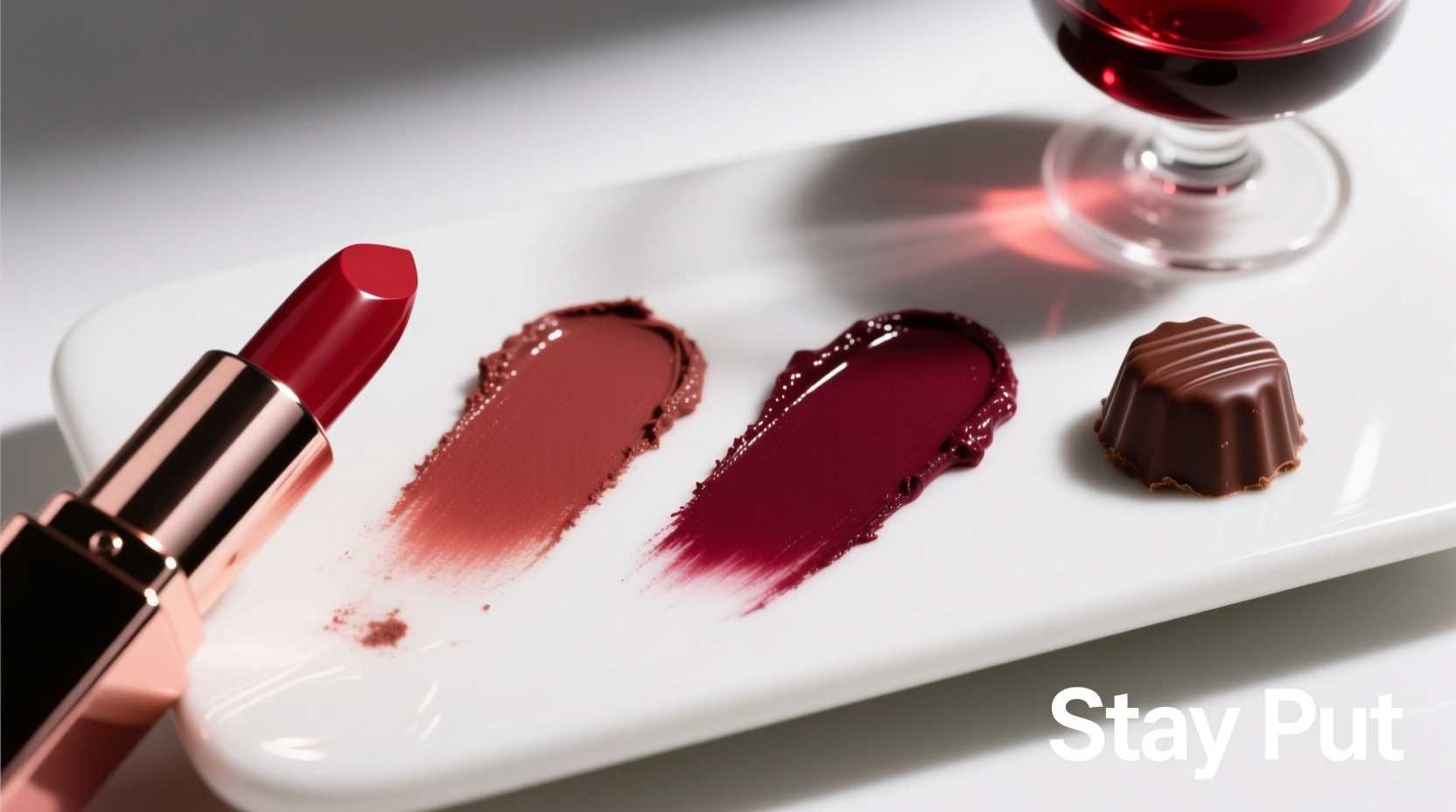
The distinction between metallic and matte lipsticks goes beyond shine—it lies in composition, particle structure, and how light interacts with the surface.
- Matte lipsticks are formulated with minimal to no emollients or oils. They contain higher concentrations of pigments and waxes, creating a flat, non-reflective finish that adheres tightly to the lips. The lack of slip allows for stronger bonding to the skin’s surface.
- Metallic lipsticks, on the other hand, incorporate mica, shimmer particles, or liquid metal pigments suspended in a slightly more emollient base. These reflective components scatter light, producing a lustrous, multidimensional effect—but often at the cost of longevity when friction or moisture is introduced.
Because metallics rely on a smoother, sometimes creamier delivery system to evenly distribute shimmer, they tend to have a looser grip on the lip tissue. This makes them more prone to transfer and fading when pressed against cups, straws, or food surfaces.
Performance Under Pressure: Eating, Drinking, and Real-World Wear
To assess true staying power, consider not just time elapsed, but physical interactions. A lipstick might last eight hours untouched, but what happens after sipping tea, eating a sandwich, or wiping your mouth?
Matte lipsticks, particularly those labeled “liquid matte” or “transfer-proof,” form a flexible film on the lips. This film resists breakdown from oils and mild abrasion. Many use polymer technologies like polyurethane or acrylate copolymers that create a breathable yet durable barrier. Once set, these formulas resist smudging and can survive multiple meals with only slight edge fading.
In contrast, metallic lipsticks—even in liquid formats—often fail earlier under similar conditions. The reflective particles do not bond as deeply to the skin and are more easily dislodged by contact. Oils in food dissolve the thinner film of metallic creams, causing patchiness. Even blotting after application can remove significant shimmer, leaving behind uneven color.
“Film-forming agents in modern matte lipsticks act like invisible armor. Metallics prioritize aesthetics over adhesion, making them inherently less resilient.” — Dr. Lena Choi, Cosmetic Chemist & Formulation Specialist
Comparative Breakdown: Key Factors Affecting Longevity
| Factor | Matte Lipstick | Metallic Lipstick |
|---|---|---|
| Oil Resistance | High – low oil content prevents breakdown from greasy foods | Low to Moderate – emollients attract and absorb oils |
| Film Formation | Strong – polymers create a bonded layer | Weak – particles sit on top rather than adhere |
| Transfer Resistance | High – minimal transfer to cups or masks | Low – leaves visible marks due to slip |
| Reapplication Need After Eating | Rarely needed unless edges fade | Almost always required |
| Shine Retention Over Time | N/A – designed to stay flat | Poor – loses luster within 1–2 hours |
This table highlights why matte finishes dominate in professional settings, weddings, or any event where touch-ups are inconvenient. Their resilience stems from intentional engineering for durability, not just aesthetic preference.
Step-by-Step: Maximizing Wear Time for Either Finish
Even the longest-wearing formula benefits from proper prep and technique. Follow this timeline to extend lipstick life—regardless of finish.
- Exfoliate (Morning or Pre-Application): Use a soft toothbrush or lip scrub to remove dry flakes. Smooth lips provide a uniform surface for better adhesion.
- Hydrate & Blot (15 Minutes Before Application): Apply a lightweight balm, then blot thoroughly. Avoid residual moisture, which prevents bonding.
- Prime or Line (Essential Step): Use a lip liner close to your natural lip color or lipstick shade. Fill in the entire lip area—this creates a grippy base that slows fading.
- Apply in Thin Layers: For matte, apply one thin coat, let it dry 30 seconds, then add a second if needed. For metallic, layer lightly to avoid excess product buildup that slides off.
- Blot & Set (Optional for Extra Hold): Place a single-ply tissue over lips and dust translucent powder through it using a puff. This sets the color without killing shine entirely.
- Maintain During the Day: When drinking, use a straw angled toward the back of the mouth. After eating, wipe gently with a napkin—don’t rub—and reapply only where necessary.
Real-World Test: A Lunch Date Comparison
Sophia, a marketing executive, tested two high-end lipsticks during a weekday business lunch: a blue-based red matte liquid and a rose-gold metallic cream.
She applied both after exfoliating and lining her lips. The meal included grilled chicken salad with olive oil dressing, iced green tea (with a straw), and a slice of lemon cake. She blotted once after the first bite.
- Matte Result: After 90 minutes, the matte lipstick showed minor fading at the center of the bottom lip but remained fully intact at the edges. No transfer was visible on her glass or napkin.
- Metallic Result: Within 30 minutes, the metallic had visibly dulled. By dessert, it was patchy near the inner corners and had left a faint golden ring on her tea glass. Full reapplication was needed before her afternoon meeting.
Sophia concluded: “I love how glamorous the metallic looked at the start, but I simply don’t have time to fix my lips after every meal. The matte stayed put and saved me stress.”
Expert Tips for Choosing Based on Lifestyle
Your daily routine should dictate your finish choice—not just personal style.
- If you eat frequently throughout the day or drink hot beverages, **matte** is the smarter option. Look for keywords like “long-wear,” “kiss-proof,” or “transfer-resistant.”
- If you’re attending a photo shoot, evening event, or want high-impact glamour for a few hours, **metallic** delivers unmatched dimension. Just plan for a touch-up kit.
- For hybrid needs—glossy effect with decent hold—consider **metallic liquid lipsticks** with matte bases. Brands like Fenty Beauty, Huda Beauty, and Pat McGrath Labs offer shades that combine shimmer with extended wear.
“Clients often choose metallic for special occasions, but I always remind them: sparkle fades faster than pigment. If longevity matters, go matte—or carry backup.” — Jasmine Reed, Celebrity Makeup Artist
Checklist: How to Pick the Right Lipstick for All-Day Wear
Before purchasing or applying, ask yourself:
- ✅ Will I be eating or drinking within the next 4 hours?
- ✅ Do I have access to a mirror and touch-up products?
- ✅ Is the outfit or setting formal enough to justify frequent maintenance?
- ✅ Does the formula claim long-wear or transfer resistance?
- ✅ Have I prepped my lips properly (exfoliated, lined, primed)?
If most answers lean toward convenience and minimal upkeep, matte wins. If you prioritize drama over durability, metallic earns its place—with caveats.
Frequently Asked Questions
Do matte lipsticks dry out your lips?
Some traditional mattes can feel drying due to high wax content, but modern formulas often include hydrating agents like squalane or hyaluronic fillers. To prevent discomfort, always prep with balm and blot well before application. Avoid formulas with alcohol listed in the top five ingredients, as these increase dryness.
Can I make a metallic lipstick last longer?
Yes, with strategy. Start by lining and filling your lips completely with a matching pencil. Apply the metallic in a thin layer, then lightly mist with a setting spray. Avoid thick layers, which slide off faster. Reapplication after meals is still likely, but this method reduces initial breakdown.
Are there truly long-wearing metallic lipsticks?
A growing number of brands now offer metallic-finish liquids with lasting power. These use suspended pearls in a matte-like polymer base, allowing shimmer to remain even as the outer layer wears. Examples include Rare Beauty Stun液体 Liner (in metallic shades), Maybelline SuperStay Ink Crystals, and Charlotte Tilbury Rock Chick. Performance varies, so patch-test first.
Final Verdict: Which One Stays Put?
When subjected to the realities of eating and drinking, **matte lipsticks consistently outperform metallic ones in staying power**. Their formulation is built for endurance, relying on strong adhesion and resistance to oils and friction. Metallic lipsticks, while visually striking, sacrifice durability for luminosity. Their reflective particles sit atop the lip surface and are easily disrupted by contact, moisture, and natural movement.
That said, the gap is narrowing. Innovations in hybrid textures and polymer suspensions mean you no longer have to choose between shine and staying power in all cases. But for anyone prioritizing practicality—professionals, travelers, parents, or those with back-to-back schedules—matte remains the gold standard for all-day wear.
Ultimately, the best lipstick is the one that aligns with your lifestyle. Choose matte when you need reliability. Embrace metallic when you want impact—and don’t mind a midday refresh.




 浙公网安备
33010002000092号
浙公网安备
33010002000092号 浙B2-20120091-4
Comments
No comments yet. Why don't you start the discussion?