
Drying jalapeño peppers is a time-tested method for preserving their vibrant heat, grassy-green aroma, and culinary versatility. Whether you've harvested a surplus from your garden or purchased in bulk during peak season, transforming fresh jalapeños into dried forms extends their usability year-round. Unlike freezing, which preserves texture but requires freezer space, drying reduces moisture content to inhibit microbial growth, allowing storage at room temperature for months without spoilage. Beyond preservation, the dehydration process intensifies flavor, deepens color, and unlocks new applications—from homemade chili flakes to smoky chipotle powder. With minimal equipment and proper technique, any home cook can master this foundational food preservation skill.
Definition & Overview
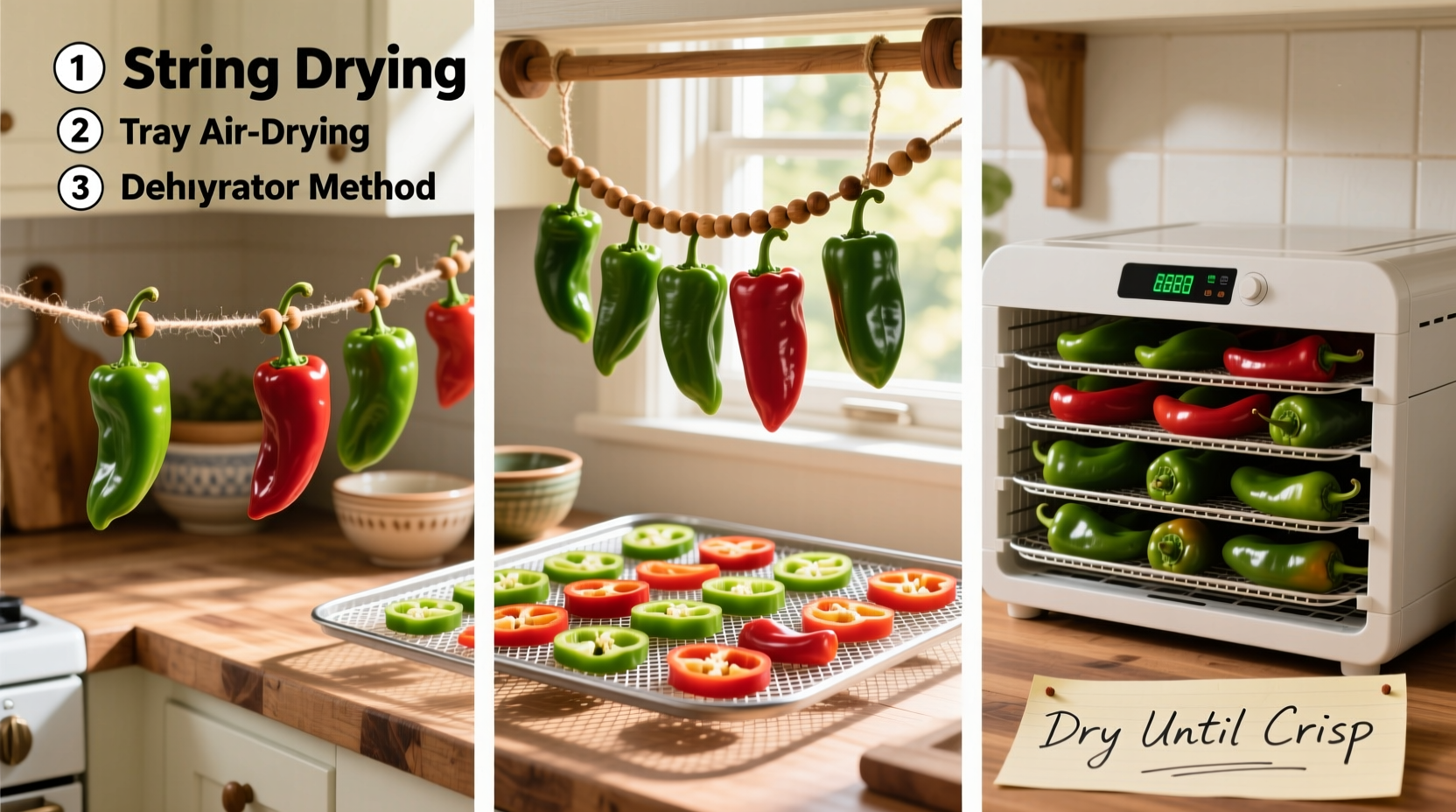
Jalapeño peppers (Capsicum annuum) are medium-heat chili peppers originating from Mexico, where they have been cultivated for thousands of years. The name derives from Xalapa, the capital of Veracruz, a region historically associated with their production. Typically harvested when bright green and firm, jalapeños can also be left to ripen to red, which increases sweetness and slightly alters capsaicin distribution. On the Scoville scale, fresh jalapeños range from 2,500 to 8,000 units—mild compared to habaneros or ghost peppers, yet assertive enough to add noticeable warmth to dishes.
Drying jalapeños transforms their physical and chemical properties. As water evaporates (fresh jalapeños are about 90% water), sugars concentrate, volatile aromatics shift, and cellular structures collapse, resulting in leathery or brittle textures depending on method. Crucially, drying does not eliminate capsaicin—the compound responsible for heat—but redistributes it more uniformly throughout the pepper. This makes dried jalapeños ideal for grinding into powders, infusing into oils, or rehydrating for sauces and stews.
Key Characteristics of Dried Jalapeños
| Characteristic | Description |
|---|---|
| Flavor Profile | Earthy, slightly sweet, with intensified vegetal notes; smoked versions develop rich, campfire-like depth |
| Aroma | Dry, warm, toasted; reminiscent of sun-baked herbs and dried mushrooms |
| Color | Green jalapeños darken to olive or khaki; red-ripened ones become deep burgundy to mahogany |
| Heat Level (Scoville) | Remains 2,500–8,000 SHU, though perceived heat may increase due to concentration |
| Texture | Leathery when partially dried, crisp when fully dehydrated; easily crumbled or ground |
| Shelf Life | 6–12 months in airtight container away from light and moisture; longer if vacuum-sealed |
| Culinary Function | Seasoning agent, spice base, thickener (when rehydrated), garnish |
Practical Usage: How to Use Dried Jalapeños in Cooking
Dried jalapeños offer greater flexibility than their fresh counterparts. Their concentrated form allows precise control over heat and flavor, making them valuable in both everyday cooking and advanced techniques.
Whole Dried Jalapeños
Use whole dried peppers to infuse soups, stews, bean dishes, or braising liquids. Add one or two to a pot of black beans or chili during simmering, then remove before serving. The slow extraction releases heat gradually while contributing background complexity. Whole peppers can also be toasted lightly in a dry skillet to enhance aroma before crushing or grinding.
Crushed or Flaked Form
Break dried jalapeños by hand or with a mortar and pestle into flakes for use as a seasoning. Sprinkle over pizza, roasted vegetables, tacos, or popcorn. Store in a glass jar with other dried spices. For consistency, pulse briefly in a spice grinder, taking care not to turn into powder unless desired.
Ground Powder
Grind fully dehydrated jalapeños into a fine powder using a clean coffee grinder reserved for spices. Sift through a fine mesh to remove fibrous stems or seeds if preferred. Use as a 1:1 substitute for cayenne in rubs, marinades, or spice blends like taco seasoning. Combine with garlic powder, onion powder, and smoked paprika for a custom chili blend.
Rehydration for Sauces and Pastes
To mimic fresh pepper texture and juiciness, rehydrate dried jalapeños by soaking in hot water, broth, or vinegar for 20–30 minutes until pliable. Drain and chop finely for salsas, mole, or adobo sauce. Rehydrated peppers blend smoothly into emulsions and hold well in cooked dishes.
Pro Tip: When handling dried chilies, wear gloves. Capsaicin becomes more concentrated and airborne during grinding, increasing risk of skin or eye irritation. Work in a well-ventilated area, especially when using blenders or food processors.
Variants & Types of Dried Jalapeños
Not all dried jalapeños are created equal. The final product varies significantly based on ripeness at harvest, drying method, and whether smoke is introduced.
- Green Dried Jalapeño: Made from unripe green peppers. Retains sharp vegetal notes and moderate heat. Best for applications requiring brightness without smokiness.
- Red Dried Jalapeño (Often Called “Jalapeño Seco”): Harvested after full ripening. Sweeter, fruitier, and slightly milder in perceived heat. Ideal for powders and sauces where depth is desired.
- Chipotle Pepper: A specific type of smoked red jalapeño. Traditionally smoke-dried over oak or hickory for several days, resulting in a deeply smoky, leathery pepper. Chipotles come in two common forms: Meco (longer smoke, drier, more intense) and Morita (shorter smoke, redder, slightly fruitier).
- Semi-Dried (Semi-Dehydrated): Removed before complete dryness. Retains some flexibility, useful for stuffing or rehydrating quickly. Less shelf-stable but excellent for immediate processing.
| Type | Best Used For | Shelf Life | Smoke Level |
|---|---|---|---|
| Green Dried | Flakes, general seasoning, salsas | 8–10 months | None |
| Red Dried | Powders, spice blends, infused oils | 10–12 months | None |
| Chipotle Meco | Stews, braises, long-cooked dishes | 12+ months | High |
| Chipotle Morita | Sauces, adobo, marinades | 12+ months | Medium-High |
Comparison with Similar Ingredients
Dried jalapeños are sometimes confused with other dried chilies. Understanding distinctions ensures correct usage in recipes.
| Ingredient | Heat Level | Flavor Notes | Common Confusion |
|---|---|---|---|
| Dried Jalapeño | 2,500–8,000 SHU | Vegetal, earthy, mildly sweet | Often mistaken for guajillo; lacks guajillo’s tart berry notes |
| Guajillo | 2,500–5,000 SHU | Tangy, raisin-like, tea-like | Longer and flatter; never smoked |
| Chipotle (Morita/Meco) | 5,000–10,000 SHU | Smoky, tobacco, plum | Technically a dried jalapeño but distinct due to smoking |
| Pasilla | 1,000–2,500 SHU | Chocolate, licorice, prune | Narrower, darker, less spicy; often mislabeled as “chilaca” |
“The key difference between a dried jalapeño and a chipotle isn’t the pepper—it’s the fire. Smoke transforms chemistry, creating new aromatic compounds that elevate dishes beyond mere heat.” — Chef Elena Ruiz, Culinary Anthropologist and Author of *Fire & Earth: Traditional Mexican Preservation*
Four Effective Methods for Drying Jalapeño Peppers at Home
Each drying method affects flavor, texture, and convenience differently. Choose based on available tools, time, and desired outcome.
1. Oven Drying (Most Accessible)
Ideal for small batches and cooks without specialized equipment.
- Wash and dry 1–2 pounds of jalapeños. Slice lengthwise and remove seeds and ribs (optional; retaining them increases heat).
- Arrange cut-side up on a wire rack placed over a baking sheet to allow airflow.
- Set oven to lowest possible temperature (ideally 140°F–170°F / 60°C–75°C). If no setting below 200°F, prop door open slightly with a wooden spoon.
- Dry for 6–12 hours, rotating trays halfway. Peppers are done when brittle and snap cleanly.
- Cool completely before storing in airtight glass jars away from sunlight.
Note: Oven drying may impart a slightly baked flavor. Avoid higher temperatures, which can cook rather than dehydrate, leading to uneven drying and loss of volatile oils.
2. Food Dehydrator (Most Consistent)
The preferred method for precision, efficiency, and scalability.
- Prepare jalapeños as above—halved and deseeded.
- Place on dehydrator trays in single layer, ensuring no overlap.
- Set temperature to 135°F (57°C) for optimal enzyme preservation and microbial safety.
- Dry for 8–14 hours, checking periodically after 8 hours. Fully dried peppers will feel leathery or crisp depending on thickness.
- Condition before storage: place in a sealed jar for 1–2 days. If condensation appears, return to dehydrator.
Dehydrators maintain steady airflow and temperature, minimizing flavor degradation. They also allow simultaneous drying of multiple fruits, herbs, or meats.
3. Air Drying (Traditional & Energy-Free)
Suitable in low-humidity climates with good ventilation.
- Thread whole jalapeños through the stem using a needle and cotton string.
- Hang in a warm, dry, dark location—attic, pantry, or shaded porch—with free air circulation.
- Allow 2–4 weeks for complete drying. Rotate bundle occasionally for even exposure.
- Peppers are ready when shriveled and brittle.
This method produces \"ristras,\" decorative chains common in Southwestern kitchens. However, high humidity or fluctuating temperatures can lead to mold. Never air-dry in kitchens with steam exposure (e.g., near stovetop).
4. Smoking (For Chipotle-Style Results)
Transforms red-ripe jalapeños into smoky chipotles using a smoker or grill.
- Select fully red jalapeños. Halve and deseed.
- Preheat smoker to 200°F–225°F (95°C–110°C). Use hardwoods like hickory, pecan, or oak.
- Place peppers on grates, cut-side down. Smoke for 4–8 hours, depending on desired intensity.
- Finish in oven or dehydrator at 135°F if needed to ensure complete dryness.
Smoking adds antimicrobial phenols and complex flavor compounds. The result is nearly identical to commercial chipotles in adobo, minus added preservatives.
Practical Tips & FAQs
How do I choose the best jalapeños for drying?
Select firm, glossy peppers without soft spots, wrinkles, or blemishes. Red-ripe jalapeños yield sweeter, more complex dried products. Organic peppers are preferable to avoid pesticide residues concentrating during drying.
Should I remove seeds and membranes?
Optional. Capsaicin is concentrated in the white pith and seeds. Removing them reduces heat and prevents bitter notes in powder form. For whole drying or smoking, leaving them intact preserves traditional character.
Can I dry jalapeños in a microwave?
No. Microwaves cook rather than dehydrate, resulting in uneven texture, off-flavors, and potential fire hazard. Stick to slow, low-heat methods.
How should I store dried jalapeños?
In airtight glass containers, away from light, heat, and moisture. Include a food-safe silica gel packet to absorb residual humidity. Label with date. Properly stored, they retain potency for up to one year.
What if my dried peppers develop mold?
Discard immediately. Mold indicates incomplete drying or moisture ingress. Never attempt to salvage by cutting off visible areas—mycotoxins may have spread internally.
Can I use dried jalapeños in place of fresh?
Yes, but adjust quantities. As a rule: 1 tablespoon dried flakes ≈ 1–2 fresh chopped jalapeños. Rehydrate for closer texture match. Ground powder is more potent per volume.
Are there health benefits to drying jalapeños?
Drying preserves capsaicin, which has anti-inflammatory and metabolism-boosting properties. Vitamin C degrades somewhat during drying, but antioxidants like flavonoids remain stable. No sodium or additives are required, making homemade dried chilies a clean ingredient.
Storage Checklist:
✓ Cool, dark location
✓ Airtight container (glass preferred)
✓ Low humidity
✓ Label with date and type
✓ Check every 2–3 months for quality
Summary & Key Takeaways
Drying jalapeño peppers at home is a practical, economical way to preserve seasonal abundance and expand your spice repertoire. Whether using an oven, dehydrator, air-drying, or smoking method, the goal remains consistent: reduce moisture to 10% or less to prevent spoilage while enhancing flavor. Green dried jalapeños deliver clean heat and vegetal notes, while red-ripened or smoked versions offer deeper sweetness and complexity. Once dried, these peppers can be used whole, crushed, powdered, or rehydrated—each form suited to different culinary roles.
Success hinges on attention to detail: selecting fresh peppers, maintaining low and steady temperatures, ensuring airflow, and storing properly. Avoid high-heat shortcuts, which compromise quality. With practice, home-dried jalapeños surpass store-bought versions in freshness, purity, and customization.
Start with a small batch using your preferred method. Compare results side by side—flavor, texture, ease of use—and refine your approach. Over time, you’ll develop a signature dried chili that elevates everything from scrambled eggs to slow-cooked barbacoa.




 浙公网安备
33010002000092号
浙公网安备
33010002000092号 浙B2-20120091-4
Comments
No comments yet. Why don't you start the discussion?