
When summer arrives, footwear choices often come down to convenience and style. Two of the most popular warm-weather options—flip flops and platform sandals—are staples in many wardrobes. While both offer breathability and ease, a growing number of consumers are asking: do platform sandals actually provide better support than traditional flip flops? The answer isn't as simple as it seems. Support depends on design, materials, and biomechanics—not just sole thickness. Understanding the differences can help you make smarter choices for foot health, especially if you're on your feet all day or prone to discomfort.
The Anatomy of Flip Flops: Why They Fall Short
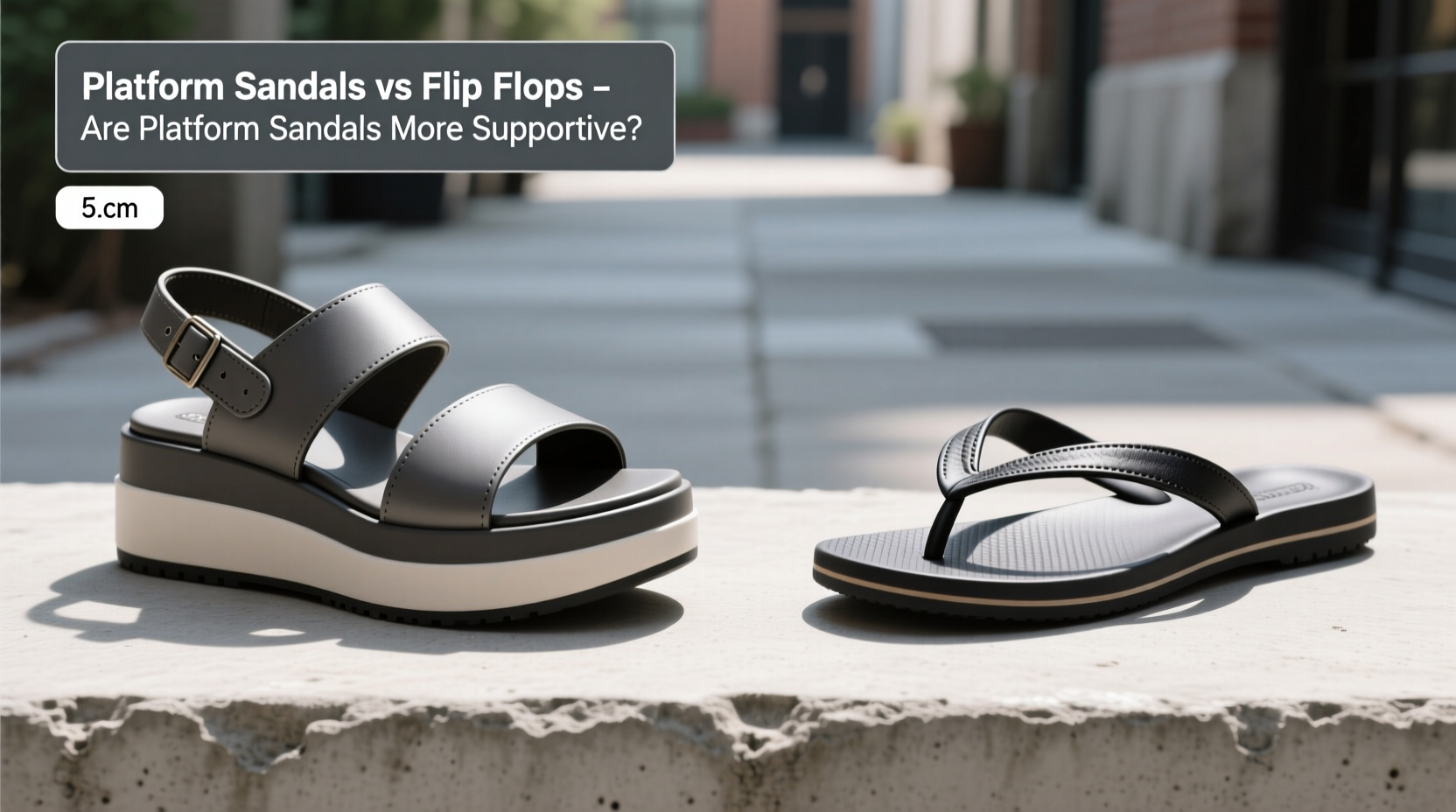
Flip flops are minimalist by design. Typically consisting of a flat sole with a Y-shaped strap that passes between the first and second toes, they offer little to no structural support. Because they lack heel counters, arch support, and secure fastening systems, flip flops force your toes to grip the shoe with each step—a motion called \"toe clenching.\" Over time, this unnatural gait can lead to strain in the feet, calves, and lower back.
Podiatrists consistently warn against prolonged use of flip flops. Dr. Lena Torres, a board-certified podiatrist based in Miami, explains:
“Wearing flip flops for extended periods alters your natural stride. You tend to shorten your step and lift your feet higher to keep them from slipping off, which increases stress on the Achilles tendon and plantar fascia.” — Dr. Lena Torres, DPM
This change in gait pattern may contribute to conditions like plantar fasciitis, shin splints, and even metatarsalgia. Additionally, the thin soles common in most flip flops provide minimal shock absorption, making them unsuitable for walking on hard surfaces like concrete or pavement for long durations.
Platform Sandals: Built for Height and (Sometimes) Support
Platform sandals differ significantly in structure. They feature elevated soles—often 1 to 3 inches high—that extend under both the heel and forefoot. Unlike stilettos or wedges that concentrate pressure at the heel, well-designed platforms distribute weight more evenly across the foot. This balanced load distribution can reduce strain on specific areas, particularly when compared to flimsy flip flops.
But not all platform sandals are created equal. Many fashion-focused styles prioritize aesthetics over ergonomics. A thick sole alone doesn’t guarantee support. True support comes from features such as contoured footbeds, cushioned midsoles, adjustable straps, and rigid outsoles that resist twisting.
Comparative Breakdown: Key Features Compared
| Feature | Flip Flops | Platform Sandals |
|---|---|---|
| Arch Support | Minimal to none | Varies; often present in quality models |
| Heel Stability | Poor – heel moves freely | Better – enclosed heel or ankle strap |
| Sole Cushioning | Thin, hard material | Thicker EVA or rubber; some memory foam |
| Strap Security | Single toe post only | Multiple straps (ankle, instep, toe) |
| Weight Distribution | Front-heavy due to toe gripping | More even across foot |
| Recommended Use | Short-term, casual wear | Moderate walking, all-day events |
Real-World Example: A Day at the Festival
Consider Sarah, a 32-year-old event planner who spent an entire weekend music festival in her favorite strappy platform sandals. Though they were trendy and stood 2.5 inches tall, she chose a pair with a molded footbed and padded heel cup. Despite walking over eight hours per day across uneven grass and gravel paths, she experienced minimal foot fatigue.
In contrast, her friend Mia wore classic rubber flip flops. By the end of the first day, Mia developed sharp pain along her arch and had to sit out several performances. She later consulted a physical therapist, who diagnosed early signs of plantar fasciitis exacerbated by inadequate footwear.
This scenario illustrates that while both types of shoes are considered “casual,” their impact on foot health during prolonged activity differs dramatically. The key wasn’t just the added height—it was the thoughtful engineering behind the platform design.
What Makes a Supportive Sandal?
Support goes beyond elevation. To evaluate whether any sandal—platform or otherwise—is truly supportive, consider these five critical components:
- Contoured Footbed: Matches the natural shape of the foot, supporting the arch and cradling the heel.
- Rigid Midsole: Prevents excessive bending, reducing strain on ligaments.
- Adjustable Straps: Allow customization for different foot widths and prevent slippage.
- Adequate Heel Cup: Stabilizes the rearfoot and aligns the ankle joint properly.
- Shock-Absorbing Sole: Materials like polyurethane or EVA foam absorb impact during walking.
Many high-end brands—including Teva, Birkenstock, and Naot—engineer their platform styles with these principles in mind. However, cheaper imitations may mimic the look without delivering functional benefits.
Checklist: Choosing a Supportive Platform Sandal
- ✅ Test the footbed—press your thumb into the arch area. It should resist slight indentation.
- ✅ Wiggle the sole side-to-side. Minimal torsion indicates good structural integrity.
- ✅ Ensure straps are adjustable and made from durable, non-stretch material.
- ✅ Walk on a hard surface in-store or at home. No heel slippage or toe gripping should occur.
- ✅ Avoid overly flexible soles—they may feel soft but lack long-term support.
Expert Insight: When Height Helps (and Hurts)
Dr. Alan Kim, a biomechanics specialist at the American Academy of Podiatric Sports Medicine, notes that moderate platform height can actually improve posture for some wearers:
“For individuals with flat feet or low arches, a modest platform with proper arch contouring can restore alignment and reduce overpronation. But once heels exceed 3 inches, even platforms begin to shift weight forward, increasing pressure on the ball of the foot.” — Dr. Alan Kim, DPM
His advice? Stick to platforms under 3 inches and always prioritize fit and function over fashion trends.
Frequently Asked Questions
Can platform sandals cause foot pain?
Yes—if they lack proper support, are too tight, or have an improper fit. Even thick soles won’t prevent discomfort if the shoe doesn’t align with your foot’s natural mechanics. Always break in new platforms gradually and avoid wearing them for long walks right away.
Are flip flops ever safe to wear?
For short durations—like walking to the pool, beach, or shower—they’re generally fine. However, limiting continuous use to less than one hour is recommended by foot health professionals. Opt for supportive versions with cushioned soles and wide straps if you must wear them longer.
Do orthotic-friendly platform sandals exist?
Yes. Brands like Vionic and Rockport offer platform styles with removable insoles, allowing you to insert custom orthotics. Look for roomy toe boxes and deep heel cups to accommodate added inserts without compromising fit.
Final Thoughts: Prioritize Function Without Sacrificing Style
The idea that all platform sandals are inherently better than flip flops is a myth—but so is dismissing them entirely. The real distinction lies in construction. A well-made platform sandal with anatomical support, secure straps, and quality materials offers far greater protection for your feet than a basic flip flop. That said, not every platform delivers on those promises. Consumers must look past aesthetics and examine the engineering beneath the surface.
Your feet carry you through life. Choosing footwear that supports natural movement, absorbs impact, and stabilizes joints isn’t just about comfort—it’s an investment in long-term mobility. Whether you're strolling through a city park or navigating a crowded outdoor market, your sandals should work with your body, not against it.




 浙公网安备
33010002000092号
浙公网安备
33010002000092号 浙B2-20120091-4
Comments
No comments yet. Why don't you start the discussion?