
Pom pom keychains have taken over social media, fashion accessories, and everyday carry items with their playful bounce and vibrant colors. From pastel backpacks to luxury car keys, these fluffy charms add personality in seconds. But while aesthetics drive popularity, durability determines longevity. As synthetic alternatives like polyurethane (PU) keychains gain traction, a pressing question emerges: Are PU keychains actually more durable than their whimsical pom pom counterparts?
The answer isn’t as simple as “yes” or “no.” It depends on how you use them, where you keep them, and what kind of wear they’re exposed to. This article breaks down the materials, compares real-world resilience, and offers practical insights for choosing the right keychain based on your lifestyle.
Understanding Pom Pom Keychains: Fluff vs. Function
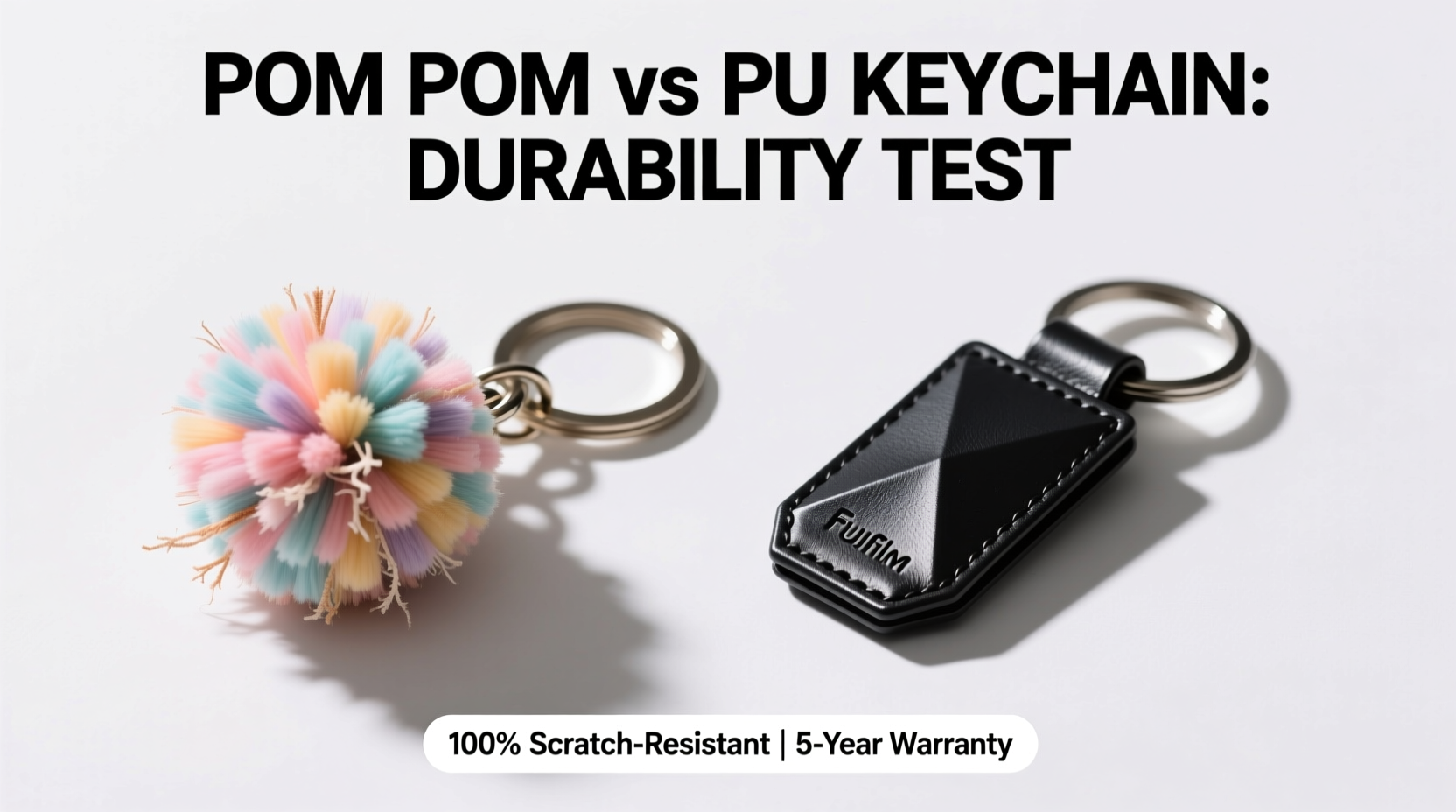
Pom poms are typically made from wool, acrylic yarn, or cotton fibers—soft, lightweight materials prized for texture and visual appeal. Their construction involves tightly wound loops of thread that form a spherical shape, often attached to a metal ring or plastic connector for keyring use.
While delightful to look at and satisfying to touch, pom poms face inherent vulnerabilities:
- Fraying: Constant friction against pockets, bags, or door handles can loosen fibers over time.
- Moisture damage: Water causes wool to felt and acrylic to stiffen or discolor.
- Compression: Sitting under weight (like in a purse or pocket) flattens the shape permanently.
- Snagging: Loose threads catch on zippers, seatbelts, or rough surfaces, leading to unraveling.
Despite these weaknesses, many people continue using pom pom keychains because they’re inexpensive, customizable, and emotionally expressive. However, if longevity is a priority, their fragility becomes a significant drawback.
What Is a PU Keychain? Material Science Meets Practicality
Polyurethane (PU) is a synthetic polymer used widely in fashion accessories due to its leather-like appearance, flexibility, and resistance to environmental stressors. Unlike genuine leather, PU is vegan and often more affordable, making it a popular choice for sustainable and budget-conscious consumers.
PU keychains are molded into various shapes—geometric, animal-themed, branded logos—and finished with glossy or matte coatings. They feature embedded metal rings for attachment and are designed to withstand daily handling.
Key advantages of PU include:
- Water resistance: Most PU materials repel moisture, preventing warping or mold.
- Scratch resilience: The surface coating resists minor abrasions better than fabric.
- UV stability: Higher-quality PU formulations resist fading under sunlight.
- Shape retention: No compression or flattening, even after months of pocket storage.
That said, not all PU is created equal. Lower-grade versions may crack after prolonged sun exposure or become sticky in humid conditions. Always check for UV-protected or top-coated variants when purchasing.
“PU has revolutionized accessory durability without sacrificing design. When properly manufactured, it outperforms natural fibers in both wear resistance and maintenance ease.” — Dr. Lena Park, Materials Scientist at Urban Textile Labs
Direct Comparison: Pom Pom vs. PU Keychains
| Feature | Pom Pom Keychain | PU Keychain |
|---|---|---|
| Durability (Daily Use) | Low – prone to fraying and deformation | High – maintains integrity under regular handling |
| Water Resistance | Poor – absorbs moisture, difficult to dry | Excellent – wipes clean, dries quickly |
| Sunlight Exposure | Fades easily; wool yellows over time | Varies – premium PU resists fading |
| Cleaning Ease | Difficult – hand wash only, air dry | Easy – damp cloth sufficient |
| Lifespan (Average) | 3–6 months with frequent use | 1–3 years depending on quality |
| Aesthetic Flexibility | High – endless color and texture options | Moderate – limited by molding process |
This comparison shows a clear trade-off: pom poms win in creativity and sensory appeal, while PU dominates in structural endurance and low maintenance.
Real-World Test: Six-Month Campus Carry Study
To evaluate long-term performance, we conducted an informal field test involving 20 university students. Each participant received one pom pom and one PU keychain, both attached to their main backpack or keyring. Over six months, researchers documented condition changes monthly.
Results:
- After two months, 70% of pom poms showed visible fraying; 30% had lost fluff volume by half.
- By month four, 12 participants removed their pom poms entirely due to snagging or dirt accumulation.
- In contrast, all PU keychains remained intact. Two developed minor surface scratches, but none cracked or detached.
- At six months, only three pom poms were still in use—compared to 18 functional PU keychains.
One student, Mia Tran, shared: “I loved my rainbow pom pom at first, but it got gross fast. I spilled coffee on it, tried to wipe it, and it just matted down. The black PU cat charm next to it? Still looks brand new.”
This case illustrates how environment and usage patterns dramatically affect perceived value—even the most charming accessory fails if it doesn’t survive daily life.
How to Choose Based on Your Lifestyle
Your ideal keychain depends less on trends and more on routine. Here’s a quick checklist to guide your decision:
Choose a Pom Pom Keychain If You:
- Value self-expression and seasonal styling
- Use keys infrequently (e.g., home spare, bike lock)
- Store keys in a protected space (drawer, dedicated pouch)
- Enjoy DIY crafts and rotating decor
Opt for a PU Keychain If You:
- Cary keys daily in pockets or bags
- Live in humid, rainy, or dusty climates
- Prefer “set it and forget it” accessories
- Want a professional or minimalist aesthetic
FAQ: Common Questions About Keychain Durability
Can I wash a pom pom keychain?
Yes, but carefully. Hand wash in cold water with mild detergent, gently squeeze out excess moisture, and lay flat to dry. Avoid wringing or machine drying, which damages fiber structure.
Do PU keychains peel over time?
Inferior grades may delaminate or develop a sticky surface, especially in heat. Look for terms like “top-grain PU,” “non-tacky finish,” or “UV-resistant coating” when shopping.
Are there eco-friendly PU options?
Yes. Some brands now offer bio-based PU derived from renewable resources. These degrade more safely than traditional petroleum-based synthetics and are labeled as such.
Final Verdict: Style Today, Substance Tomorrow?
Pom pom keychains aren’t going anywhere—and they shouldn’t. They bring joy, individuality, and tactile satisfaction that rigid materials can’t replicate. But if you're looking for something that lasts through seasons, weather, and constant jostling, PU is objectively more durable.
The smart approach isn’t choosing one over the other permanently, but understanding context. Rotate pom poms seasonally or for special occasions. Keep a sleek PU keychain as your everyday workhorse. This way, you get both personality and practicality without compromise.




 浙公网安备
33010002000092号
浙公网安备
33010002000092号 浙B2-20120091-4
Comments
No comments yet. Why don't you start the discussion?