
Hanging a mirror might seem straightforward, but doing it incorrectly can lead to cracks, misalignment, or worse—safety hazards. Whether you're placing a lightweight bathroom mirror or a heavy statement piece in your living room, the goal is always the same: a perfectly level, securely mounted mirror that enhances your space without risk. The key lies not just in tools, but in technique. With the right approach, hanging a mirror becomes simple, safe, and satisfyingly precise.
Assess Your Mirror and Wall Type First
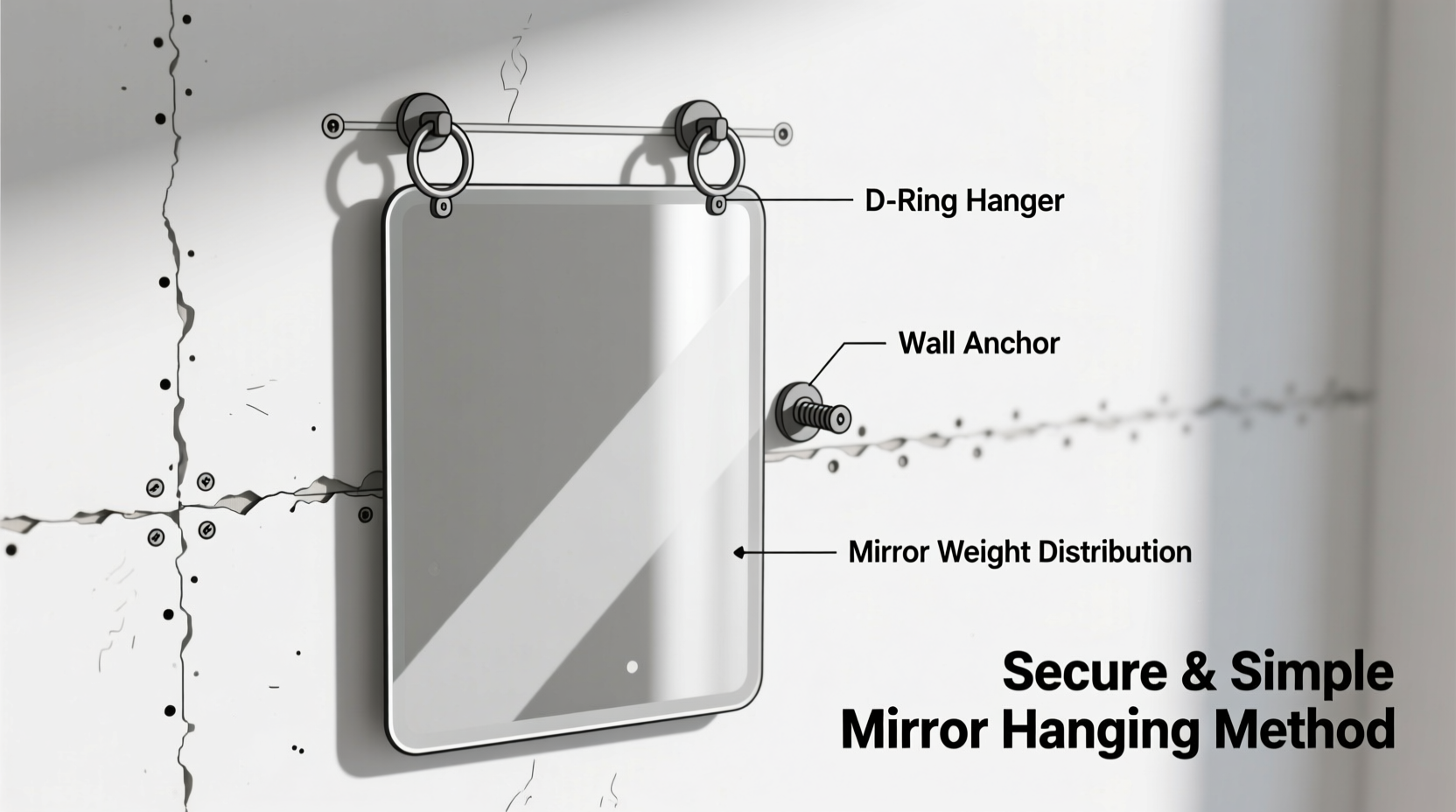
Before picking up a drill, take a moment to evaluate two critical factors: the mirror’s weight and the wall material. These determine your mounting method and hardware needs.
Lightweight mirrors (under 5 lbs) can often be hung with adhesive strips or small nails into drywall. Medium-weight mirrors (5–20 lbs) require anchors or mounting into wall studs. Heavy mirrors (over 20 lbs) must be anchored into studs or supported with specialized hardware like French cleats or toggle bolts.
Wall types vary significantly in load-bearing capacity:
- Drywall: Common in homes, but weak alone. Requires anchors for anything beyond very light loads.
- Plaster: Denser than drywall but brittle. Use masonry bits and appropriate anchors.
- Studs (wood or metal): Ideal for heavy mirrors. Locate them using a stud finder.
- Tile: Found in bathrooms and kitchens. Drilling requires carbide-tipped bits and extreme care to avoid cracking.
- Concrete or brick: Needs masonry anchors and a hammer drill.
Step-by-Step: How to Hang a Mirror Safely and Level
Follow this proven sequence to ensure your mirror is both secure and straight. This process works for most standard-sized mirrors on drywall or plaster, with adjustments for heavier models.
- Gather your tools: Stud finder, level, tape measure, pencil, drill, appropriate screws and anchors, mounting brackets or picture hooks, gloves, and safety glasses.
- Measure and mark the desired height. Standard eye-level placement is 57–60 inches from the floor to the center of the mirror, but adjust based on furniture or personal preference.
- Locate wall studs using a stud finder. Mark their edges lightly with pencil. If your mirror spans multiple studs, great—you can anchor directly into wood. If not, plan for heavy-duty drywall anchors.
- Check the mirror’s hanging mechanism. Many mirrors come with pre-installed D-rings, sawtooth hangers, or wire. For heavy mirrors, D-rings with offset clips are ideal—they distribute weight and allow for precise leveling.
- Hold the mirror against the wall at the desired height. Have a helper assist while you align it and mark the screw points through the hanging hardware.
- Drill pilot holes at the marks. Insert anchors if not mounting into studs.
- Screw in the wall hooks or screws, leaving a slight gap so the D-rings or wire can slide on easily.
- Lift the mirror and hang it carefully. Ensure both sides are seated properly on the hooks.
- Use a level to confirm alignment. Adjust if necessary by slightly repositioning the hooks.
- Test stability gently—press lightly on the top edge to ensure no wobbling or shifting.
For Extra-Heavy Mirrors: Use a French Cleat
A French cleat is one of the most secure methods for large, heavy mirrors. It consists of two interlocking wooden or metal strips—one attached to the mirror frame, the other to the wall. When joined, they lock securely and distribute weight evenly across multiple studs.
“French cleats eliminate stress points and prevent forward tipping—a major safety advantage for oversized mirrors.” — James Reed, Professional Framer and Home Installer
Do’s and Don’ts: Mirror Hanging Safety Guide
| Do | Don’t |
|---|---|
| Use a stud finder to locate framing before drilling | Guess where studs are or rely only on spacing patterns |
| Choose hardware rated for at least 1.5x the mirror’s weight | Use flimsy picture hooks for anything over 10 lbs |
| Double-check levelness after hanging | Assume the floor or ceiling is level—always use a tool |
| Wear safety glasses when drilling into walls | Drill near outlets or switches without checking wiring |
| Ask for help when lifting heavy mirrors | Try to hang large mirrors alone—risk of injury and damage is high |
Real Example: Hanging a 30-Pound Bathroom Mirror
Sarah wanted to upgrade her outdated bathroom mirror to a sleek, 36\"x48\" framed model weighing 30 pounds. She assumed she could use heavy-duty drywall anchors, but after testing her stud finder, she discovered that one edge of the mirror would align perfectly with a stud, while the other side fell into open drywall.
Instead of relying solely on anchors, she opted for a hybrid solution: one screw driven into the stud, and a toggle bolt on the drywall side. She used dual D-ring hangers on the mirror, spaced to match. After drilling carefully and inserting the hardware, she and her partner lifted the mirror together. Using a 2-foot level, they confirmed perfect alignment before stepping back.
The result? A securely mounted mirror that has remained stable for over two years—even through seasonal humidity shifts. Sarah later said, “I almost skipped the stud finder. That five-minute check saved me from a falling mirror and a trip to the ER.”
Essential Tips for Long-Term Security
Even the best installation can fail over time due to environmental changes or poor initial choices. These tips help maintain safety and appearance.
For mirrors above sinks or tubs, avoid placing them where direct water spray can reach the frame or hanging hardware. Moisture weakens adhesives and corrodes metal components. If your mirror has a wire backing, replace it with D-rings—wires can stretch or snap unexpectedly.
If you're renting or want a non-damaging option, consider high-adhesion mounting strips designed for heavy objects. Brands like 3M offer strips rated for up to 16 pounds per pair. However, these work best on smooth, clean surfaces and should never be used for full-length or heavy mirrors.
FAQ: Common Mirror Hanging Questions
Can I hang a heavy mirror without finding studs?
Yes, but only if you use proper hollow-wall anchors like toggle bolts or snap toggles. These expand behind the drywall and support significant weight. However, never exceed the anchor’s rated capacity, and always distribute the load across multiple points.
What’s the safest way to hang a mirror on tile?
Use a carbide-tipped drill bit designed for glass and tile. Start slowly to prevent cracking, and apply light pressure. Consider silicone adhesive in combination with anchors for added security. Always wear eye protection during drilling.
How do I hang a mirror without leaving visible hardware?
For a clean look, use hidden mounting systems like mirror clips or recessed standoffs. These attach to the frame and rest on screws in the wall, holding the mirror flush without dangling wires or obvious hooks.
Final Checklist: Before You Hang
- ✅ Measure the mirror and plan placement
- ✅ Identify wall type and locate studs
- ✅ Choose appropriate hardware (hooks, anchors, screws)
- ✅ Gather tools: level, drill, stud finder, pencil, measuring tape
- ✅ Confirm weight capacity of chosen method
- ✅ Enlist help for mirrors over 15 lbs
- ✅ Double-check level and alignment after hanging
Conclusion: Hang with Confidence
Hanging a mirror doesn’t need to be stressful or risky. By combining the right tools, careful planning, and attention to structural details, you can achieve a result that’s both beautiful and safe. Whether it’s a small accent piece or a grand centerpiece, every mirror deserves a secure foundation. Take the time to do it right—your home, and your peace of mind, will thank you.




 浙公网安备
33010002000092号
浙公网安备
33010002000092号 浙B2-20120091-4
Comments
No comments yet. Why don't you start the discussion?