
Navigating health insurance can feel overwhelming, especially when the stakes are high and the options seem endless. The Affordable Care Act (ACA), commonly known as Obamacare, provides a reliable path to affordable, comprehensive coverage for millions of Americans. But understanding how to enroll, what plans are available, and when to act is crucial. This guide walks you through every essential step—clearly and practically—so you can make informed decisions without confusion or stress.
Understand What Obamacare Is and Who It’s For
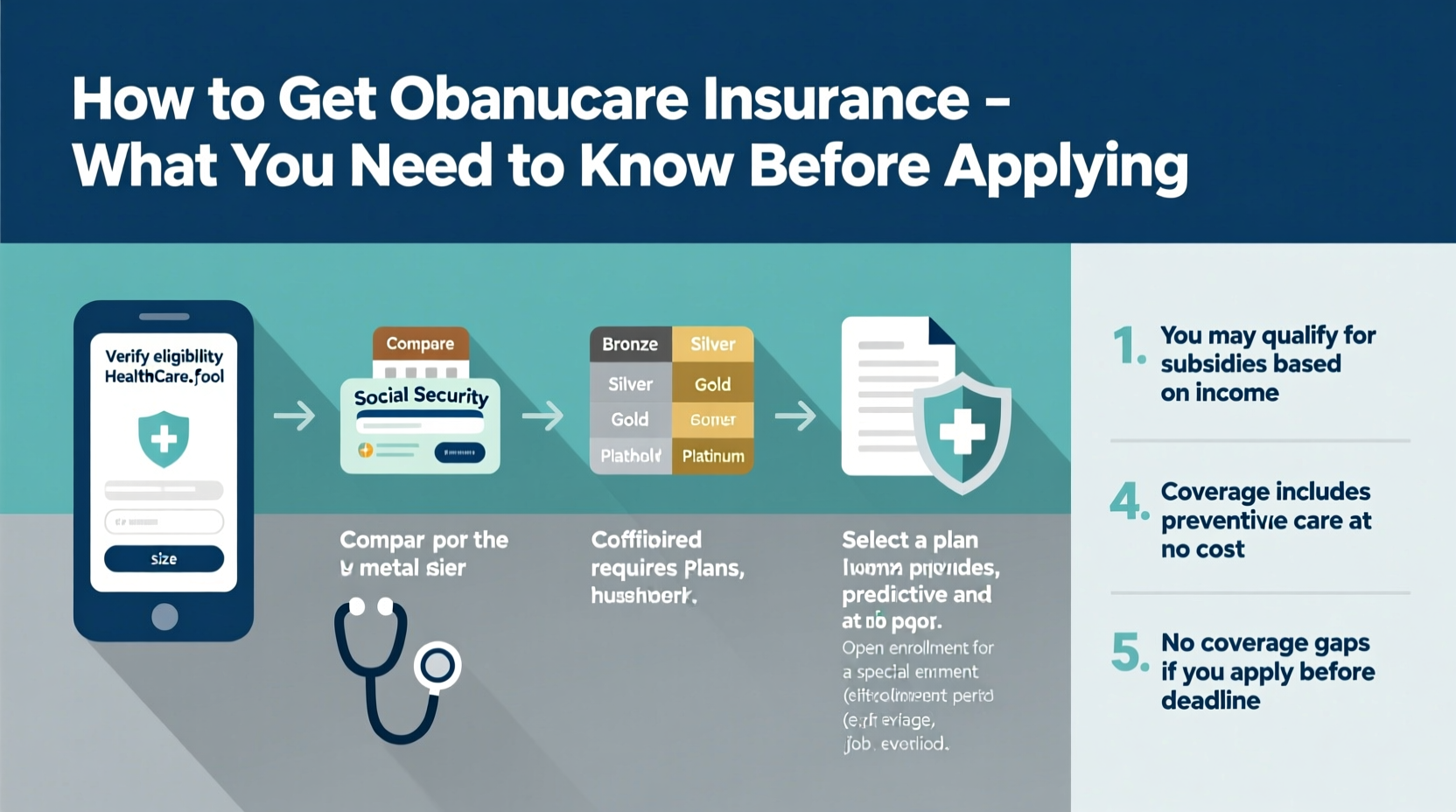
Obamacare, established under the Affordable Care Act in 2010, created a national framework for accessible health insurance. It prohibits insurers from denying coverage due to pre-existing conditions, expands Medicaid in participating states, and offers subsidies to lower-income individuals and families.
The program primarily serves people who don’t have employer-sponsored insurance, are self-employed, work part-time, or fall into a coverage gap. You do not need to be unemployed or low-income to qualify—middle-income households often receive financial help based on income and household size.
“Obamacare isn’t just for the uninsured—it’s a tool for anyone seeking stable, affordable healthcare with consumer protections.” — Dr. Linda Chen, Health Policy Analyst at the Commonwealth Fund
Eligibility is broad. U.S. citizens and legal residents who live in the country and aren’t incarcerated can apply. However, undocumented immigrants are not eligible for Marketplace plans or subsidies.
Your Step-by-Step Enrollment Process
Enrolling in an Obamacare plan doesn’t have to be complicated. Follow this clear, six-step process to ensure you’re prepared and covered.
- Determine your enrollment window. Open Enrollment typically runs from November 1 to January 15 in most states. Outside this period, you may still qualify for a Special Enrollment Period (SEP) if you’ve experienced a qualifying life event—such as losing job-based coverage, moving, getting married, or having a baby.
- Gather necessary documents. You’ll need Social Security numbers, proof of income (like W-2s or tax returns), information about any current insurance, and details about household members applying.
- Visit Healthcare.gov or your state’s exchange. Most states use the federal marketplace; others like California (Covered CA), New York (NY State of Health), and Minnesota (MNSure) operate their own. Use the correct portal for your state.
- Complete your application. Input your personal and financial details. The system will determine your subsidy eligibility and show all available plans in your area.
- Compare plans carefully. Look beyond premiums. Consider deductibles, copays, provider networks, and prescription drug coverage.
- Select and confirm your plan. After choosing, pay your first month’s premium to activate coverage. Confirm receipt of your insurance card and provider list.
Know Your Plan Options and Subsidies
Obamacare offers four main metal-tier plans: Bronze, Silver, Gold, and Platinum. These reflect how costs are shared between you and the insurer—not quality of care.
| Tier | Avg. Cost Coverage | Premium | Deductible | Best For |
|---|---|---|---|---|
| Bronze | 60% | Lowest | Highest | Healthy individuals who want protection against worst-case scenarios |
| Silver | 70% | Moderate | Moderate | Families and those eligible for cost-sharing reductions (CSRs) |
| Gold | 80% | Higher | Lower | People who expect frequent medical care |
| Platinum | 90% | Highest | Lowest | Those prioritizing predictable out-of-pocket costs |
If your household income is between 100% and 400% of the Federal Poverty Level (FPL), you likely qualify for a premium tax credit that lowers your monthly payment. In 2024, that means individuals earning up to $65,000 and families of four up to $135,000 may get help.
Additionally, those with incomes up to 250% FPL who choose a Silver plan may qualify for Cost-Sharing Reductions (CSRs), which reduce deductibles, copays, and out-of-pocket maximums.
Real-World Example: Maria’s Successful Enrollment
Maria, a freelance graphic designer in Texas, lost her spouse’s employer insurance after their divorce. With two children and irregular income, she was anxious about healthcare costs. She discovered she qualified for a Special Enrollment Period and used Healthcare.gov to apply.
Her estimated annual income placed her at 180% of the FPL. She selected a Silver plan with a $0 premium after subsidies and received CSR benefits that lowered her deductible from $6,000 to $1,500. Her kids were automatically enrolled in CHIP, a related program for children.
Within three weeks, Maria had coverage, visited a primary care doctor, and scheduled dental checkups—all with minimal out-of-pocket expense.
Avoid Common Mistakes: Do’s and Don’ts
Even small errors can delay coverage or increase costs. Use this checklist to stay on track.
- DO verify your income estimate accurately using recent pay stubs or tax records.
- DO check if your doctors and hospitals are in-network before selecting a plan.
- DO review your plan annually during Open Enrollment—you might find a better fit.
- DON’T skip the application questions about household size or citizenship status—this can delay processing.
- DON’T assume all plans cover maternity or mental health equally—review benefit summaries.
- DON’T ignore renewal notices. Auto-enrollment doesn’t guarantee the best deal.
“Many people stick with the same plan for years without realizing they could save hundreds—or access better care—with a simple switch.” — Sarah Kim, Certified Application Counselor, National Association of Healthcare Access
Frequently Asked Questions
Can I get Obamacare if I already have Medicaid?
No. If you’re enrolled in Medicaid, you’re not eligible for Marketplace plans or subsidies. However, you can disenroll from Medicaid and switch to an Obamacare plan if it better suits your needs—but consider the trade-offs in cost and coverage.
What happens if I miss the deadline?
Outside Open Enrollment, you can only enroll if you experience a qualifying life event. Examples include losing minimum essential coverage, moving to a new state, gaining a dependent, or leaving incarceration. Documentation is required, and you usually have 60 days from the event to enroll.
Are short-term health plans the same as Obamacare?
No. Short-term plans are not ACA-compliant. They often exclude pre-existing conditions, maternity care, and mental health services. While cheaper upfront, they offer limited protection and do not qualify as minimum essential coverage—meaning you could face penalties in states with individual mandates.
Final Checklist Before You Apply
Before starting your application, ensure you’re ready with this essential checklist:
- ✅ Proof of Identity and Citizenship
- Social Security numbers, birth certificates, or immigration documents.
- ✅ Income Verification
- Recent pay stubs, W-2 forms, or last year’s tax return.
- ✅ Current Insurance Details (if applicable)
- Policy numbers and end dates for any expiring coverage.
- ✅ Household Information
- Names, birthdates, and relationships of all family members applying.
- ✅ List of Prescriptions and Preferred Providers
- To compare formularies and networks effectively.
Take Action Today—Your Health Depends On It
Health insurance is more than a monthly bill—it’s a foundation for stability, peace of mind, and long-term well-being. The Obamacare enrollment process is designed to be accessible, but timing, preparation, and attention to detail make all the difference. Whether you're navigating a job change, managing a chronic condition, or planning for your family’s future, now is the time to take control.
Start by visiting Healthcare.gov, checking your eligibility, and exploring your options. Millions of Americans have successfully secured affordable, reliable coverage through the Marketplace. With the right information and a few focused steps, you can too.




 浙公网安备
33010002000092号
浙公网安备
33010002000092号 浙B2-20120091-4
Comments
No comments yet. Why don't you start the discussion?