
For gardeners and home cooks alike, tomatoes are more than just a staple ingredient—they're a seasonal obsession. Yet one of the most critical decisions in growing successful tomato plants isn't about soil or sunlight; it's understanding the fundamental growth habit of the variety you choose. The distinction between determinate and indeterminate tomato plants shapes everything from harvest timing to pruning strategy, trellising needs, and even culinary use. Misjudging this difference can lead to overcrowded gardens, collapsed supports, or a single overwhelming glut of fruit. Knowing which type suits your space, cooking style, and gardening goals ensures healthier plants and a more manageable, productive harvest.
Definition & Overview
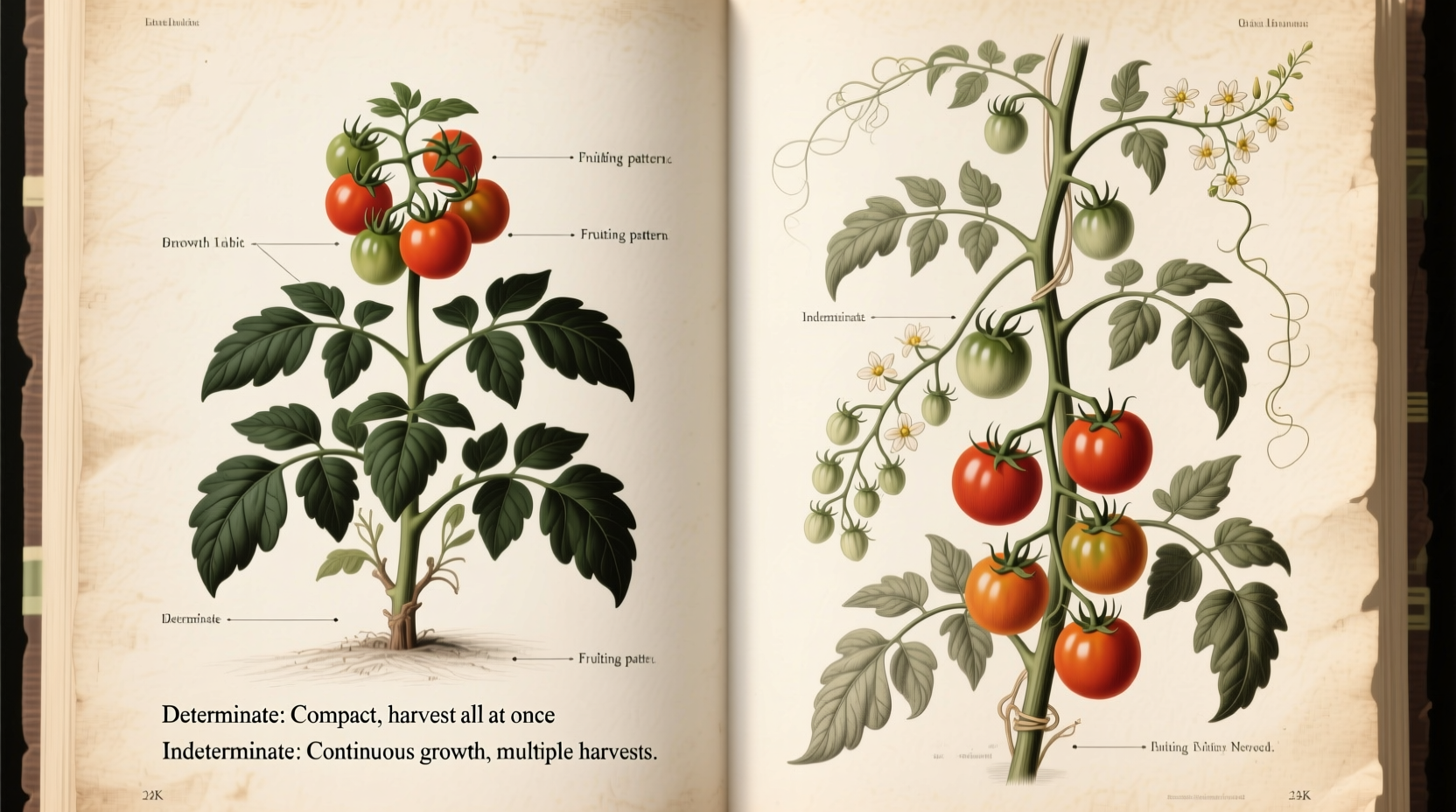
Tomato plants (Solanum lycopersicum) are broadly categorized into two primary types based on their growth patterns: determinate and indeterminate. This classification refers not to fruit size or flavor but to how the plant develops over the growing season—specifically, when and how it sets fruit and whether it continues to grow vertically.
Determinate tomatoes, also known as \"bush\" tomatoes, grow to a genetically predetermined height—usually between 3 to 4 feet—and stop once they begin setting fruit at the terminal (top) bud. These plants flower and ripen their fruit over a concentrated period, typically within a few weeks, making them ideal for canning, sauce-making, or market growers who need a uniform harvest.
Indeterminate tomatoes, often called \"vining\" tomatoes, behave more like perennials in tropical climates but are grown as annuals in temperate zones. They continue to grow, flower, and set fruit throughout the season until killed by frost. Left unsupported, these plants can reach 6 to 12 feet or more in length and produce fruit continuously from early summer to first frost.
The choice between these two types is not merely horticultural—it directly affects kitchen planning, preservation efforts, and garden design. A gardener aiming to make weekly fresh salads will benefit from indeterminate varieties, while someone focused on batch-processing salsa will find determinate types more practical.
Key Characteristics
| Characteristic | Determinate Tomatoes | Indeterminate Tomatoes |
|---|---|---|
| Growth Habit | Bushy, compact, self-limiting | Vining, sprawling, continuous |
| Height | 3–4 feet max | 6–12+ feet |
| Fruiting Period | Concentrated (2–3 weeks) | Continuous (6+ months) |
| Support Needs | Minimal (cages or short stakes) | High (staking, trellising, tying) |
| Pruning Requirements | Low (pruning reduces yield) | High (regular pruning improves airflow and fruit size) |
| Ideal Use Case | Canning, sauces, container gardening | Fresh eating, extended harvest, culinary diversity |
| Lifespan in Season | Shorter (ends after main fruit set) | Longer (grows until frost) |
Practical Usage: How Growth Type Affects Gardening and Cooking
The real-world implications of choosing between determinate and indeterminate varieties go beyond plant height. Each type demands different management strategies and delivers distinct culinary benefits.
Determinate Tomatoes: Efficiency and Predictability
Determinate varieties excel in situations where space, time, or processing capacity is limited. Because they mature all at once, they’re favored by home preservers and small-scale farmers supplying markets with bulk orders. If you plan to make 20 quarts of marinara sauce each year, planting three determinate plants like 'Rutgers' or 'Amish Paste' ensures a synchronized harvest that streamlines preparation.
These plants are also well-suited for container gardening. Their compact size makes them viable for patios, balconies, or urban rooftops. Varieties such as 'Patio Princess', 'Bush Early Girl', or 'Balcony Cherry' are bred specifically for small spaces and perform reliably in pots 14–18 inches wide.
In the kitchen, the predictable yield allows for precise meal planning. You can schedule preserving days, invite friends for a sauce-making party, or coordinate with local food banks for donation drives. However, because production ceases after the main flush, there may be little to no tomatoes available later in the season unless succession-planted.
TIP: Pair determinate tomatoes with cold frames or row covers to slightly extend their season. Since they finish early, consider intercropping them with fast-growing greens or planting a second crop of bush beans in the same bed once the tomatoes decline.
Indeterminate Tomatoes: Sustained Abundance
Indeterminate varieties reward patient gardeners with a steady supply of fruit from midsummer through fall. This makes them ideal for households that consume fresh tomatoes daily—on sandwiches, in salads, or roasted for pasta dishes. Heirloom favorites like 'Brandywine', 'Cherokee Purple', and 'Black Krim' are almost exclusively indeterminate, prized for their complex flavors and large fruit size.
Because these plants grow continuously, they require strong structural support. Growers commonly use staking systems with soft twine (the Florida weave), cattle panels, or tall T-posts with horizontal wires. Without proper support, vines sprawl across the ground, increasing disease risk and reducing air circulation.
Pruning is essential. Removing suckers—the shoots that form in leaf axils—directs energy toward fruit development rather than excessive foliage. For best results, prune to one or two main stems and remove lower leaves as the plant grows to prevent soil-borne pathogens from splashing upward.
In culinary terms, the staggered harvest encourages creativity. One week might bring green zebra slicers for pickling, the next giant beefsteaks for grilling, followed by clusters of sun gold cherries for snacking. This diversity supports seasonal menus and reduces reliance on grocery store purchases.
TIP: Train indeterminate vines horizontally along trellises to maximize light exposure and ease of harvesting. This method, used in commercial high-tunnel production, increases yield per square foot and simplifies pest inspection.
Variants & Types
Within both categories, numerous subtypes exist, tailored to specific uses and environments.
Determinate Varieties
- 'Roma' / 'San Marzano': Classic paste tomatoes with thick flesh and low moisture—ideal for sauces and drying.
- 'Celebrity': Disease-resistant hybrid producing medium-sized fruits over several weeks—not fully synchronous, but still classified as semi-determinate.
- 'Marglobe': Cold-tolerant and crack-resistant, excellent for northern climates.
- 'Tiny Tim': Ultra-compact, suitable for indoor growing or child-friendly gardens.
Indeterminate Varieties
- 'Beefsteak': Large, meaty fruits perfect for slicing and sandwiches.
- 'Sun Gold': High-sugar cherry tomatoes with early and prolific yields.
- 'Yellow Pear': Ornamental and edible, with teardrop-shaped yellow fruits.
- 'Japanese Oxheart': Conical, dense fruits weighing up to 1 pound, excellent for stuffing.
Semi-determinate varieties represent a middle ground. They grow taller than standard determinates and produce over a longer window but eventually stop growing. These are useful for gardeners seeking moderate yields without the maintenance burden of full indeterminates.
Comparison with Similar Concepts
Confusion often arises between growth habit and other tomato classifications. Clarifying these distinctions prevents misinformed choices.
| Category | Determinate vs. Indeterminate | Common Misconception |
|---|---|---|
| Fruit Size | Both types come in cherry, plum, slicing, and beefsteak forms. | \"Small tomatoes are always bush types.\" False—many cherry tomatoes are indeterminate (e.g., 'Sweet 100'). |
| Heirloom Status | Most heirlooms are indeterminate, but some determinate heirlooms exist (e.g., 'Stupice'). | \"All heirlooms keep growing.\" Not universally true. |
| Disease Resistance | Breeding for resistance occurs in both types; labeled with codes like VFN (Verticillium, Fusarium, Nematodes). | \"Determinate = more resistant.\" No inherent link—resistance depends on breeding, not growth habit. |
| Container Suitability | Determinates generally better, but dwarf indeterminates (like 'Tumbling Tom') thrive in pots. | \"Only bush tomatoes work in containers.\" Outdated—many compact indeterminates are now available. |
\"The biggest mistake new tomato growers make is treating all tomatoes the same. A 'Better Boy' needs a completely different setup than a 'Bush Goliath'—not just physically, but in watering, feeding, and harvesting schedules.\" — Maria Thompson, Master Gardener & Urban Farm Educator
Practical Tips & FAQs
How do I identify whether my tomato plant is determinate or indeterminate?
Check the seed packet or plant tag—reputable suppliers list growth habit. If unsure, observe growth patterns: determinates develop flower clusters at the tips of branches early on and stop growing shortly after. Indeterminates continue producing new leaves above flower clusters and show no natural stopping point.
Can I prune determinate tomatoes?
Generally, no. Pruning removes potential fruit-bearing sites. These plants are designed to produce all fruit at once, so interference reduces overall yield. Only remove diseased or ground-touching foliage.
Do indeterminate tomatoes produce more total fruit?
Yes, over the season. While a determinate may outproduce an indeterminate in a single week, the cumulative yield of an indeterminate often exceeds it by 2x–3x, assuming proper care and long growing seasons.
Which type is better for beginners?
It depends on goals. For simplicity and low maintenance, determinates win. For ongoing harvests and learning advanced techniques, indeterminates offer deeper engagement. Many experts recommend starting with one of each to compare.
Can I grow both types together?
Yes, but plan spacing carefully. Place determinates at the garden’s edge or front rows where they won’t shade shorter plants. Position indeterminates on the north side to avoid casting shadows. Use separate support systems to prevent vine entanglement.
What about dwarf or micro-determinate tomatoes?
Dwarf varieties (e.g., 'Micro Tom') are bred for extreme compactness and are used in research or specialty containers. Micro-determinates complete their lifecycle in under 50 days, useful for cool climates or classroom projects.
Are there indeterminate tomatoes suited for small spaces?
Absolutely. Look for “patio” or “balcony” indeterminates such as 'Tumbling Blue' or 'Red Robin'. These spread horizontally rather than vertically and thrive in hanging baskets.
TIP: Keep a garden journal noting which varieties performed best. Record harvest dates, pest issues, and flavor ratings. Over time, this data helps refine your selection toward optimal combinations of determinate reliability and indeterminate abundance.
Summary & Key Takeaways
Understanding the difference between determinate and indeterminate tomato varieties is foundational to successful cultivation and efficient kitchen use. Determinate tomatoes grow compactly and deliver a single, heavy harvest—perfect for preserving, container gardening, and space-limited settings. Indeterminate types grow continuously, offering a prolonged supply of fruit ideal for fresh consumption and culinary versatility, though they demand more support, pruning, and attention.
Key points to remember:
- Determinate = bush type, finite growth, synchronized harvest.
- Indeterminate = vining type, indefinite growth, continuous production.
- Neither type is inherently superior—the right choice depends on your goals, space, and cooking habits.
- Always verify growth habit before planting; don’t assume based on fruit size or heirloom status.
- Combine both types strategically for a balanced garden that feeds you early, mid, and late season.
Whether you're stocking pantry shelves with jars of crushed tomatoes or savoring a sun-warmed heirloom slice on buttered bread, aligning your plant choices with your lifestyle transforms gardening from a chore into a deeply rewarding practice. Choose wisely, support accordingly, and enjoy the fruits of informed cultivation.
Explore seed catalogs with filters for growth habit, and plan next season’s garden with intention. Try pairing one determinate paste variety with one indeterminate slicer to experience the full spectrum of tomato productivity.




 浙公网安备
33010002000092号
浙公网安备
33010002000092号 浙B2-20120091-4
Comments
No comments yet. Why don't you start the discussion?