
For many, the Christmas tree is the heart of holiday decor—a focal point that brings warmth, tradition, and joy into the home. But when square footage is limited, choosing how and where to place that tree becomes a real challenge. In tight apartments, cozy townhouses, or multifunctional living areas, every inch counts. This has led to a growing trend: rethinking the traditional upright tree in favor of creative alternatives, including horizontally placed trees. So, which option truly works better in compact environments—vertical or horizontal? The answer depends on layout, lifestyle, and aesthetic goals.
This guide explores both vertical and horizontal Christmas tree placements with practical insights, spatial comparisons, and real-world applications. Whether you’re furnishing a studio apartment or simply trying to preserve floor space during the holidays, understanding the pros, cons, and design potential of each approach will help you make an informed decision.
The Space Challenge: Why Tree Placement Matters in Small Homes
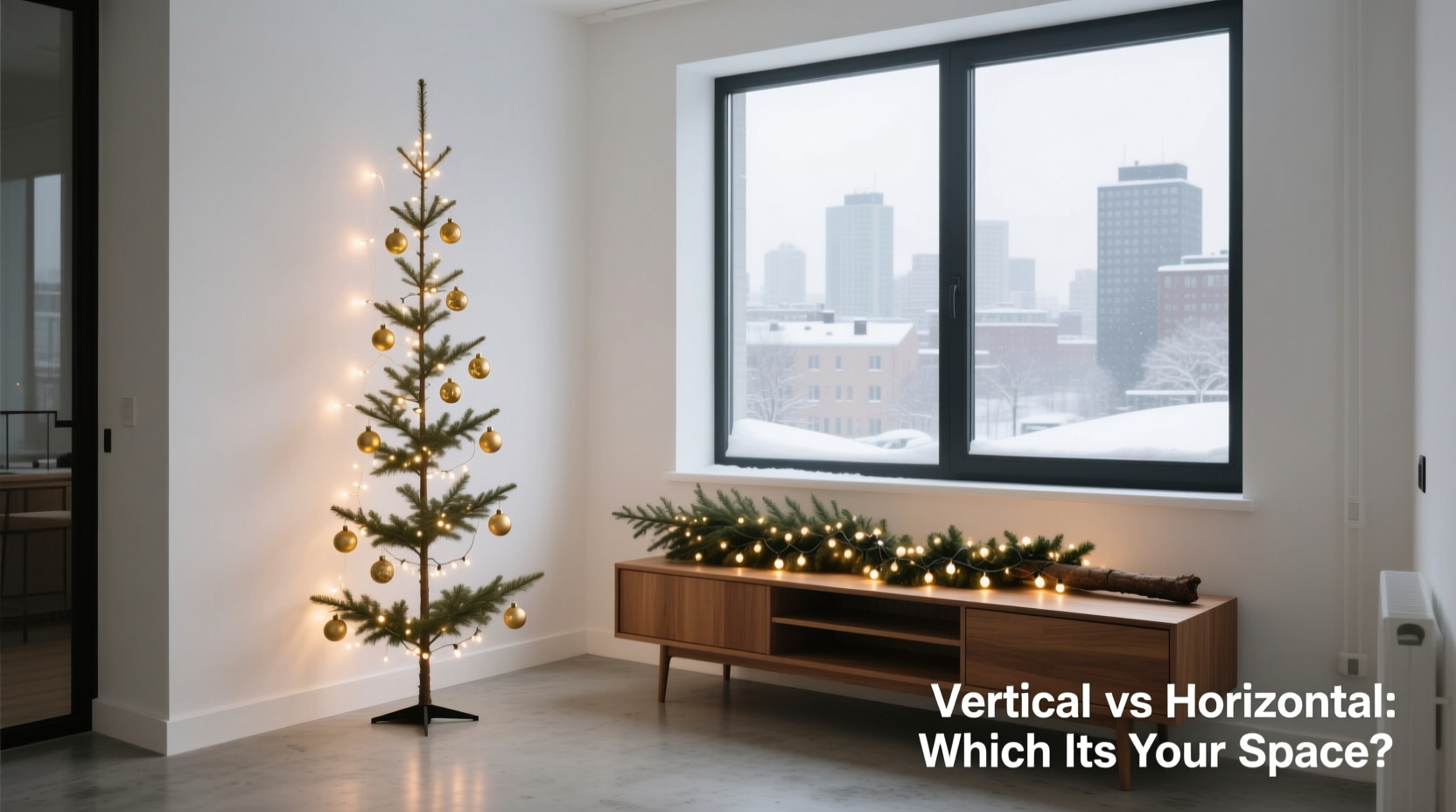
In homes under 800 square feet, furniture arrangement directly impacts comfort and flow. A bulky tree can obstruct pathways, crowd seating areas, or dominate visual space—turning festive cheer into spatial stress. The standard 6- to 7-foot vertical tree requires a clear footprint of about 3–4 feet in diameter at its base. That’s equivalent to losing a small armchair or part of a dining nook.
Urban dwellers increasingly seek minimalist, multipurpose solutions. Enter the horizontal Christmas tree—an alternative gaining popularity for its space-saving profile and modern flair. Mounted along walls, laid across mantels, or suspended from ceilings, these designs use underutilized zones like empty wall space or unused corners. However, they come with trade-offs in scale, ornamentation, and tradition.
The key isn’t just fitting a tree into a room—it’s integrating it harmoniously so it enhances rather than interrupts daily life.
Vertical Trees: Tradition Meets Practicality
The vertical tree remains the classic choice for good reason. Its upward growth mimics natural evergreens, evoking nostalgia and grandeur. When properly scaled, even a tall tree can work in modest spaces.
Smaller vertical trees (4 to 5 feet) are ideal for apartments and narrow rooms. They occupy minimal floor area while still allowing for full decoration. Slim-profile varieties, such as pencil trees or artificial firs with narrow silhouettes, take up as little as 18 inches in diameter—less than a barstool.
Another advantage: vertical trees support heavier ornaments, lights, and toppers. Their structure allows for balanced weight distribution, making them safer and more stable in high-traffic areas. Families with children or pets often prefer this orientation because it keeps decorations out of immediate reach while maintaining visibility.
When Vertical Works Best
- You have ceiling height but limited floor width.
- Your room has a defined corner or recessed area.
- You want a traditional centerpiece for gift display.
- Multiple people will view the tree from different angles.
However, vertical trees demand vertical clearance and stable flooring. In studios or open-plan lofts, they may visually divide the space too aggressively, making the environment feel segmented or cluttered.
Horizontal Trees: Maximizing Unused Dimensions
Horizontal trees flip convention on its side—literally. Instead of rising toward the ceiling, they extend laterally along walls, shelves, or mantelpieces. Often constructed from individual branches arranged in a linear pattern, these installations function more like living art pieces than traditional trees.
One popular version is the “ladder tree,” where greenery and lights are draped across the rungs of a leaning ladder. Another uses floating shelves to hold potted plants or faux boughs in a stepped formation. These designs free up floor space entirely, turning blank walls into festive displays.
Because they don’t rely on floor-standing bases, horizontal setups are excellent for renters or those avoiding hardware installation. Many can be assembled using command hooks, tension rods, or adhesive mounts—ideal for preserving finishes on floors and walls.
“Horizontal trees represent a shift toward adaptive holiday design—they reflect how people now live in smaller, smarter spaces.” — Laura Bennett, Interior Stylist & Sustainable Design Advocate
Design Flexibility and Visual Impact
A well-executed horizontal tree draws the eye horizontally, which can make a narrow room feel wider. By aligning the tree with existing architectural lines—such as crown molding, bookshelves, or window frames—it integrates seamlessly into the décor.
These trees also lend themselves to thematic expression. A minimalist setup might feature bare birch branches with white LED string lights. A rustic version could incorporate pinecones, plaid ribbons, and vintage ornaments mounted on twine. Because they’re custom-built, horizontal trees offer greater creative control than pre-shaped artificial ones.
Still, limitations exist. Horizontal arrangements typically lack depth, meaning ornaments must be viewed primarily from the front. They also struggle to accommodate large or heavy decorations. And unlike vertical trees, they rarely serve as gift repositories underneath, shifting present storage elsewhere.
Comparative Analysis: Key Factors Side by Side
| Factor | Vertical Tree | Horizontal Tree |
|---|---|---|
| Floor Space Used | Moderate to high (3–4 ft²) | Negligible (wall-mounted) |
| Ceiling Height Required | Yes (7+ ft recommended) | No |
| Stability & Safety | High (weighted base) | Varies (depends on mounting) |
| Ornament Capacity | High (all-around access) | Low to moderate (front-facing only) |
| Assembly Time | 15–30 minutes (pre-lit) | 30–90 minutes (custom builds) |
| Kid/Pet Friendly | Good (if secured) | Excellent (out of reach) |
| Storage Requirements | Larger box or bag needed | Often disassembles into flat components |
| Cost | $30–$150 (standard models) | $20–$100 (DIY materials) |
This comparison shows that while vertical trees win in ease and tradition, horizontal options excel in space efficiency and customization. Your choice should align with your room dimensions, household dynamics, and decorating philosophy.
Real-Life Example: Decorating a Studio Apartment
Sophia, a graphic designer living in a 550-square-foot Brooklyn studio, faced a common dilemma: she loved Christmas traditions but dreaded blocking her already cramped layout. Her sofa doubled as a guest bed, and the only corner suitable for a tree was near the entryway—right in the main traffic path.
Last year, she tried a 5-foot vertical tree. It looked beautiful but forced her to reposition the coffee table and made moving between kitchen and bedroom awkward. This year, she opted for a horizontal solution: a wall-mounted “tree” made from sustainably sourced cedar branches attached to a reclaimed wood frame in a triangular outline. She added battery-powered fairy lights and handmade paper stars.
The result? A striking focal point behind the couch that didn’t interfere with movement. Gifts were wrapped and stored in decorative bins under the windowsill. The entire setup took two evenings to build, cost under $60, and received rave reviews from visitors.
Sophia’s experience illustrates how horizontal trees aren’t just compromises—they can become signature design elements that reflect personal style and spatial intelligence.
Step-by-Step Guide to Choosing and Installing the Right Tree
- Measure Your Available Space: Note floor dimensions, ceiling height, and nearby furniture. Identify dead zones—like blank walls or unused mantels—that could host a tree.
- Determine Primary Function: Will the tree be a backdrop for gifts? A photo spot? A subtle accent? This guides size and orientation.
- Assess Household Needs: Do you have pets or toddlers who might pull at branches? Is noise or light sensitivity a concern with blinking lights?
- Select Style Based on Constraints: If floor space is scarce, lean toward horizontal. If height allows, go vertical with a slim profile.
- Gather Materials: For vertical trees: stand, tree (real or artificial), lights, ornaments. For horizontal: mounting hardware, greenery, lights, fixings.
- Install Safely: Anchor tall trees to walls. Ensure horizontal mounts can bear weight. Use cool LED lights to reduce fire risk.
- Style Thoughtfully: Balance color, texture, and lighting. Avoid overcrowding—especially on narrow horizontal displays.
- Test Traffic Flow: Walk through the space after setup. Adjust positioning if paths feel obstructed.
FAQ: Common Questions About Small-Space Tree Placement
Can a horizontal tree still feel festive?
Absolutely. While unconventional, horizontal trees can radiate holiday spirit through creative lighting, themed decor, and thoughtful placement. Their uniqueness often makes them conversation starters, adding personality to your celebration.
Are horizontal trees safe for rental units?
Yes, especially when using non-permanent mounting methods like adhesive strips, tension rods, or freestanding ladders. Always check lease agreements regarding wall modifications, and avoid drilling unless permitted.
What’s the smallest viable vertical tree?
Tabletop trees as short as 2 feet work well in extremely confined areas. Placed on a console table, shelf, or desk, they maintain the classic shape without sacrificing usability. Pair with a matching skirt or base to enhance proportion.
Final Checklist Before You Decorate
- ✅ Measured room dimensions and identified optimal location
- ✅ Chosen tree type (vertical/horizontal) based on space and needs
- ✅ Confirmed ceiling height and floor stability
- ✅ Selected energy-efficient, cool-touch LED lights
- ✅ Planned ornament style and weight distribution
- ✅ Ensured secure anchoring for tall or wall-mounted trees
- ✅ Verified pet- and child-safe materials and placement
- ✅ Allocated storage space for off-season packing
Conclusion: Celebrate Smarter, Not Just Bigger
The holidays shouldn’t require sacrificing comfort for tradition. Whether you choose a slender vertical tree or an imaginative horizontal design, the goal is to enhance your space—not overwhelm it. In small homes, creativity often outshines size. A thoughtfully placed tree, no matter its orientation, can deliver all the warmth and magic of the season without compromising livability.
By prioritizing function, safety, and personal expression, you can craft a holiday atmosphere that feels abundant—even in compact quarters. Don’t let square footage dictate your spirit. Instead, let smart design amplify it.




 浙公网安备
33010002000092号
浙公网安备
33010002000092号 浙B2-20120091-4
Comments
No comments yet. Why don't you start the discussion?