
In the design of the United States government, few principles are as vital—or as intentionally crafted—as the system of checks and balances. Born from historical lessons, philosophical thought, and political necessity, this framework ensures that no single branch of government accumulates unchecked power. The Founding Fathers, wary of tyranny and centralized authority, embedded mechanisms into the Constitution to distribute power and hold each branch accountable. Understanding why checks and balances were created is essential to appreciating how American democracy functions—and how it avoids descending into autocracy.
The Historical Context Behind the System
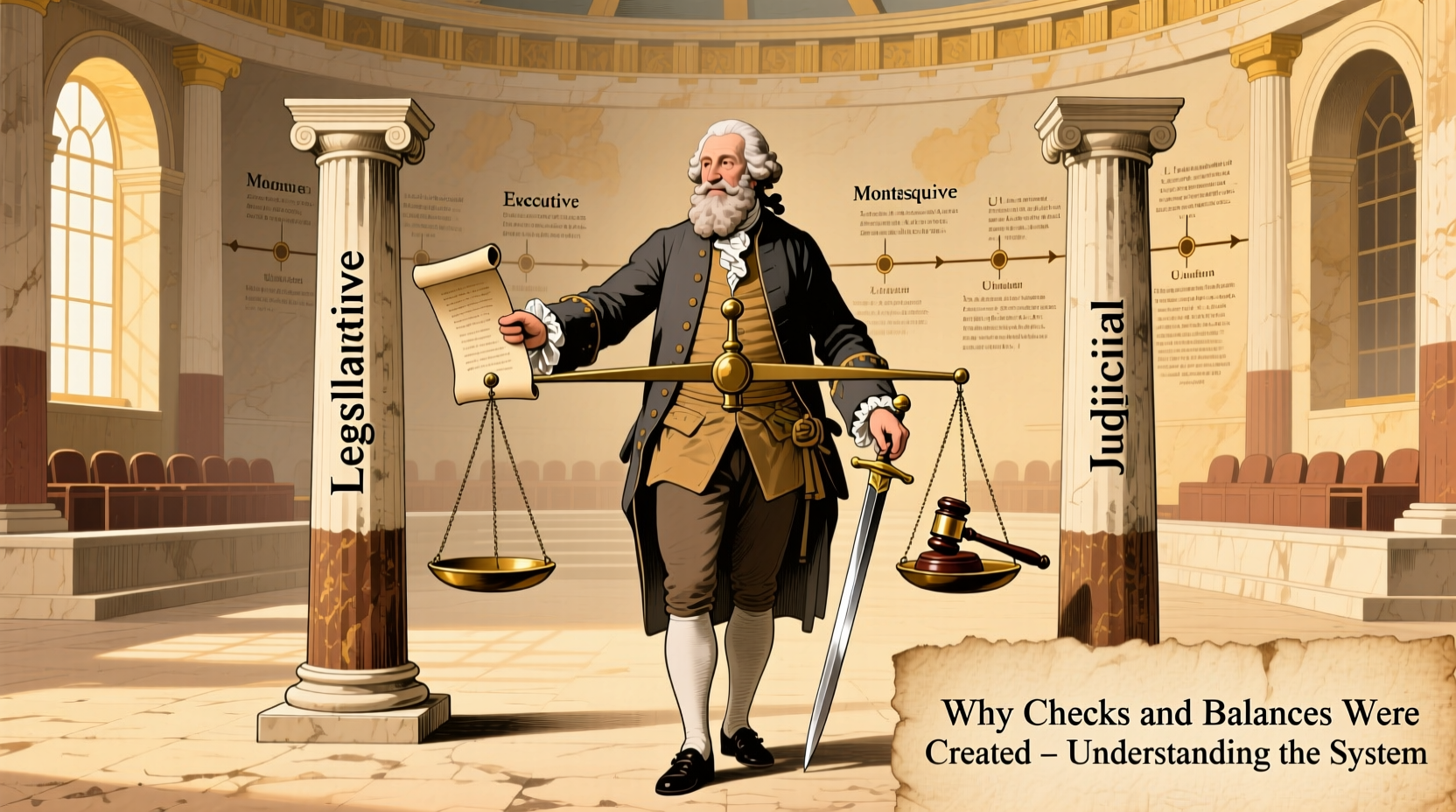
The concept of dividing government power did not originate with the American Revolution. Thinkers like Montesquieu, whose work The Spirit of the Laws deeply influenced the Founders, argued that liberty could only be preserved through a separation of powers. He observed monarchies and republics alike, noting that when legislative, executive, and judicial functions were concentrated in one entity, oppression often followed.
The American colonists had firsthand experience with such concentration. Under British rule, they saw Parliament pass laws, the monarchy enforce them, and royal courts interpret them—all without meaningful input from the governed. This lack of accountability fueled revolutionary sentiment. After independence, early experiments with governance, such as the weak central authority under the Articles of Confederation, revealed another danger: too little cohesion could lead to chaos.
The Constitutional Convention of 1787 was convened to strike a balance. Delegates sought a strong but limited national government—one capable of action yet restrained from overreach. The result was a tripartite structure: legislative, executive, and judicial branches, each with distinct powers and responsibilities, and each equipped to limit the others.
How Checks and Balances Function in Practice
The U.S. Constitution does not use the phrase “checks and balances,” but its provisions clearly establish the principle. Each branch has tools to influence or restrain the others, creating a dynamic equilibrium.
For example, Congress can pass legislation, but the President may veto it. However, Congress can override that veto with a two-thirds majority in both chambers. The judiciary can declare laws unconstitutional, but judges are nominated by the President and confirmed by the Senate. Meanwhile, Congress can initiate impeachment proceedings against both the President and federal judges.
This interdependence prevents any one branch from dominating. It also forces compromise and deliberation. Legislation must survive scrutiny from multiple angles before becoming law. Executive actions are subject to judicial review. Judicial appointments reflect political negotiation.
Key Examples of Checks Across Branches
| Branch | Power Held | Check Exercised Over | Example |
|---|---|---|---|
| Legislative (Congress) | Pass laws | Executive | Overrides presidential veto with 2/3 vote |
| Executive (President) | Veto legislation | Legislative | Rejects a bill passed by Congress |
| Judicial (Supreme Court) | Interpret laws | Both | Declares a law or executive order unconstitutional |
| Congress | Confirm appointments | Executive & Judicial | Approves or rejects federal judge nominees |
| Congress | Impeachment | Executive & Judicial | Removes a president or judge from office |
“Power tends to corrupt, and absolute power corrupts absolutely.” — Lord Acton, Historian
A Real-World Example: The Watergate Scandal
No moment in modern history illustrates the importance of checks and balances more vividly than the Watergate scandal of the 1970s. When journalists uncovered evidence that President Richard Nixon’s administration had orchestrated a break-in at the Democratic National Committee headquarters and subsequently covered it up, the system of accountability was put to the test.
The judiciary played a crucial role when the Supreme Court ruled unanimously in United States v. Nixon (1974) that the President could not withhold subpoenaed tapes on grounds of executive privilege. This decision affirmed that even the President is subject to the rule of law.
Simultaneously, Congress exercised its investigative and impeachment powers. The House Judiciary Committee approved articles of impeachment for obstruction of justice, abuse of power, and contempt of Congress. Faced with near-certain removal from office, Nixon resigned—the first and only U.S. president to do so.
Watergate demonstrated that while individuals may attempt to consolidate power, the institutional safeguards built into the government can prevail. No single branch acted alone; it was the convergence of judicial rulings, congressional oversight, and public pressure that restored constitutional order.
Common Misconceptions About the System
Despite its importance, the system of checks and balances is often misunderstood. Some believe it exists to slow down government unnecessarily. Others argue that political polarization has rendered it ineffective. While gridlock can occur, especially when different parties control different branches, the system is designed to encourage debate—not prevent governance entirely.
Another misconception is that checks and balances apply only to federal institutions. In reality, many states mirror this structure at the local level, and citizens also play a role through voting, jury duty, and civic engagement. The system only works when people remain informed and involved.
Step-by-Step: How a Check Is Exercised in Federal Government
- A federal agency issues a regulation based on broad authority granted by Congress.
- Interest groups challenge the rule in court, arguing it exceeds statutory authority.
- Federal judges hear arguments and review legal precedent.
- The court rules the regulation unconstitutional or beyond scope.
- The executive branch must either revise the rule or cease enforcement.
- Congress may respond by clarifying the original law to prevent future disputes.
Why This System Remains Essential Today
In an era of heightened partisanship and rapid information flow, the need for institutional restraints is greater than ever. Leaders may claim emergency powers, issue sweeping executive orders, or challenge election results—actions that test the resilience of democratic norms.
The judiciary’s independence, Congress’s willingness to investigate, and the transparency of public records all serve as bulwarks against authoritarian drift. Recent events, such as judicial rulings limiting presidential travel bans or congressional investigations into January 6th, show that the system continues to function—even under stress.
However, the effectiveness of checks and balances depends on integrity within the branches. If officials refuse to uphold their constitutional duties—such as a president ignoring subpoenas or senators blocking all judicial nominations—the system frays. That’s why public vigilance matters.
Checklist: Supporting Checks and Balances as a Citizen
- Stay informed about proposed legislation and executive actions.
- Vote in all elections, including judicial and local races.
- Contact your representatives when you believe a branch is overstepping.
- Support independent media and fact-based reporting.
- Advocate for transparent government practices and ethical leadership.
Frequently Asked Questions
What happens if one branch ignores the others?
If a branch refuses to comply with checks—such as a president defying a court order—it risks constitutional crisis. Other branches may respond with legal challenges, funding cuts, or impeachment. Ultimately, sustained defiance undermines democracy and relies on public resistance to correct.
Can checks and balances be abused?
Yes. For instance, Congress might use impeachment as a partisan tool rather than a remedy for misconduct. Similarly, the judiciary could engage in “judicial activism” by making policy decisions better left to lawmakers. The system requires good-faith participation to remain effective.
Do other countries have similar systems?
Many democracies incorporate elements of checks and balances, though structures vary. The United Kingdom, for example, has a parliamentary system where the executive emerges from the legislature, reducing formal separation. However, independent judiciaries and free press still provide oversight. The U.S. model remains one of the most explicit in dividing and balancing power.
Conclusion: Preserving the Foundation of Democracy
The creation of checks and balances was not an abstract experiment—it was a direct response to the dangers of concentrated power. From colonial grievances to modern political crises, this system has repeatedly proven its value in maintaining accountability and protecting liberty.
Its strength lies not in perfection, but in persistence. It slows rash decisions, exposes corruption, and forces collaboration. But it only survives through active citizenship. Understanding why checks and balances were created is the first step in defending them.




 浙公网安备
33010002000092号
浙公网安备
33010002000092号 浙B2-20120091-4
Comments
No comments yet. Why don't you start the discussion?