
Vertical nail splitting—also known as onychoschizia—is a common but frustrating condition that affects millions of people, especially women over 40. Unlike horizontal splits or breaks at the tip, vertical splits run from the cuticle toward the free edge, often creating deep ridges or even separating layers of the nail plate. While occasional peeling may seem minor, recurring vertical splitting can signal underlying health issues or long-term damage from everyday habits. The good news is that most cases are preventable with consistent care and lifestyle adjustments.
Nails are made of keratin, a tough protein also found in hair and skin. When this structure weakens due to dehydration, trauma, or nutritional deficiencies, the nail becomes brittle and prone to splitting. Understanding the root causes and adopting protective routines can transform fragile nails into strong, resilient ones—without expensive treatments or supplements.
What Causes Vertical Nail Splitting?
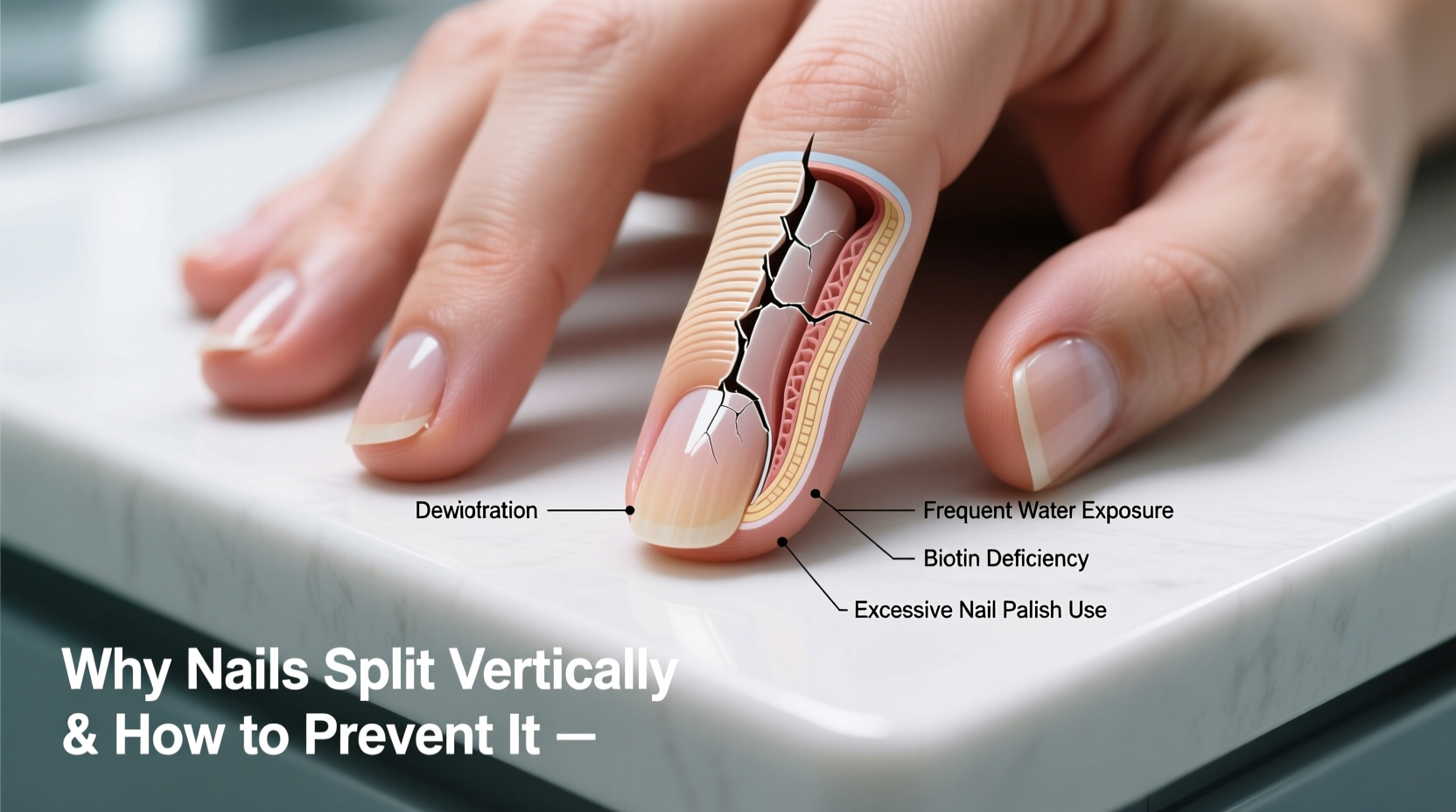
Vertical splitting doesn’t happen randomly. It’s usually the result of cumulative stress on the nail matrix and plate. Several interrelated factors contribute to this condition:
- Dryness and Dehydration: Frequent handwashing, exposure to soaps, detergents, and low-humidity environments strip natural oils from nails, making them brittle.
- Mechanical Trauma: Using nails as tools (e.g., opening cans, typing aggressively, picking at surfaces) creates micro-tears that develop into splits.
- Nail Care Practices: Over-filing, using harsh acetone-based removers, or removing gel polish incorrectly damages the nail surface.
- Nutritional Deficiencies: Lack of biotin, iron, zinc, or essential fatty acids impairs keratin production and nail integrity.
- Medical Conditions: Thyroid disorders, psoriasis, lichen planus, and fungal infections can manifest through nail changes.
- Aging: As we age, circulation to the nail bed decreases, and cell turnover slows, leading to thinner, drier nails.
The Role of Hydration in Nail Strength
Just like skin, nails require moisture to remain flexible and resistant to breakage. When dehydrated, the keratin fibers lose elasticity and begin to delaminate—separating in layers—which appears as vertical ridges or splits.
External hydration is critical. Constant exposure to water followed by rapid drying (like washing dishes or frequent hand sanitizer use) causes nails to swell and contract repeatedly. This expansion and contraction weaken the nail structure over time. Similarly, prolonged immersion in water softens the nail, increasing vulnerability to snagging and splitting.
Internal hydration matters too. Drinking enough water supports overall tissue health, including the nail matrix where new cells form. Chronic mild dehydration can impair nutrient delivery to growing nails.
“Nails are a mirror of internal health. Persistent splitting despite good care should prompt evaluation for systemic conditions.” — Dr. Lena Torres, Dermatologist & Nail Health Specialist
Simple Daily Habits That Prevent Nail Splitting
Prevention starts with small, sustainable changes. You don’t need specialized products or salon visits—just consistency and awareness.
1. Wear Gloves for Wet Work
Whether you're washing dishes, cleaning bathrooms, or gardening, wear cotton-lined rubber gloves. They protect against both water exposure and chemical irritants. Replace gloves if they develop holes—damp cotton lining defeats the purpose.
2. Moisturize Nails and Cuticles Regularly
Apply a nourishing hand cream or cuticle oil (containing jojoba, almond, or argan oil) at least twice daily—especially after handwashing. Massage it into the nail bed and surrounding skin to boost circulation and seal in moisture.
3. Limit Acetone Use
Acetone-based nail polish removers are effective but extremely drying. Switch to acetone-free formulas for regular removal. Reserve acetone only for stubborn gels or glitter polishes—and always follow with oil application.
4. File Gently and Correctly
Use a glass or fine-grit file (180+ grit). File in one direction only—never saw back and forth—as this causes micro-fractures. Shape nails in a rounded or squoval form to reduce stress points at the corners.
5. Keep Nails Shorter During High-Risk Periods
If you're frequently doing manual tasks, traveling, or exposed to dry climates, keep nails slightly shorter. Less length means less leverage for snags and splits.
Do’s and Don’ts for Healthy Nails
| Do’s | Don’ts |
|---|---|
| Use gentle, fragrance-free soaps | Use hot water excessively |
| Push back cuticles instead of cutting | Cut cuticles aggressively |
| Take breaks between gel manicures (4–6 weeks) | Get gel fills every 2 weeks without recovery time |
| Eat protein-rich foods and healthy fats | Skip meals or rely on processed snacks |
| Use a base coat with strengthening ingredients | Apply dark polish directly to bare nails (can stain and weaken) |
When Nutrition Plays a Key Role
Your diet directly influences nail strength. Keratin synthesis depends on adequate intake of specific nutrients:
- Biotin (Vitamin B7): Supports keratin infrastructure. Found in eggs, nuts, sweet potatoes, and salmon. Some studies show biotin supplementation improves nail thickness in deficient individuals.
- Iron: Iron deficiency anemia often presents with spoon-shaped or brittle nails. Include leafy greens, lentils, and lean meats; pair with vitamin C for better absorption.
- Zinc: Essential for cell growth and repair. Oysters, pumpkin seeds, and chickpeas are excellent sources.
- Omega-3 Fatty Acids: Reduce inflammation and support scalp and nail hydration. Found in flaxseeds, chia seeds, and fatty fish.
- Protein: Nails are mostly protein. Inadequate intake leads to thin, slow-growing nails.
While supplements are popular, whole-food nutrition is more effective and safer. Excess biotin can interfere with lab tests, including cardiac markers, so consult a doctor before starting any regimen.
Mini Case Study: Recovering from Chronic Nail Splitting
Sarah, a 42-year-old nurse, struggled with severe vertical splitting for years. Her job required constant handwashing—up to 30 times per shift—and she regularly used alcohol-based sanitizers. Despite using nail hardeners, her nails continued to peel and split down to the quick.
After consulting a dermatologist, she made three key changes: wearing nitrile gloves under her work gloves during procedures, applying thick urea-based cream nightly, and taking a balanced multivitamin with iron and zinc. Within eight weeks, her nails stopped splitting. After four months, they grew longer and smoother than they had in a decade.
Her case highlights how occupational exposure compounds nail damage—and how targeted protection and internal support can reverse it.
Step-by-Step Guide to Repairing and Protecting Splitting Nails
Follow this six-week timeline to rebuild nail resilience:
- Week 1: Assess and Adjust
Stop using acetone. Switch to a moisturizing hand soap. Buy cotton-lined gloves for chores. Begin applying cuticle oil morning and night. - Week 2: Trim and Shape Safely
Cut nails short and file into a rounded shape. Avoid pointed tips. Use a glass file gently in one direction. - Week 3: Boost Nutrition
Add two servings of protein and one source of omega-3s daily. Consider a blood test for iron and vitamin D if fatigue or hair loss is present. - Week 4: Introduce a Strengthening Base Coat
Use a formaldehyde-free, polymer-based base coat. Look for ingredients like calcium, hydrolyzed wheat protein, or panthenol. - Week 5: Eliminate Mechanical Stress
Stop using nails as tools. Use fingertips to text or open packages. Keep a nail file handy to smooth rough edges immediately. - Week 6: Evaluate Progress
Check for reduced ridges, fewer splits, and improved flexibility. If no improvement, see a dermatologist to rule out psoriasis or thyroid issues.
Frequently Asked Questions
Can vertical nail splits heal completely?
Yes, but the damaged portion must grow out. Since fingernails grow about 3 mm per month, full recovery can take 6–9 months. Focus on protecting the new growth at the base to prevent recurrence.
Is it safe to use nail glue or tea bags for splits?
Temporary fixes like nail glue or silk wraps can stabilize a deep split and prevent further tearing. However, they should be applied sparingly and removed gently. Long-term reliance can trap moisture and increase infection risk.
Should I stop getting manicures if my nails split?
You don’t need to quit manicures entirely, but choose salons carefully. Avoid those that over-buff or cut cuticles. Opt for breathable polishes and skip gels or acrylics until your nails strengthen. Ask technicians to use non-acetone remover.
Conclusion: Small Changes, Lasting Results
Vertical nail splitting is rarely dangerous, but it’s a clear signal that your nails need attention. The solution isn’t in miracle serums or costly treatments—it lies in consistent, mindful habits. By protecting your nails from dehydration, trauma, and poor nutrition, you create the conditions for strong, healthy growth.
Start today: put on gloves before cleaning, apply oil after your next handwash, and check your diet for protein and healthy fats. These small actions compound over time, turning fragile nails into resilient ones. Your hands tell a story—make it one of care, not neglect.




 浙公网安备
33010002000092号
浙公网安备
33010002000092号 浙B2-20120091-4
Comments
No comments yet. Why don't you start the discussion?