
Every year, millions of households around the world spend time and care decorating their Christmas trees—selecting the perfect ornaments, weaving in lights with precision, and finally placing the crowning jewel: the tree topper. Yet, within just a few days, many notice a disheartening sight—the once-centerpiece angel, star, or bow has begun tilting sideways, threatening to topple entirely. This common frustration isn’t random; it’s often the result of poor weight distribution, structural instability, and environmental factors that accumulate over time. Understanding the mechanics behind this shift is key to maintaining a balanced, beautiful display throughout the holiday season.
The Physics Behind the Tilt: Why Tree Toppers Shift
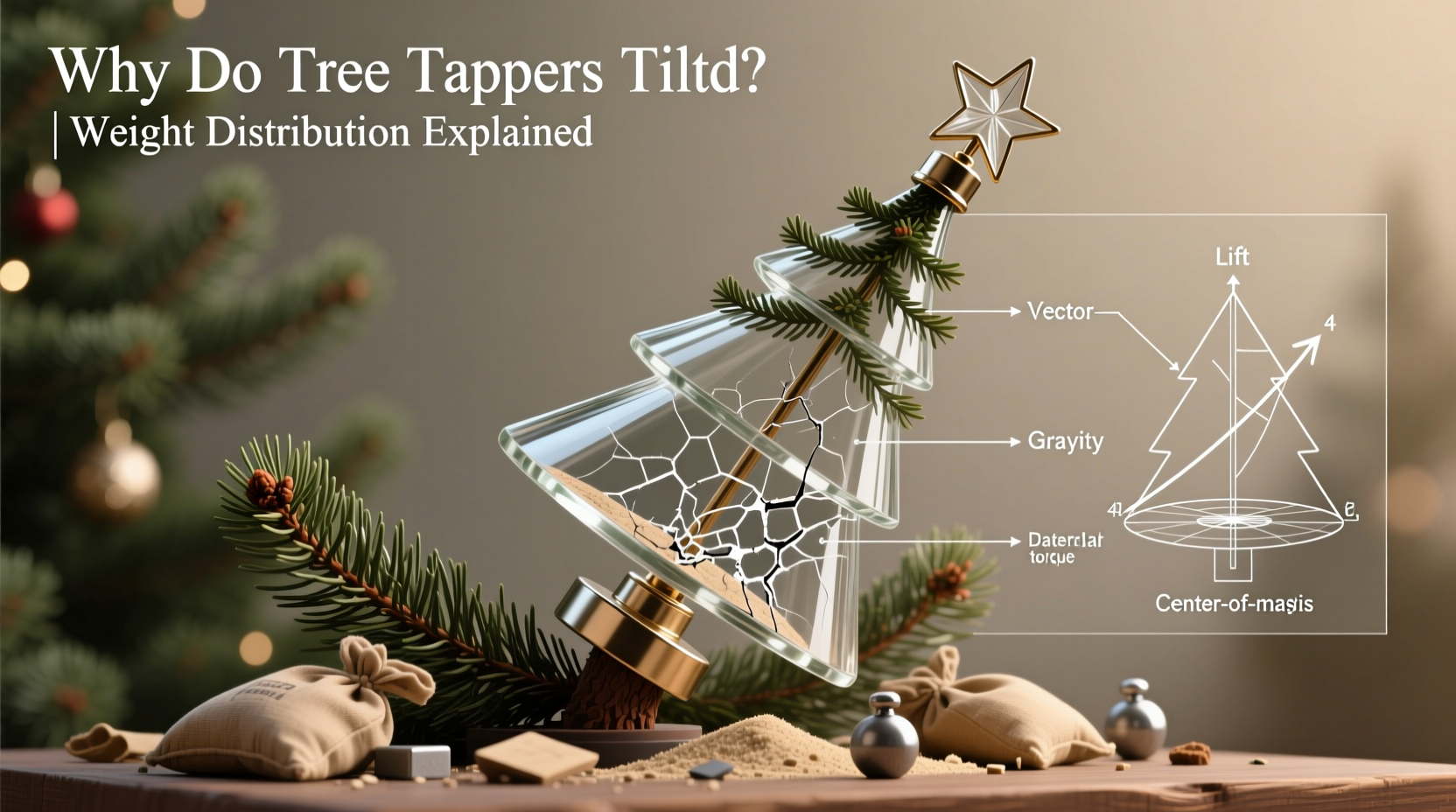
Tree toppers don’t simply “fall” overnight—they gradually lose stability due to a combination of physical forces. The primary culprit is uneven weight distribution. When a topper is heavier on one side—whether due to asymmetrical design, added embellishments, or internal wiring—it creates a torque effect on the topmost branch or support rod. Over time, even slight imbalances cause the structure beneath to bend or compress, especially if the tree is artificial with flexible tips or real with drying limbs.
Additionally, temperature fluctuations and air currents play a role. Indoor heating systems dry out real trees, making branches brittle and less supportive. Artificial trees may seem sturdier, but their metal or plastic stems can flex under prolonged pressure. Even vibrations from foot traffic or nearby doors can nudge a precariously balanced topper off-center.
“Weight distribution is everything when it comes to tree toppers. A perfectly centered topper can still lean if the upper structure isn’t reinforced.” — Daniel Reeves, Holiday Display Engineer and Lighting Designer
How Tree Type Affects Stability
The kind of tree you use significantly influences how well your topper stays upright. Real fir, spruce, and pine trees have natural tapering at the top, which provides a stable base—if handled correctly. However, as they dry out, the topmost branches lose rigidity and moisture, reducing their load-bearing capacity. Artificial trees, while consistent in shape, often feature hollow or thin central poles that aren’t designed to support heavy ornaments without additional bracing.
Many modern pre-lit artificial trees come with built-in light wires running through the center pole. While convenient, these internal components can weaken structural integrity if not accounted for during assembly. If the pole bends slightly during setup—or if the top section isn’t fully locked into place—the entire apex becomes unstable, making it easier for a topper to drift sideways.
Weight Distribution: The Hidden Culprit
Even seemingly symmetrical toppers can have hidden imbalances. Consider a traditional angel with outstretched arms—one wing might contain a heavier wire frame, or the fabric on one side could absorb more dust, subtly altering its center of gravity. LED-lit stars often house batteries or circuitry concentrated in one quadrant, creating an uneven mass.
When placed on a flexible stem, this imbalance applies constant rotational force. Think of it like a seesaw: the heavier side pulls down, causing the lighter side to rise. Over three days, micro-shifts accumulate until the topper visibly tilts. In some cases, the supporting branch or rod slowly deforms under stress, accelerating the process.
Another overlooked factor is ornament placement near the top. Hanging heavy ornaments just below the topper increases downward pressure and can destabilize the apex. Similarly, tangled lights or garlands draped over the upper branches add lateral pull, nudging the topper off-axis.
Common Weight Imbalance Scenarios
| Scenario | Effect on Stability | Solution |
|---|---|---|
| Asymmetrical topper design (e.g., angled wings) | Creates torque on support structure | Add counterweight or reposition internally |
| Battery pack inside one side of a star | Shifts center of gravity | Relocate battery to center or use external power |
| Heavy tinsel or garland near the top | Increases lateral pull | Distribute weight lower on the tree |
| Drying real tree branches | Loses structural integrity | Hydrate tree daily; avoid heavy toppers |
| Loose pole connection in artificial tree | Allows rotation at apex | Tighten joints; use adhesive reinforcement |
Step-by-Step Guide to Achieving Perfect Balance
Preventing a tilting topper requires proactive planning and precise execution. Follow this timeline to ensure your tree topper remains centered for weeks.
- Day 1 – Assess the Tree Structure: Inspect the top 12 inches of your tree. For artificial models, ensure all sections are tightly connected. Use a small level to verify the top is vertically aligned. For real trees, choose a strong central leader branch and trim any weak or split tips.
- Day 1 – Test the Topper’s Balance: Hold the topper in your hand and observe if one side dips. Place it on a flat surface; if it rocks, identify the heavy side. Mark it lightly with tape for reference.
- Day 2 – Modify for Symmetry: If the topper is uneven, redistribute internal weight. For example, move battery packs toward the center or add lightweight foam padding to the lighter side. Avoid external attachments that alter appearance.
- Day 2 – Reinforce the Support: Insert a wooden dowel or sturdy metal rod (¼ inch diameter) into the center of the tree, extending 6–8 inches above the highest branch. Secure it with zip ties or hot glue at the base. This creates a rigid anchor point.
- Day 3 – Install with Precision: Slide the topper onto the reinforcement rod. Use a small spirit level or smartphone app to confirm it’s perfectly level. Secure it with clear floral wire or museum putty at contact points—never rely on friction alone.
- Ongoing – Monitor and Adjust: Check the topper every 48 hours, especially in warm rooms. Gently re-level if needed and ensure no decorations are pulling on adjacent branches.
Real-World Example: The Leaning Star of Maple Street
In suburban Chicago, the Thompson family installed a 7-foot pre-lit artificial tree each December. Their heirloom LED star, passed down from grandparents, weighed 1.2 pounds with internal wiring and a small battery compartment on the left arm. Each year, by December 26, the star would tilt dramatically to the right, despite careful placement.
After consulting a local holiday decorator, they discovered the issue: the tree’s central pole had a slight manufacturing bend, and the star’s battery created an imbalance of nearly 3 ounces on one side. The solution? They inserted a 10-inch hardwood dowel into the pole, secured it with epoxy at the base, and relocated the battery to a small pouch attached to the back center using conductive thread. The star remained perfectly upright for 28 days—longer than ever before.
This case highlights how minor flaws, when combined, create major instability. Addressing both structural support and weight symmetry resolved the problem permanently.
Expert Tips for Long-Term Stability
- Choose lightweight materials: Opt for toppers made of foam, fabric, or paper mache instead of glass or dense resin.
- Avoid over-decorating the top third: Keep heavy ornaments at least 12 inches below the apex to reduce strain.
- Use a central support rod: Even for light toppers, a hidden dowel adds insurance against warping or settling.
- Check room conditions: Keep trees away from vents, radiators, and direct sunlight to minimize drying and thermal expansion.
- Consider magnetic or clip-on alternatives: Some modern toppers use magnetic bases that distribute force evenly across a metal plate mounted atop the tree.
“The best tree toppers aren’t just beautiful—they’re engineered. Balance isn’t luck; it’s physics applied with care.” — Lila Nguyen, Seasonal Display Consultant at Evergreen Studios
Quick Checklist: Preventing a Tilting Topper
Follow this actionable checklist before finalizing your tree setup:
- ✅ Inspect the top of the tree for loose connections or weak branches
- ✅ Test the topper for balance on a flat surface
- ✅ Reinforce the central stem with a rigid dowel or rod
- ✅ Distribute internal weight evenly (batteries, wiring, etc.)
- ✅ Install the topper using a level tool for precision
- ✅ Secure with invisible fasteners (floral wire, museum putty)
- ✅ Avoid hanging heavy items near the top 12 inches
- ✅ Recheck alignment every 2–3 days
Frequently Asked Questions
Can I fix a tilting topper without taking it down?
Yes, in most cases. Gently lift the topper and insert a small wedge of folded cardboard or craft foam on the high side to rebalance it. If it’s on a rod, rotate it slightly to find a more stable orientation. Then secure it with putty or wire.
Are some tree toppers inherently more stable than others?
Absolutely. Flat-based toppers (like wide stars or circular halos) distribute weight better than narrow-pointed ones. LED toppers with external power sources are more balanced than those with internal batteries. Look for models labeled “low-center-of-gravity” or “balanced design.”
Is it safe to use glue or tape on my tree topper?
It depends on the material. Museum putty is safe for most surfaces and leaves no residue. Hot glue can be used on non-heat-sensitive bases but avoid applying it directly to delicate fabrics or painted finishes. Always test adhesives on a small area first.
Conclusion: A Stable Topper, A Lasting Tradition
A crooked tree topper doesn’t just detract from aesthetics—it disrupts the harmony of your entire holiday display. But with a deeper understanding of weight distribution, structural support, and environmental factors, you can prevent this common issue before it starts. By reinforcing the tree’s apex, balancing the topper’s mass, and monitoring for subtle shifts, you ensure that your centerpiece remains proud and centered throughout the season.
The effort you invest in stability today pays off in lasting beauty and peace of mind. Whether you’re using a cherished family heirloom or a new designer piece, treat it with the engineering care it deserves. A perfectly balanced topper isn’t just decoration—it’s a symbol of thoughtfulness, tradition, and attention to detail.




 浙公网安备
33010002000092号
浙公网安备
33010002000092号 浙B2-20120091-4
Comments
No comments yet. Why don't you start the discussion?