
Graying hair is a universal sign of aging, yet for many, it arrives earlier than expected—sometimes in the 20s or 30s. While genetics play a dominant role, lifestyle, stress, and health conditions can accelerate the process. Understanding why hair turns gray isn't just about vanity; it's about recognizing what your body is signaling. This article breaks down the biological mechanisms behind hair pigmentation loss, explores key contributing factors, and offers practical, science-backed strategies to help maintain natural color longer.
The Science Behind Hair Color and Graying
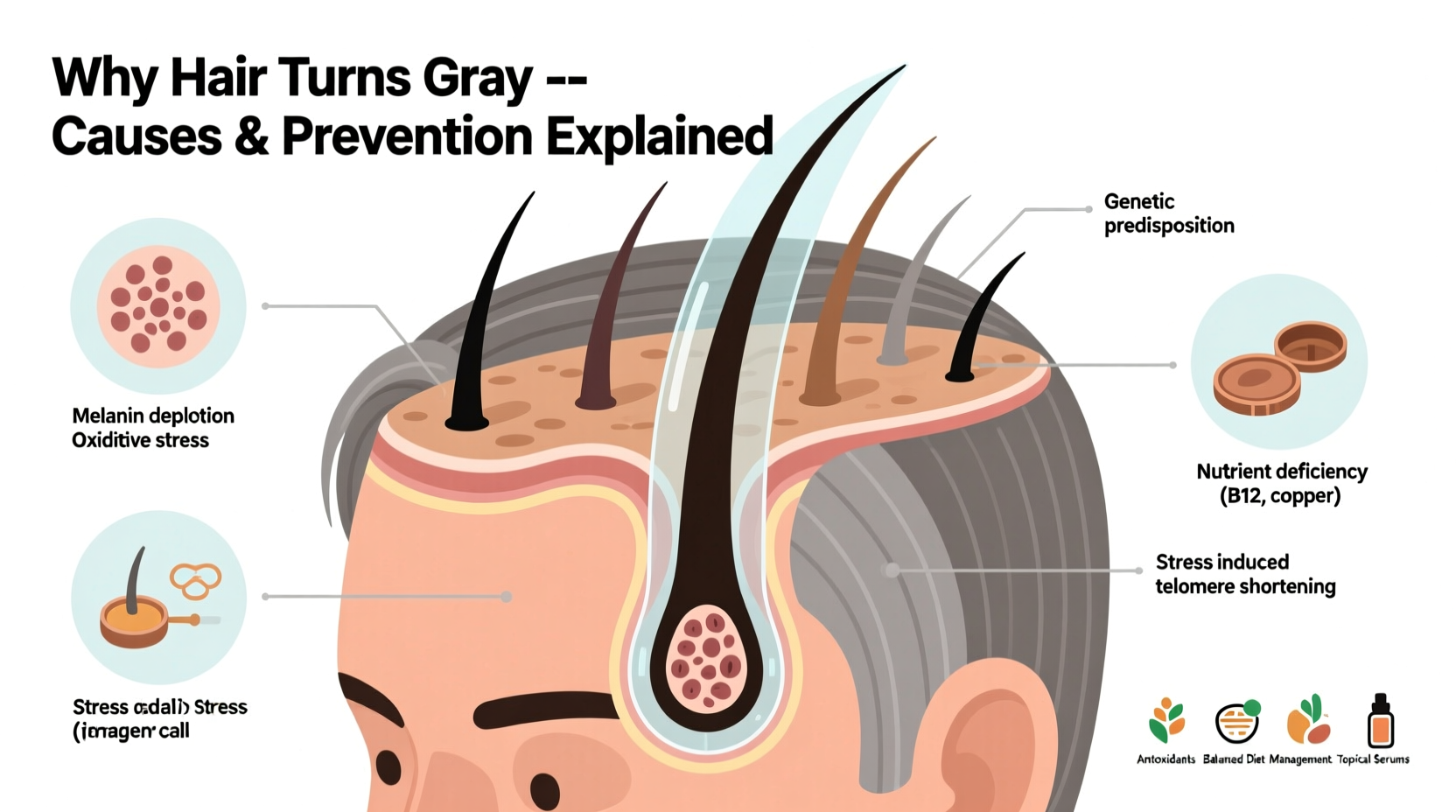
Hair gets its color from melanin, a pigment produced by specialized cells called melanocytes located in the hair follicle. There are two types of melanin: eumelanin (responsible for black and brown tones) and pheomelanin (which gives red and yellow hues). The combination and concentration of these determine your unique hair shade.
As we age, melanocyte activity declines. Fewer pigment-producing cells mean less melanin is deposited into each new hair strand as it grows. Over time, hair shafts emerge with reduced or no pigment, appearing translucent at first and eventually white or gray when viewed en masse.
This process typically begins in the late 30s for most people, but the timing varies widely. Caucasians often see gray hair earlier than those of Asian or African descent. By age 50, about half of the population has 50% gray hair—a phenomenon known as \"canities.\"
“Hair graying is not a disease but a reflection of complex interactions between genes, oxidative stress, and cellular aging.” — Dr. Robert M. Hoffman, Dermatology Researcher, Journal of Investigative Dermatology
Key Causes of Premature and Age-Related Gray Hair
While aging is inevitable, premature graying—defined as graying before age 20 in Caucasians, 25 in Africans, and 30 in Asians—can stem from multiple factors beyond time.
Genetics
Your DNA is the strongest predictor of when you’ll go gray. If your parents or grandparents developed gray hair early, you’re more likely to follow suit. Specific genes like IRF4 and BCL2 have been linked to melanin regulation and hair aging.
Oxidative Stress
Free radicals accumulate in the body due to environmental exposure, poor diet, and metabolic processes. When antioxidant defenses weaken, oxidative stress damages melanocytes. Hydrogen peroxide, naturally produced in hair follicles, builds up over time and can bleach hair from within if not neutralized by enzymes like catalase.
Nutritional Deficiencies
Certain vitamins and minerals are essential for melanin production and follicle health. Deficiencies in vitamin B12, vitamin D, copper, iron, and zinc are strongly associated with premature graying.
- Vitamin B12: Critical for red blood cell formation and nerve function; deficiency common in vegans and older adults.
- Copper: Required for tyrosinase, an enzyme involved in melanin synthesis.
- Zinc: Supports immune function and cell regeneration; low levels may impair pigment production.
Medical Conditions
Autoimmune disorders such as vitiligo and alopecia areata can destroy melanocytes. Thyroid imbalances, especially hypothyroidism, and chronic illnesses like diabetes may also contribute to early graying.
Lifestyle Factors
Smoking, chronic stress, and excessive UV exposure increase oxidative damage and inflammation, accelerating hair aging. A 2020 study found smokers were 2.5 times more likely to develop gray hair before age 30.
Can You Prevent or Reverse Gray Hair?
Once a hair follicle stops producing melanin, the resulting hair strand will remain colorless. However, emerging research suggests that certain interventions may slow the process—or even restore pigment in some cases—especially when graying is driven by reversible factors.
Diet and Supplementation
A nutrient-rich diet supports healthy hair pigmentation. Consider incorporating:
| Nutrient | Role in Hair Health | Best Food Sources |
|---|---|---|
| Vitamin B12 | Supports melanocyte function | Meat, eggs, dairy, fortified cereals |
| Copper | Activates melanin-producing enzymes | Shellfish, seeds, lentils, cashews |
| Zinc | Promotes cell turnover in follicles | Pumpkin seeds, beef, chickpeas |
| Vitamin D | Regulates hair cycle and immune response | Fatty fish, sunlight, fortified milk |
If deficiencies are confirmed via blood tests, supplementation under medical supervision may help. However, avoid self-prescribing high-dose supplements without testing, as excess copper or zinc can be toxic.
Stress Management
Chronic stress elevates cortisol and norepinephrine, which can deplete melanocyte stem cells in hair follicles. Techniques such as mindfulness meditation, yoga, and regular sleep may mitigate this effect.
“A growing body of evidence links psychological stress to accelerated hair graying. Managing stress isn’t just good for mental health—it may preserve your natural hair color.” — Dr. Catherine Roberts, Neurodermatology Specialist, Harvard Medical School
Step-by-Step Guide to Delaying Gray Hair
Follow this actionable plan to support long-term hair pigmentation:
- Get tested: Request blood work to check levels of B12, vitamin D, ferritin (iron), copper, and zinc.
- Adjust your diet: Prioritize whole foods rich in antioxidants and pigmentation-supporting nutrients.
- Quit smoking: Eliminate tobacco use to reduce oxidative damage.
- Manage stress: Practice daily relaxation techniques and ensure 7–8 hours of quality sleep.
- Protect your scalp: Wear hats outdoors to minimize UV exposure.
- Limit chemical treatments: Reduce bleaching, perming, or dyeing, which can stress follicles.
- Consult a dermatologist: Rule out underlying conditions like thyroid disease or autoimmune disorders.
Real-Life Example: Reversal Through Lifestyle Change
Mark T., a 38-year-old software engineer, noticed significant graying at 32. After consulting a dermatologist, he discovered low vitamin B12 and elevated stress markers. He began taking B12 supplements, adopted a Mediterranean-style diet rich in leafy greens and fish, and started a daily walking routine. Within 18 months, he reported that new growth at his temples showed increased dark pigment. While not fully reversed, the rate of new gray hairs slowed dramatically. His case illustrates how addressing root causes can influence the graying trajectory—even if genetics set the baseline.
Common Myths About Gray Hair
Misinformation abounds when it comes to graying hair. Here’s what doesn’t hold up under scientific scrutiny:
- Plucking one gray hair causes seven more: False. Plucking may damage the follicle but won’t multiply gray hairs.
- Gray hair is thicker or coarser: It may feel that way due to changes in texture during aging, but the hair itself isn’t inherently different.
- Diet alone can reverse gray hair: While nutrition matters, reversal is unlikely once melanocyte stem cells are depleted.
FAQ
Can gray hair turn back to its original color naturally?
In rare cases, yes—especially when graying is linked to temporary factors like severe stress or nutritional deficiency. Once the trigger is removed, pigment may return. However, this is not common and usually occurs only in early stages of graying.
Does pulling out gray hairs cause more to grow?
No. Each hair grows independently. Pulling may traumatize the follicle and lead to infection or scarring, but it won’t increase the number of gray hairs.
Are there any effective topical treatments to prevent graying?
Currently, no FDA-approved topical products reverse or prevent graying. Some experimental serums containing catalase or pseudocatalase aim to break down hydrogen peroxide in follicles, but clinical evidence is limited.
Final Thoughts: Embracing and Managing the Process
While complete prevention of gray hair may not be possible, understanding its causes empowers you to make informed choices. Whether through better nutrition, stress reduction, or medical evaluation, you can influence the timeline and potentially delay the onset of noticeable graying. For many, embracing gray hair becomes a statement of confidence and authenticity. But for those who wish to maintain their natural color longer, a proactive, holistic approach offers the best chance of success.




 浙公网安备
33010002000092号
浙公网安备
33010002000092号 浙B2-20120091-4
Comments
No comments yet. Why don't you start the discussion?