
Cats are enigmatic creatures, often engaging in behaviors that leave their owners puzzled. One such behavior is staring intently at blank walls for minutes on end. While occasional odd conduct can be normal feline curiosity, persistent wall-staring may indicate underlying issues—especially those related to vision, neurological function, or mental health. Understanding the possible causes behind this behavior is essential for ensuring your cat’s well-being. This article explores the reasons cats fixate on walls, evaluates whether vision problems could be involved, and outlines when veterinary intervention is necessary.
Understanding Normal vs. Abnormal Feline Behavior
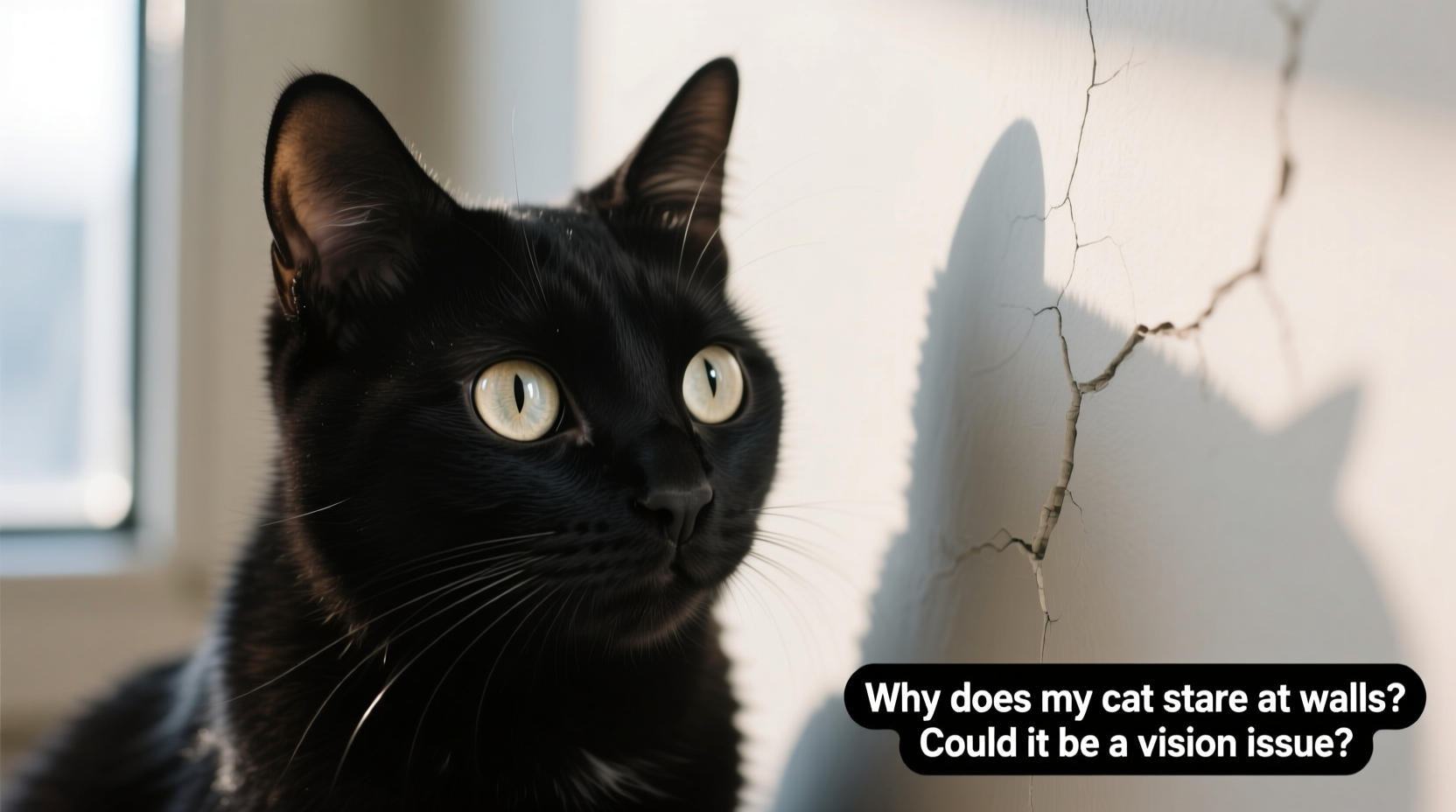
Cats rely heavily on their senses to interpret their environment. Their acute hearing allows them to detect high-frequency sounds beyond human perception, while their vision is optimized for low-light hunting scenarios. It's not uncommon for cats to pause and focus on seemingly empty spaces—perhaps tracking dust motes floating in sunlight, listening to subtle noises inside walls (like rodents or plumbing), or reacting to shadows cast by moving objects.
In many cases, brief episodes of wall-gazing fall within the spectrum of normal cat behavior. However, concern should arise when the staring becomes frequent, prolonged, or accompanied by other abnormal signs such as disorientation, lack of response to stimuli, or changes in appetite and grooming habits.
Potential Vision Problems That May Cause Wall Staring
Impaired vision can significantly alter how a cat interacts with its surroundings. When eyesight deteriorates, cats may appear confused, hesitant, or overly focused on surfaces they previously ignored. Several ocular conditions can contribute to unusual visual processing and lead to wall fixation.
Common Vision-Related Conditions
- Glaucoma: Increased pressure within the eye damages the optic nerve, leading to pain, bulging eyes, and eventual blindness. Cats may squint or avoid bright lights and show confusion in familiar environments.
- Cataracts: Clouding of the lens impairs clarity of vision. While more common in older cats, cataracts can develop secondary to diabetes or inflammation.
- Hypertensive Retinopathy: High blood pressure—a frequent complication of kidney disease or hyperthyroidism in cats—can cause sudden retinal detachment, resulting in acute blindness. Affected cats may suddenly bump into furniture or stare vacantly.
- Progressive Retinal Atrophy (PRA): A genetic condition causing gradual degeneration of photoreceptor cells, ultimately leading to night blindness and total vision loss over time.
“Cats are masters at compensating for sensory deficits. By the time owners notice behavioral changes like wall-staring, vision loss may already be advanced.” — Dr. Lena Torres, Veterinary Ophthalmologist
If your cat exhibits any of the following symptoms alongside wall fixation, consider a veterinary ophthalmology evaluation:
- Dilated or uneven pupils
- Cloudy or hazy appearance of the eyes
- Bumping into walls or furniture
- Lack of reaction to fast-moving objects (e.g., a hand waved near the face)
- Reluctance to jump onto surfaces they once navigated easily
Neurological and Cognitive Causes
Not all wall-staring originates from vision impairment. Neurological disorders can also manifest through repetitive or vacant behaviors. Seizures, brain tumors, and cognitive dysfunction syndrome (CDS)—similar to dementia in humans—are known contributors.
Focal Seizures
Also called partial seizures, these affect only a specific region of the brain. During an episode, a cat may freeze, twitch facial muscles, drool, or stare fixedly at one point without responding. These episodes can last seconds to minutes and may go unnoticed if mild. Post-seizure, cats might seem disoriented or tired.
Cognitive Dysfunction Syndrome
More prevalent in senior cats (typically over 10 years old), CDS involves age-related decline in brain function. Symptoms include:
- Confusion in familiar spaces
- Vocalizing at night
- Reduced social interaction
- Repetitive actions like pacing or staring
A 2021 study published in *Veterinary Neurology and Neurosurgery* found that nearly 30% of cats aged 11–14 showed at least one sign of cognitive impairment, rising to over 50% in cats 15 and older.
Environmental and Behavioral Explanations
Before jumping to medical conclusions, assess environmental factors that could explain your cat’s fixation. Some non-pathological reasons include:
- Movement detection: Insects, drafts moving curtains, or light reflections can capture a cat’s attention.
- Auditory stimulation: Mice in walls, electrical buzzing, or distant sounds may prompt alert stillness.
- Play anticipation: If toys are stored near a wall or playtime usually occurs there, your cat might be mentally rehearsing.
- Stress or anxiety: Changes in household dynamics, new pets, or loud noises can trigger displacement behaviors like obsessive staring.
| Behavior | Possible Cause | Action Step |
|---|---|---|
| Occasional short stares (under 30 seconds) | Normal curiosity or auditory cue | Monitor; likely no action needed |
| Prolonged staring (over 1 minute), unresponsiveness | Potential seizure or vision loss | Schedule vet visit, record video if possible |
| Staring with head tilt or circling | Neurological issue (e.g., tumor, infection) | Seek immediate veterinary assessment |
| Staring at night with yowling | Cognitive dysfunction or hypertension | Check blood pressure, evaluate for CDS |
| Staring after sudden noise | Reflexive alertness | Observe for recurrence |
Mini Case Study: Bella, the 13-Year-Old Calico
Bella had always been a quiet but affectionate indoor cat. Her owner, Maria, first noticed her staring at the living room wall for several minutes each evening. Initially dismissing it as odd but harmless, Maria became concerned when Bella began missing her litter box and seemed startled when approached from the side.
After recording a 90-second episode where Bella remained motionless, pupils fully dilated, and unresponsive to voice, Maria took her to the vet. Bloodwork revealed severe hypertension linked to chronic kidney disease. An ophthalmic exam confirmed bilateral retinal detachment—Bella was essentially blind.
With medication to control blood pressure and environmental modifications (keeping furniture consistent, using scent cues), Bella adapted well. The wall-staring ceased, replaced by increased tactile exploration and reliance on sound. Early intervention prevented further complications.
Step-by-Step Guide: What to Do If Your Cat Stares at Walls
- Observe and Document: Note frequency, duration, time of day, and accompanying behaviors (tremors, vocalizations, drooling).
- Record a Video: Capture an episode to show your veterinarian—this helps differentiate between seizures, hallucinations, and normal behavior.
- Check the Environment: Look for drafts, insects, flickering lights, or hidden noises that might attract attention.
- Schedule a Veterinary Exam: Include a full physical, blood panel, blood pressure check, and thorough eye examination.
- Follow Up as Needed: Depending on findings, your vet may recommend neuroimaging (MRI/CT), referral to a specialist, or treatment for underlying conditions.
Checklist: Signs That Warrant Immediate Veterinary Attention
- ✓ Staring lasts longer than one minute
- ✓ No response to touch or voice during episodes
- ✓ Accompanied by muscle twitching, drooling, or falling
- ✓ Sudden onset in older cats (over 10 years)
- ✓ Recent changes in mobility, appetite, or litter box use
- ✓ Unequal or persistently dilated pupils
- ✓ Bumping into walls or hesitation on stairs
FAQ
Can cats hallucinate?
Yes, especially during or after focal seizures. Cats may appear to chase invisible prey or react to stimuli that aren’t present. This can resemble wall-staring if the perceived “target” is on a surface. Metabolic imbalances or toxins can also induce hallucinatory states.
Is wall-staring always a sign of illness?
No. Brief moments of intense focus are part of natural feline behavior. The key is consistency and context. If your cat returns to normal immediately and shows no other symptoms, it’s likely benign. Persistent or worsening episodes require evaluation.
How can I test my cat’s vision at home?
You can perform simple tests: toss a cotton ball in front of your cat to see if they track it visually, or clap your hands nearby to observe if they blink (visual threat reflex). Also, watch their navigation in dim versus bright light. Any noticeable decline should prompt a vet visit.
Conclusion: Prioritize Observation and Proactive Care
Your cat’s tendency to stare at walls isn't inherently alarming, but it shouldn't be dismissed outright—especially when patterns emerge or other symptoms accompany it. Vision issues, neurological conditions, and systemic diseases like hypertension or kidney failure can all present subtly before escalating. The strength of early detection lies in attentive ownership. By monitoring behavior closely, documenting anomalies, and seeking timely veterinary input, you empower yourself to protect your cat’s health and quality of life.




 浙公网安备
33010002000092号
浙公网安备
33010002000092号 浙B2-20120091-4
Comments
No comments yet. Why don't you start the discussion?