
Kombucha has earned its place in kitchens around the world thanks to its tangy flavor, probiotic benefits, and satisfying fizz. But even experienced brewers occasionally pull a jar from their countertop only to be met with an overpowering vinegar punch. While a hint of acidity is expected—and even desirable—excessive sourness can make kombucha unpleasant to drink. The most common culprit? Fermentation timing gone awry.
Understanding how fermentation works and what influences its pace is essential for achieving a well-balanced brew. Temperature, sugar levels, SCOBY health, and brewing duration all play critical roles. When any of these factors are mismanaged, especially time, the result is often an over-fermented, overly acidic beverage that masks the subtle sweetness and complexity kombucha should offer.
This guide breaks down why your kombucha might taste like vinegar, identifies the top fermentation timing mistakes home brewers make, and provides actionable strategies to keep your batches flavorful and consistent.
The Science Behind Kombucha Sourness
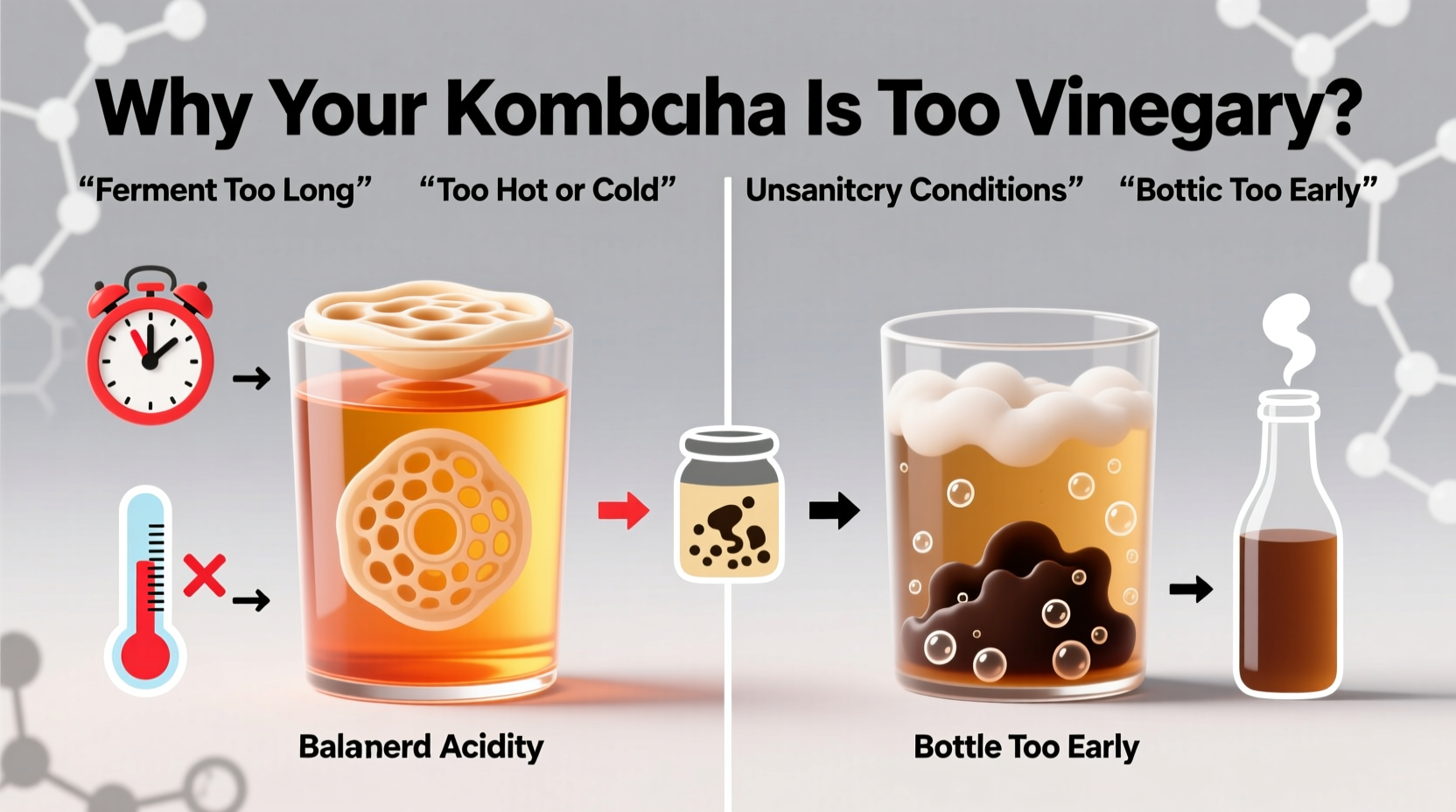
Kombucha’s signature tartness comes from organic acids produced during fermentation. As the symbiotic culture of bacteria and yeast (SCOBY) consumes sugar, it generates acetic acid, gluconic acid, lactic acid, and other compounds. Acetic acid—the same compound found in household vinegar—is primarily responsible for the sharp, sour bite.
In a healthy fermentation cycle, acid production increases gradually. Early on, yeast converts sucrose into alcohol. Then, acetic acid bacteria convert that alcohol into acetic acid. This process accelerates over time, meaning the longer kombucha ferments, the more acidic it becomes.
A well-timed first fermentation typically lasts 7 to 14 days. Within this window, sugars are mostly consumed, carbonation begins to build, and acid levels reach a pleasant balance. Beyond two weeks, especially in warm environments, acid accumulation can dominate, overwhelming other flavors.
Top 5 Fermentation Timing Mistakes That Lead to Vinegar-Like Kombucha
1. Letting It Ferment Too Long
This is the most frequent cause of over-sour kombucha. Many beginners assume longer fermentation equals better quality or more probiotics. In reality, extended fermentation increases acidity without proportional benefit. After about 14 days, most of the sugar is already consumed, and further fermentation mainly produces excess acetic acid.
Leaving kombucha to ferment for three weeks or more—especially at room temperatures above 78°F (26°C)—can turn it into functional vinegar rather than a refreshing drink.
2. Ignoring Ambient Temperature
Fermentation speed is highly temperature-dependent. At 68°F (20°C), a batch may take 14–21 days to reach optimal acidity. But at 85°F (29°C), the same process can finish in just 6–8 days. Many brewers follow a fixed schedule without adjusting for seasonal changes, leading to unintentional over-fermentation in summer months.
Warmer environments accelerate microbial activity, shortening the ideal fermentation window. Without close monitoring, high heat can push kombucha past its peak flavor in half the expected time.
3. Skipping the Taste Test
Relying solely on calendar dates instead of sensory evaluation is a critical oversight. Every batch behaves differently based on SCOBY strength, tea type, sugar concentration, and kitchen conditions. A rigid “I always ferment for 10 days” approach ignores real-time feedback.
Tasting allows you to pinpoint the sweet spot where sweetness and tartness are in harmony. If you wait until day 10 to taste and it's already sharp, you've missed the ideal harvest moment.
4. Using an Overly Active or Mature SCOBY
An older or very healthy SCOBY contains a dense colony of acetic acid bacteria, which can ferment aggressively. While a strong SCOBY is generally a good sign, it may shorten the fermentation timeline significantly. New brewers often don’t account for this variability and end up with over-acidified batches.
Likewise, using multiple SCOBYs in one jar multiplies bacterial activity, speeding up acid production and increasing the risk of over-fermentation.
5. Delaying the Second Fermentation or Refrigeration
Some brewers finish primary fermentation but leave the kombucha at room temperature while preparing for bottling. Even without the SCOBY, residual yeast and bacteria remain active. If left unrefrigerated for days, post-fermentation acid development continues unchecked.
Once you remove the SCOBY and transfer kombucha to bottles—or if you're skipping second fermentation—refrigeration halts further acidification. Delaying cold storage by even 24–48 hours can noticeably increase sourness.
“Time is the invisible ingredient in kombucha. Too little, and it’s cloyingly sweet; too much, and it becomes a lab experiment in acidity.” — Dr. Lena Torres, Fermentation Scientist & Author of *The Microbiology of Home Brews*
How to Prevent Over-Fermentation: A Step-by-Step Guide
Consistently great kombucha starts with a structured yet flexible approach. Follow this timeline to avoid vinegar-like results:
- Day 1: Brew sweet tea (typically 1 cup sugar per gallon of water), cool, add starter tea (10–20% of total volume), and introduce the SCOBY.
- Days 3–5: Observe early signs of fermentation—bubbles, slight cloudiness, thin new SCOBY layer forming. No need to taste yet.
- Day 6: Begin daily tasting. Use a clean straw to siphon a small sample from beneath the surface. Evaluate sweetness vs. sourness.
- Days 7–10: Target range for most batches. Ideal flavor is slightly sweet with mild tartness. If it’s already sharp, stop fermentation now.
- When ready: Remove SCOBY and reserve 1–2 cups of liquid as starter tea for next batch. Bottle remaining kombucha immediately.
- Refrigerate within 24 hours: Cold temperatures halt microbial activity and preserve flavor balance.
Do’s and Don’ts of Fermentation Timing
| Do | Don’t |
|---|---|
| Taste daily starting on day 6–7 | Assume all batches take the same number of days |
| Maintain a stable brewing temperature (75–78°F / 24–26°C) | Brew near heaters, ovens, or direct sunlight |
| Use a thermometer to monitor room temperature | Ignore seasonal temperature shifts |
| Refrigerate promptly after removing the SCOBY | Leave finished kombucha on the counter for days before bottling |
| Keep a brewing journal with notes on taste, time, and conditions | Rely solely on memory or generic timelines |
What to Do If Your Kombucha Is Already Too Sour
Even seasoned brewers produce an over-fermented batch now and then. Don’t toss it—repurpose it.
- Mix it with fresh juice: Blend equal parts sour kombucha and fruit juice (like apple, pineapple, or peach) for a balanced drink.
- Use it in salad dressings: Its acidity makes it ideal for vinaigrettes. Combine with olive oil, Dijon mustard, and herbs.
- Dilute for cleaning: Raw, unpasteurized kombucha vinegar can serve as a natural surface cleaner or drain deodorizer.
- Add to smoothies: A splash enhances tanginess and adds probiotics without dominating the flavor.
- Start a new batch: Use over-fermented kombucha as starter tea—it will help acidify the next round quickly and prevent mold.
“I once left a batch fermenting for 19 days while traveling. I came back to pure kombucha vinegar. Instead of dumping it, I used it to make a citrus-kombucha shrub. Now it’s my favorite cocktail base.” — Maya Lin, Home Brewer & Fermentation Educator
Checklist: Avoiding Vinegary Kombucha
- ✅ Begin tasting kombucha on day 6 or 7
- ✅ Keep fermentation vessel in a temperature-stable location
- ✅ Use a thermometer to track ambient temperature
- ✅ Limit primary fermentation to 7–14 days unless conditions suggest otherwise
- ✅ Remove SCOBY and refrigerate kombucha within 24 hours of reaching desired taste
- ✅ Maintain a log of each batch: start date, taste progression, final fermentation time
- ✅ Adjust expectations based on season—shorter times in summer, longer in winter
- ✅ Avoid stacking multiple SCOBYs unless intentionally making vinegar
FAQ
Can I fix over-fermented kombucha by adding sugar?
No—adding sugar after fermentation won’t reverse acidity. However, blending with sweet ingredients like juice, honey, or fruit puree can balance the flavor when serving.
Is vinegary kombucha safe to drink?
Yes. Over-fermented kombucha is still safe and rich in beneficial acids and probiotics. It’s simply more acidic than typical drinking kombucha. Some people enjoy it as a digestive tonic or use it medicinally.
How do I know when kombucha is perfectly fermented?
The ideal batch strikes a balance between sweetness and tartness. It should not taste sugary, but also not sharply sour. A slight effervescence and clean finish are signs of a well-fermented brew. Trust your palate—it’s your best tool.
Conclusion
Mastering kombucha fermentation isn’t about rigid rules—it’s about learning to read the subtle cues of your brew. Time is the most powerful variable you control, and respecting its influence prevents the frustration of consistently vinegary results. By tuning into temperature, observing fermentation signs, and tasting early and often, you’ll develop the intuition needed to produce kombucha that’s refreshingly tangy, never harsh.
Every batch teaches you something new. Whether you’re troubleshooting an over-sour jar or refining your timing, each step brings you closer to brewing confidence. Start applying these insights today, and transform your kombucha from accidental vinegar into a consistently delightful homemade staple.




 浙公网安备
33010002000092号
浙公网安备
33010002000092号 浙B2-20120091-4
Comments
No comments yet. Why don't you start the discussion?