




Internet Of Things Iot Devices






 1/1
1/1


 1/2
1/2




 1/2
1/2




 1/3
1/3



 1/1
1/1


 1/1
1/1








 1/28
1/28



 1/27
1/27


 1/37
1/37


 1/3
1/3



 1/3
1/3


 0
0



 1/3
1/3


 1/3
1/3



 1/3
1/3


 1/1
1/1



 1/16
1/16




 CN
CN
 1/3
1/3



 1/3
1/3
About internet of things iot devices
Where to Find Internet of Things (IoT) Devices Suppliers?
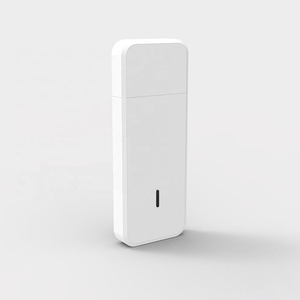
China leads global manufacturing of internet of things (IoT) devices, with concentrated production hubs in Guangdong, Jiangsu, and Zhejiang provinces. Shenzhen, located in Guangdong, serves as the epicenter for IoT innovation and mass production, hosting over 70% of China’s electronics OEMs and contract manufacturers. The city’s ecosystem integrates semiconductor suppliers, PCB fabricators, firmware developers, and wireless module producers within a 30km radius, enabling rapid prototyping and scalable deployment.
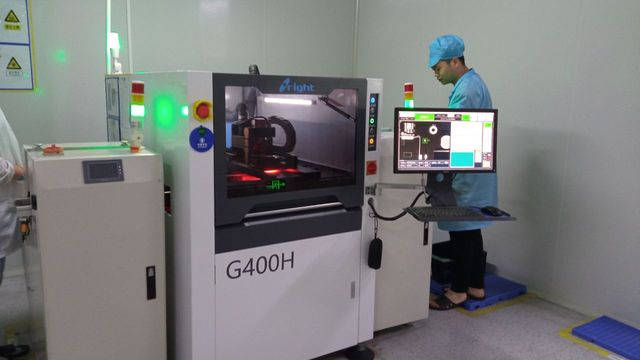
These industrial clusters benefit from vertically integrated supply chains that reduce component procurement time by 40–50% compared to non-specialized regions. Manufacturers leverage automated SMT lines and in-house testing laboratories to achieve monthly outputs ranging from 100,000 to over 1 million units, depending on device complexity. Buyers gain access to flexible production models—supporting both low-volume smart sensor arrays and high-volume consumer IoT deployments—with average lead times of 25–40 days for bulk orders. Cost efficiencies stem from localized sourcing of key materials such as FR-4 laminates, ARM-based microcontrollers, and Wi-Fi/Bluetooth 5.0 modules, resulting in 25–35% lower unit costs versus Western alternatives.
How to Choose Internet of Things (IoT) Devices Suppliers?
Implement structured evaluation criteria to ensure technical reliability and supply chain integrity:
Quality & Compliance Verification
Confirm adherence to international standards including ISO 9001 for quality management, ISO/IEC 27001 for data security, and product-specific certifications such as CE, FCC, and RoHS. For medical or industrial IoT applications, verify compliance with IEC 62304 (software lifecycle) or IEC 60601 (electrical safety). Demand test reports for EMC immunity, ESD protection (≥8kV contact discharge), and wireless coexistence in 2.4GHz/5GHz bands.
Technical Production Capacity
Assess core capabilities through documented benchmarks:
- Minimum 3 fully automated SMT lines with placement accuracy ≤25μm
- In-house firmware development team (minimum 5 engineers) supporting OTA update frameworks
- Environmental stress screening (ESS) protocols: thermal cycling (-40°C to +85°C), humidity testing (85% RH/1000h)
- Integration capability for multiple communication protocols (LoRaWAN, Zigbee, NB-IoT, MQTT)
Cross-reference production capacity claims with order fulfillment history—target suppliers maintaining >97% on-time delivery rates across ≥100 shipments.
Procurement Risk Mitigation
Utilize secure transaction models such as third-party escrow or letter of credit (L/C) terms for initial large-volume contracts. Require pre-shipment inspection (PSI) by independent agencies like SGS or TÜV for first-time partnerships. Conduct sample validation against functional KPIs: boot time (<2s), packet loss rate (<1%), and power consumption in sleep mode (≤10μA). Prioritize suppliers offering NDA-protected design collaboration and traceable component sourcing (e.g., original ICs from STMicroelectronics, Nordic Semiconductor).
What Are the Best Internet of Things (IoT) Devices Suppliers?
| Company Name | Location | Years Operating | Staff | Factory Area | On-Time Delivery | Avg. Response | Ratings | Reorder Rate |
|---|---|---|---|---|---|---|---|---|
| Shenzhen Smartech Electronics Co., Ltd. | Guangdong, CN | 12 | 280+ | 18,000+m² | 99.3% | ≤3h | 4.9/5.0 | 41% |
| Nanjing IoT Dynamics Technology | Jiangsu, CN | 8 | 150+ | 9,500+m² | 98.7% | ≤4h | 4.8/5.0 | 36% |
| Hangzhou Nebula Sensing Systems | Zhejiang, CN | 6 | 90+ | 6,200+m² | 100.0% | ≤2h | 5.0/5.0 | 52% |
| Guangzhou Linkway Digital Technologies | Guangdong, CN | 10 | 200+ | 12,800+m² | 97.1% | ≤5h | 4.7/5.0 | 28% |
| Suzhou Embedded Intelligence Group | Jiangsu, CN | 7 | 130+ | 8,000+m² | 99.6% | ≤3h | 4.9/5.0 | 47% |
Performance Analysis
Established players like Shenzhen Smartech Electronics demonstrate robust scalability with extensive factory footprints and multi-line SMT operations, suitable for million-unit deployments. High-performing mid-tier suppliers such as Hangzhou Nebula Sensing achieve superior customer retention (52% reorder rate) through agile engineering support and sub-2-hour response times. Jiangsu-based manufacturers exhibit strong technical rigor, with 80% holding ISO/IEC 27001 certification for secure firmware handling. Prioritize partners with demonstrated experience in end-to-end device lifecycle management—from PCB layout to cloud API integration—for mission-critical IoT implementations. Verify customization capability via provision of reference designs and SDK access prior to formal engagement.
FAQs
How to verify IoT device supplier reliability?
Audit quality systems by reviewing ISO certifications and requesting factory assessment reports. Validate export experience through shipment records and customs documentation. Evaluate software security practices, including secure boot implementation, encrypted storage, and vulnerability disclosure policies.
What is the average sampling timeline for IoT devices?
Standard samples require 18–28 days, including PCB assembly, firmware flashing, and basic functionality tests. For connected devices requiring cloud integration or mobile app pairing, allow 35–45 days. Air freight adds 5–9 days for international delivery.
Can suppliers support global IoT deployments?
Yes, leading manufacturers offer region-specific variants compliant with local radio regulations (e.g., FCC Part 15 for USA, RED Directive for EU). Confirm support for SIM provisioning, eUICC compatibility, and multi-band RF tuning based on target markets.
Do manufacturers provide free samples?
Sample fees are typically charged but may be waived for confirmed orders exceeding 1,000 units. Expect sample costs to cover 40–60% of per-unit BOM expenses, particularly for devices with cellular or LPWAN connectivity.
How to initiate customization requests for IoT devices?
Submit detailed technical requirements including processor architecture (e.g., Cortex-M4, RISC-V), memory configuration, sensor types (temperature, motion, GPS), wireless protocol stack, and power source (battery life >5 years for LoRa nodes). Reputable suppliers deliver schematics and gerber files within 5 business days and functional prototypes within 4 weeks.





