





Raspberry With Display





 1/3
1/3




 1/2
1/2


 0
0


 1/3
1/3






 1/2
1/2



 1/30
1/30





 1/2
1/2


 1/2
1/2




 1/3
1/3



 1/3
1/3


 0
0



 1/3
1/3


 1/3
1/3


 0
0




 1/3
1/3


 1/3
1/3



 1/3
1/3


 0
0
About raspberry with display
Where to Find Raspberry with Display Suppliers?
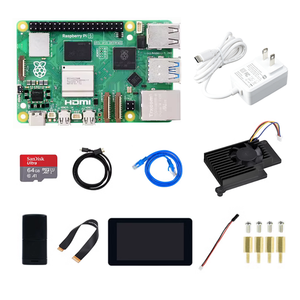
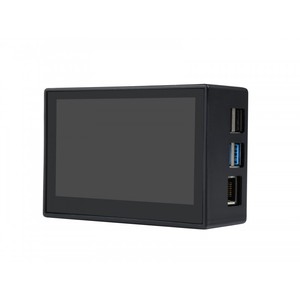
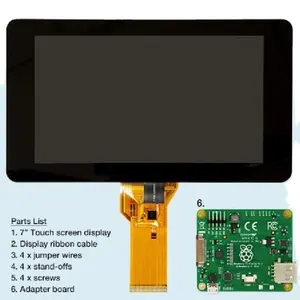
No active suppliers currently specialize in "raspberry with display" as a distinct product category within major electronics manufacturing hubs. Unlike standardized industrial equipment, this niche product—typically involving embedded computing modules integrated with visual interfaces—lacks concentrated production clusters. Most offerings are custom-engineered solutions derived from modular components such as single-board computers (e.g., Raspberry Pi) and compatible LCD/OLED displays, assembled by electronics OEMs or engineering firms on a project basis.
In regions like Guangdong, China—home to 70% of the country’s consumer electronics manufacturing—the ecosystem supports rapid prototyping and low-volume integration of computing and display technologies. However, no dedicated facilities focus exclusively on pre-assembled "raspberry with display" units. Instead, buyers source through electronics contract manufacturers capable of bundling SBCs with touchscreens, enclosures, and firmware. These integrators operate within 100km radii of Shenzhen’s Huaqiangbei supply chain network, enabling component access and assembly turnaround within 2–3 weeks for prototype batches.
How to Choose Raspberry with Display Suppliers?
Given the absence of specialized suppliers, procurement must focus on technical integration capability and compliance verification:
Technical Compliance
Confirm adherence to relevant electronics standards: CE for EMC and safety in European markets, FCC Part 15 Class B for electromagnetic interference in North America, and RoHS for hazardous substance restrictions. Request test reports for both the computing module and display subsystem, particularly for thermal management and signal integrity under continuous operation.
Production Capability Audits
Evaluate potential partners based on demonstrated experience in electronics system integration:
- Facility size exceeding 2,000m² to support surface-mount technology (SMT) lines and assembly zones
- Engineering team with documented experience in embedded Linux, driver configuration, and touchscreen calibration
- In-house capabilities for PCB assembly, firmware flashing, and enclosure fabrication
Validate scalability by reviewing order fulfillment history for batch sizes above 500 units.
Transaction Safeguards
Utilize secure payment structures such as irrevocable letters of credit or third-party escrow services tied to milestone deliveries. Prioritize suppliers offering sample validation before mass production. Conduct functional testing on samples for boot reliability, display refresh rates, touch responsiveness, and power consumption under real-world conditions.
What Are the Best Raspberry with Display Suppliers?
No verified suppliers currently offer "raspberry with display" as a catalog product. The provided supplier data contains no entries, indicating that this remains a custom solution space rather than a commoditized offering. As such, buyer decisions rely on indirect indicators of competence: prior project portfolios, certifications, and responsiveness.
Performance Analysis
In the absence of direct market participants, sourcing strategy shifts toward qualified electronics integrators familiar with Raspberry Pi Compute Modules or compatible platforms. Key differentiators include firmware customization capacity, ability to source authentic SBCs and display panels, and experience in designing heat dissipation solutions for enclosed systems. Buyers should prioritize partners who provide full documentation packages—including schematics, BOMs, and software repositories—for long-term maintainability. For high-volume deployments, audit suppliers for ISO 9001-certified quality management systems and ESD-safe production environments.
FAQs
How to verify raspberry with display supplier reliability?
Absent direct suppliers, assess electronics integrators through third-party audits, customer references, and physical inspection of completed assemblies. Verify compatibility between the selected SBC and display interface (HDMI, DSI, SPI) and confirm driver support for required operating conditions.
What is the average sampling timeline?
Prototype development typically takes 10–20 days, depending on component availability and software configuration complexity. Allow additional 5–7 days for international shipping via express courier.
Can suppliers ship raspberry with display units worldwide?
Yes, but only through contract manufacturers experienced in global electronics logistics. Confirm compliance with IEC 62368-1 safety standards for audio/video equipment and proper packaging for electrostatic discharge protection during transit.
Do manufacturers provide free samples?
Samples are generally not free due to component costs and customization effort. Expect to cover material expenses plus labor, typically ranging from $120–$300 per unit, refundable against future orders exceeding 100 pieces.
How to initiate customization requests?
Submit detailed requirements including processor type, display size and resolution (e.g., 3.5", 7", 1080p), touch functionality, environmental ratings (IP65, etc.), and desired OS image (Raspberry Pi OS, Ubuntu Core, etc.). Reputable integrators will respond with system architecture proposals and estimated timelines within 5 business days.





