
Enrolling your child in school is one of the most significant milestones in their development—and for many parents, it can feel overwhelming. With varying requirements across districts, fluctuating deadlines, and a mountain of paperwork, the process often seems more complex than necessary. Yet, when approached systematically, school enrollment can be smooth, stress-free, and even empowering. This guide walks you through every essential phase, from preparation to final confirmation, ensuring your child starts their academic journey on solid ground.
1. Determine Eligibility and School District Boundaries
The first step in enrolling your child is identifying which schools they’re eligible to attend. Public schools in most regions operate under geographic zoning laws, meaning your home address determines your assigned school. Begin by visiting your local school district’s official website and using their school locator tool. Enter your address to find your designated neighborhood school.
If you're considering alternatives—such as magnet programs, charter schools, or inter-district transfers—research availability and application windows early. These options often have competitive admission processes or lotteries, so missing deadlines can limit choices.
Key Factors Affecting School Assignment
- Child’s age and grade level (e.g., kindergarten cutoff dates vary by state)
- Proof of residency within district boundaries
- Sibling enrollment preferences (in some districts)
- Special education or gifted program needs
2. Gather Required Documentation
Schools require specific documentation to verify identity, residency, and health compliance. While exact requirements differ by district, most institutions follow a standard set of expectations. Being prepared with these documents ahead of time prevents delays and last-minute scrambling.
| Document Type | Examples | Notes |
|---|---|---|
| Proof of Residency | Lease agreement, utility bill, property deed | Must show current address; some districts require two forms |
| Child’s Birth Certificate | Certified copy issued by government authority | Photocopies may not be accepted without notarization |
| Immunization Records | State immunization form or pediatrician’s record | All vaccines must meet state-mandated schedules |
| Parent/Guardian ID | Driver’s license, passport, or state ID | Required for verification during registration |
| Academic Records (if applicable) | Report cards, IEP, or ELL plans | Necessary for transferring students |
“Having all documents organized in a folder—digital and physical—can reduce enrollment time by up to 70%.” — Dr. Linda Reyes, Director of Student Services, Austin ISD
3. Complete the Enrollment Process Step by Step
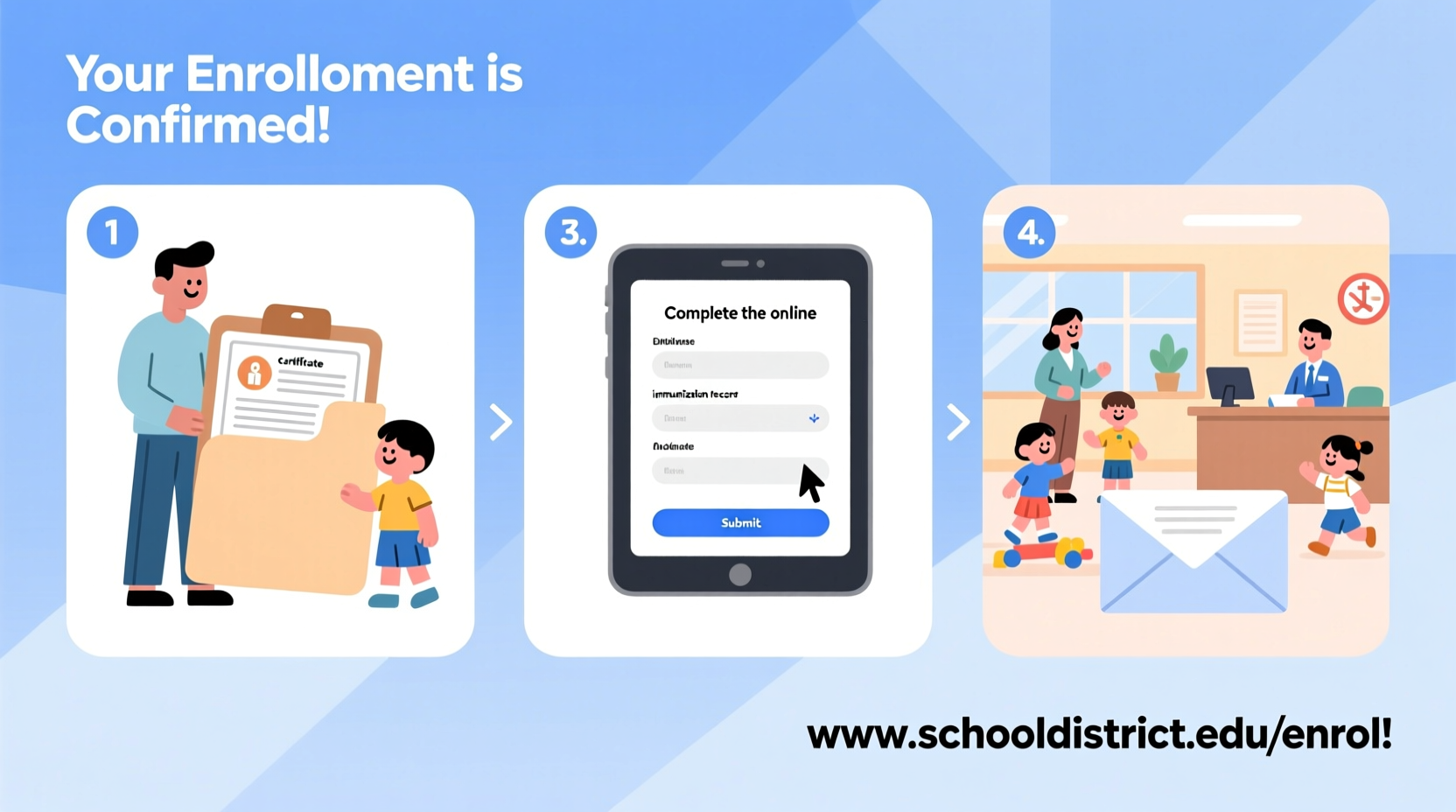
With your documents ready, proceed through the formal enrollment stages. Most school districts now offer online registration portals, though in-person appointments may still be required for initial verification.
- Create an account on the district’s enrollment platform using a valid email address.
- Enter student and family information, including emergency contacts, medical conditions, and language preferences.
- Upload scanned copies of required documents directly into the system.
- Schedule an appointment if in-person verification is needed (common for kindergarten and new-to-district families).
- Attend orientation or school tour if offered—this helps both child and parent become familiar with the environment.
- Receive confirmation via email or mail with class assignment, start date, and supply list.
4. Prepare for the First Day: Logistics and Emotional Readiness
Enrollment doesn’t end at submission. True readiness includes logistical planning and emotional support for your child. Transitioning into a new school environment can be exciting but also anxiety-inducing, especially for younger children.
Checklist: Preparing for the First Week
- Label all clothing, lunchboxes, and supplies with your child’s name
- Purchase required school supplies (check the school’s published list)
- Establish a consistent morning and bedtime routine two weeks in advance
- Practice the commute—drive or walk the route together
- Review school rules and expectations (e.g., dismissal procedures, bathroom passes)
- Meet the teacher if possible through back-to-school night or welcome emails
For children with special needs, ensure Individualized Education Programs (IEPs) or 504 Plans are transferred and reviewed by school staff. Request a meeting with counselors or support teams if accommodations need clarification.
Mini Case Study: The Thompson Family’s Smooth Transition
The Thompsons moved from another state and needed to enroll their 7-year-old daughter, Mia, in third grade mid-year. They began by calling the district’s enrollment office to confirm document equivalency. They translated her previous school records, obtained a Texas-compliant immunization update from their pediatrician, and submitted everything through the online portal within 48 hours of arrival. Because they scheduled their verification appointment immediately, Mia was placed in class just three days later—with a peer buddy assigned to help her adjust. Within a week, she was making friends and keeping up with lessons.
5. Frequently Asked Questions
What if I don’t live within the school’s attendance zone?
You may apply for an inter-district or intra-district transfer. Approval depends on space availability, transportation arrangements, and district policy. Some schools allow open enrollment; others prioritize in-zone students.
Are vaccinations mandatory for enrollment?
In most U.S. states, yes. All children must meet minimum immunization requirements unless exempted for medical or religious reasons (varies by state law). Exemption forms must be officially filed with the school nurse.
My child speaks limited English—will they get support?
Yes. Public schools are required to assess English Language Learner (ELL) status and provide appropriate services such as ESL instruction or bilingual classrooms. Indicate language needs during enrollment to trigger evaluation.
Final Steps and Ongoing Engagement
Once your child is enrolled, stay engaged. Attend parent-teacher conferences, join the PTA, and monitor academic progress through the school’s online portal. Building a relationship with teachers and staff fosters a supportive learning environment and allows early intervention if challenges arise.
Remember, enrollment is not a one-day event—it’s the beginning of a long-term partnership between family and school. By approaching it with organization, clarity, and proactive communication, you lay the foundation for your child’s educational success.




 浙公网安备
33010002000092号
浙公网安备
33010002000092号 浙B2-20120091-4
Comments
No comments yet. Why don't you start the discussion?