
When it comes to creating a warm, inviting atmosphere in your home, fairy lights are a go-to choice. Whether draped over a headboard, wrapped around a mirror, or strung across a patio, their soft glow enhances any space. But as more lighting options become available, a key question arises: which type of fairy light—battery-powered or USB-powered—lasts longer in practical use and decorative longevity?
The answer isn't just about how long the bulbs shine. It’s also about power source reliability, maintenance, environmental impact, and overall value. While both types often use LED technology (known for long lifespans), the difference lies in how they’re powered and managed over time. This article breaks down the technical and practical aspects of each option, helping you choose the one that truly lasts.
Bulb Lifespan: A Shared Strength
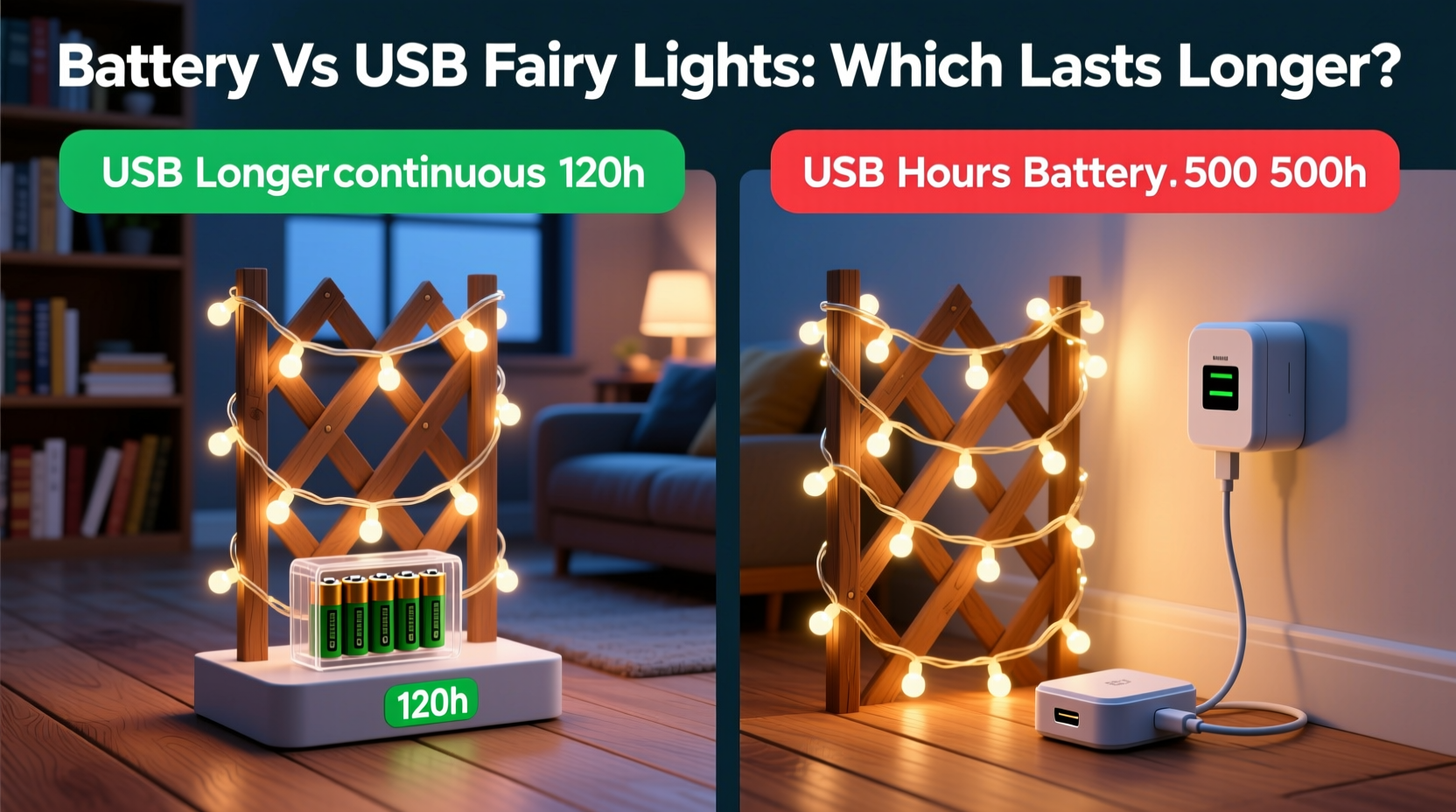
Most modern fairy lights, whether battery or USB powered, use LED (light-emitting diode) bulbs. LEDs are renowned for their durability and energy efficiency. On average, quality LED fairy lights can last between 25,000 and 50,000 hours. That means if used for six hours per day, they could theoretically remain functional for 10 to 20 years.
This impressive bulb lifespan is consistent across both power types. The critical difference lies not in the lights themselves, but in the supporting systems—the power source, wiring integrity, and usage patterns. In other words, while the bulbs may last equally long, the way they’re powered determines how consistently they deliver that performance over time.
Power Source Longevity: Where They Diverge
Despite similar LED quality, battery-powered and USB-powered fairy lights differ significantly in how they sustain operation. These differences directly affect how “long” they last from a user perspective.
Battery-Powered Fairy Lights: Convenience with Limitations
Battery-operated fairy lights offer unmatched portability. With no cords to manage, they can be placed almost anywhere—on walls without outlets, in glass jars, or outdoors where electrical access is limited. However, this convenience comes at a cost to sustained performance.
Batteries degrade over time, even when not in use. Alkaline batteries, commonly used in these lights, have a shelf life of 5–7 years but lose charge faster under load. More critically, continuous use drains batteries quickly—typically lasting between 24 and 100 hours depending on the number of LEDs, brightness setting, and battery quality.
Moreover, frequent battery replacement introduces wear and tear on the light’s housing. Opening and closing the battery compartment can loosen contacts or crack plastic casings. Corrosion from leaking batteries is another common issue, potentially damaging internal wiring and rendering the entire string unusable—even if the LEDs are still intact.
USB-Powered Fairy Lights: Steady and Sustainable
USB-powered fairy lights rely on a constant external power source—such as a wall adapter, computer, power bank, or smart plug. Because they draw regulated voltage, they operate more efficiently than battery-powered versions. There’s no risk of voltage drop as batteries deplete, meaning consistent brightness throughout use.
Since there are no disposable batteries involved, USB lights eliminate the recurring cost and environmental waste associated with battery replacement. Their power supply is also less prone to sudden failure. High-quality USB cables and adapters can last for years, especially when handled carefully.
More importantly, USB-powered systems reduce stress on the light circuitry. Without the need to frequently insert or remove batteries, connection points remain stable. When paired with a surge-protected adapter, these lights are less vulnerable to power spikes that could damage sensitive components.
“From an engineering standpoint, a stable power input like USB reduces thermal cycling and voltage stress, which are leading causes of early LED failure.” — Dr. Lena Park, Electrical Engineer & Lighting Systems Analyst
Comparative Analysis: Battery vs USB in Real-World Use
To understand which option truly lasts longer, consider how they perform across several key factors. The table below compares battery-powered and USB-powered fairy lights based on durability, cost, usability, and long-term reliability.
| Factor | Battery-Powered | USB-Powered |
|---|---|---|
| Bulb Longevity | 25,000–50,000 hours (LED dependent) | 25,000–50,000 hours (LED dependent) |
| Effective Runtime per Cycle | 24–100 hours (varies by battery) | Continuous, as long as power is supplied |
| Maintenance Needs | Regular battery changes, corrosion checks | Minimal; occasional cable inspection |
| Durability of Power System | Low—battery compartments degrade | High—few moving parts, stable input |
| Environmental Impact | Higher—disposable batteries create waste | Lower—reusable power sources |
| Cost Over 5 Years | $30–$60 (bulbs + ~20 battery sets) | $10–$20 (occasional cable replacement) |
| Portability | Excellent—no cords required | Fair—requires nearby outlet or power bank |
The data shows that while both types share similar LED lifespans, USB-powered lights outperform in sustainability, maintenance, and total cost of ownership. Their ability to run continuously without degradation gives them a clear edge in applications where long-term display is desired—like bedroom canopies, living room accents, or year-round seasonal decor.
Real-World Example: A Holiday Decorator’s Experience
Sarah M., a home stylist in Portland, uses fairy lights extensively for holiday displays and indoor ambiance. For years, she relied solely on battery-powered strings for their flexibility. However, after setting up her annual Christmas mantel display, she noticed that half her lights dimmed within two weeks, and three sets failed completely due to corroded AA batteries.
“I was replacing batteries every few days just to keep the display bright,” she said. “It became more work than enjoyment.”
The following year, she switched to USB-powered lights connected to a multi-port wall hub. She used timers to automate on/off cycles and placed the power strip behind the couch. Not only did the lights stay consistently bright, but she reused the same setup for over 18 months—including Valentine’s Day, Easter, and summer patio nights—without needing replacements.
“The initial setup took five extra minutes,” Sarah noted, “but I’ve saved money, reduced clutter, and my decor looks better all year.”
Maximizing Lifespan: A Step-by-Step Guide
No matter which type you choose, proper care extends the usable life of your fairy lights. Follow this timeline-based routine to get the most out of your investment.
- Week 1: Inspect Upon Unboxing
Check for frayed wires, loose connections, or damaged sockets. Test the full string before installation. - Monthly: Clean and Examine
Wipe dust off bulbs with a dry microfiber cloth. Inspect battery compartments for leaks or oxidation. For USB models, ensure cables aren’t bent or strained. - Every 3 Months: Performance Check
Look for flickering or dimming sections. Replace batteries preemptively if using alkaline cells. For USB setups, verify the power adapter delivers steady output. - Seasonal Rotation: Store Properly
Coil lights gently around a cardboard tube or spool. Avoid tight wrapping that stresses wires. Store in a dry, temperature-stable place away from rodents. - Yearly: Full System Review
Evaluate whether lights still perform reliably. Consider upgrading older sets to newer, more efficient models—especially if using incandescent or low-grade LEDs.
Which Is Better for Long-Term Decor?
If your priority is long-lasting, reliable performance with minimal upkeep, USB-powered fairy lights are the superior choice. They provide consistent brightness, lower lifetime costs, and reduced mechanical wear. Their integration with smart plugs or timers allows for automated control, further extending useful life by preventing unnecessary runtime.
Battery-powered lights still have a role—particularly in temporary installations, photography setups, or locations far from outlets. But for permanent or semi-permanent decor, their limitations become apparent over time. The cumulative effect of battery drain, corrosion, and physical wear shortens their effective lifespan, even if the LEDs themselves could last decades.
Additionally, USB-powered lights align better with sustainable living practices. Rechargeable power banks can run them off-grid during camping trips or outdoor events, eliminating disposable waste while maintaining flexibility.
FAQ
Can I leave USB fairy lights on all night?
Yes, most USB-powered LED fairy lights are designed for extended use. Since they generate minimal heat and draw low current, they’re safe to leave on overnight. For added safety, use a timer or smart plug to limit runtime.
Do battery-powered lights dim over time?
Yes. As batteries deplete, voltage drops, causing the lights to gradually dim. This not only affects ambiance but can also strain LEDs by operating them outside optimal voltage ranges, potentially shortening their lifespan.
Are USB fairy lights brighter than battery ones?
Not inherently, but they maintain consistent brightness. Battery-powered lights start bright and fade, while USB models deliver steady output as long as the power source is stable.
Final Recommendation: Choose Based on Use Case
For long-term decorative use—bedrooms, living rooms, offices, or covered patios—USB-powered fairy lights are the clear winner in terms of longevity, cost-efficiency, and reliability. They minimize maintenance, avoid battery waste, and deliver consistent performance year after year.
Battery-powered lights remain valuable for temporary, portable, or outlet-free applications. However, their operational lifespan is effectively limited by battery life and compartment durability, making them less ideal for permanent installations.
Ultimately, the longest-lasting fairy lights aren’t just about bulb quality—they’re about system stability. A well-designed USB-powered setup, properly maintained, can outlive multiple generations of battery-dependent strings, providing beautiful light with far less effort.




 浙公网安备
33010002000092号
浙公网安备
33010002000092号 浙B2-20120091-4
Comments
No comments yet. Why don't you start the discussion?