
When shopping for a high-functionality timepiece, two features often stand out: the tachymeter and the chronograph with altimeter. Both promise precision and utility, but they serve very different purposes—and deliver varying levels of value depending on your lifestyle. The question isn’t just about technical superiority; it’s about practicality, cost-efficiency, and long-term usability. For those weighing options between a classic tachymeter-equipped chronograph and a modern chronograph with altimeter, understanding what each offers—and at what price—is essential to making a smart investment.
Understanding the Core Functions
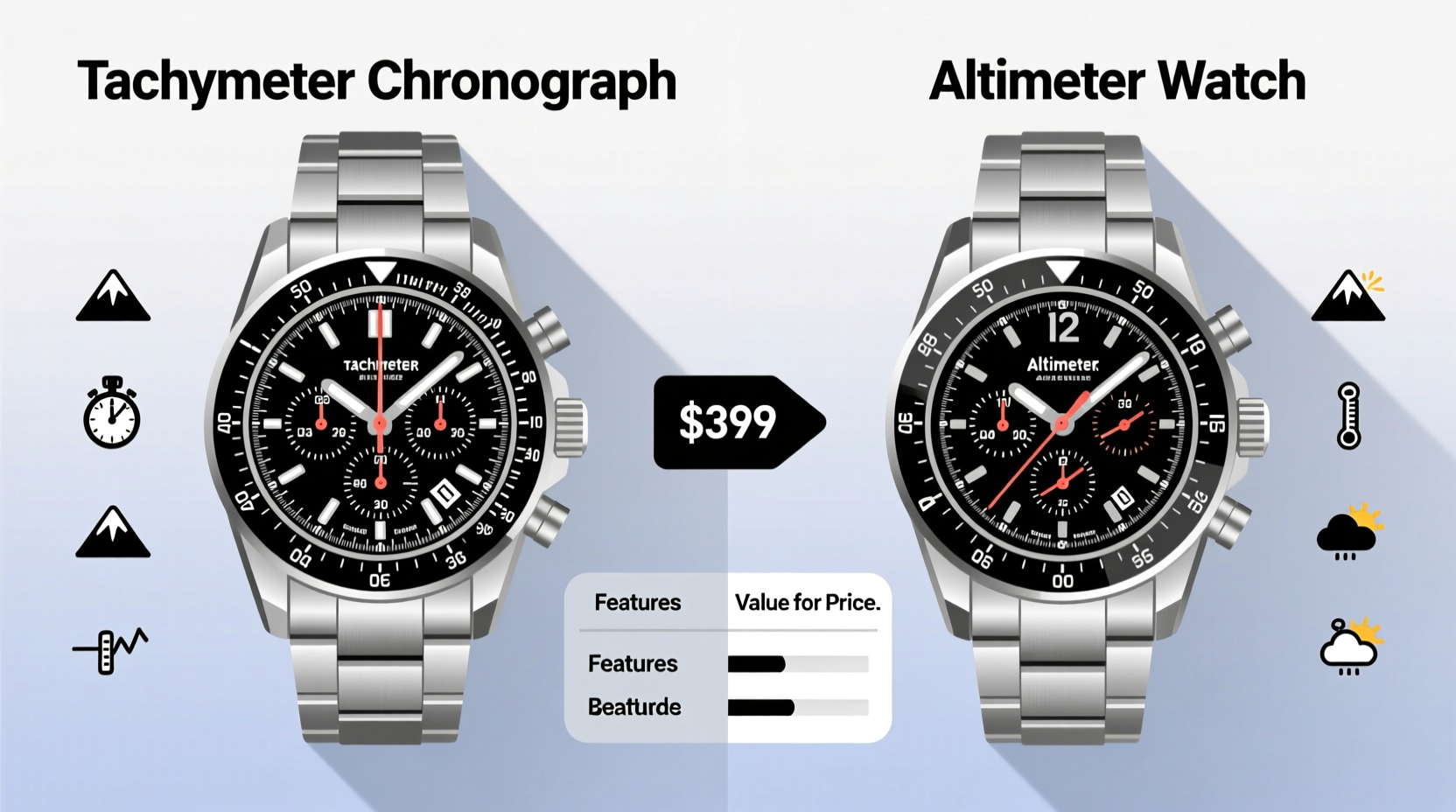
A tachymeter is a scale typically found on the bezel of a watch that measures speed based on travel time over a fixed distance. It works in conjunction with the chronograph (stopwatch) function. For example, if you drive one mile and the chronograph records 30 seconds, the tachymeter will show 120—meaning you were traveling at 120 miles per hour. This feature originated in motorsports and aviation and remains popular among enthusiasts who appreciate analog computation.
In contrast, a chronograph with an altimeter includes a built-in barometric pressure sensor that calculates elevation above sea level. This is especially useful for hikers, climbers, pilots, and outdoor adventurers. Unlike the tachymeter, which relies solely on user input via stopwatch timing, the altimeter operates continuously, providing real-time altitude data. Many such watches also include additional sensors like barometers, compasses, and temperature gauges, making them multifunctional tools rather than just timepieces.
Value Comparison: Features vs. Real-World Utility
The true value of any watch feature lies not in its novelty but in how often it's used. A tachymeter is elegant and historically significant, but its application in daily life is limited. Most drivers today rely on GPS speedometers or smartphone apps, which are far more accurate and easier to read. Unless you're timing laps or enjoy retro-engineering tricks, the tachymeter functions largely as a design element.
On the other hand, a chronograph with altimeter provides actionable data in environments where elevation changes matter. Mountain climbers use it to track ascent rates and detect sudden weather shifts via pressure changes. Hikers can confirm their position on a trail using known elevation markers. Even skiers benefit from knowing their vertical drop. These functions integrate seamlessly into active lifestyles, offering both convenience and safety.
“While tachymeters are nostalgic nods to horological history, altimeters represent the evolution of watches into personal navigation systems.” — Daniel Reeves, Watch Technology Analyst at Timepiece Review
Price-to-Performance Breakdown
Tachymeter-equipped watches range widely in price. Entry-level models like the Tissot PRX Chronograph ($650) or Hamilton Khaki Field Auto Chrono ($895) offer reliable timekeeping and classic styling. At the high end, brands like Rolex and Omega charge several thousand dollars for similar functionality, where much of the cost reflects brand prestige and craftsmanship rather than added utility.
Chronographs with altimeters tend to start higher due to the inclusion of digital sensors. Models like the Casio G-Shock Rangeman ($350) or Suunto Core ($299) pack altimeters, barometers, and compasses at budget-friendly prices. More advanced versions such as the Garmin Fenix 7 series ($700–$900) combine altimeter chronographs with GPS, heart rate monitoring, and smart features, delivering exceptional functionality per dollar spent.
| Feature | Tachymeter Chronograph | Chronograph with Altimeter |
|---|---|---|
| Primary Function | Speed measurement over distance | Elevation tracking, environmental sensing |
| Best For | Racing, driving, vintage appeal | Hiking, climbing, aviation, outdoor sports |
| Average Price Range | $500–$10,000+ | $300–$900 (most functional models) |
| Additional Sensors | Rarely included | Common: barometer, compass, thermometer |
| Daily Usability | Limited to niche scenarios | High across multiple activities |
Real-World Example: Choosing for Purpose
Consider Mark, an amateur trail runner and weekend backpacker. He initially considered a sleek tachymeter chronograph for its timeless look. After researching, he realized he’d never use the tachymeter. Instead, he purchased a Garmin Instinct 2 Solar with altimeter, barometer, and GPS. During a recent hike, the altimeter alerted him to a rapid pressure drop, signaling an approaching storm. He adjusted his route and avoided dangerous conditions. The watch paid for itself in safety alone.
In contrast, Sarah, a car enthusiast and vintage collector, chose a TAG Heuer Carrera with tachymeter. While she doesn’t use the scale regularly, she values its heritage and aesthetic harmony with her passion for classic automobiles. For her, the tachymeter enhances emotional satisfaction—even if it’s rarely functional.
Step-by-Step Guide: How to Choose Based on Value
- Assess Your Lifestyle: Are you outdoors frequently? Do you drive competitively? Your habits should guide your choice.
- List Desired Features: Prioritize functions you’ll actually use. Don’t pay for altimeters if you live in a flat city; skip tachymeters if you’re not timing anything.
- Set a Budget: Determine how much you’re willing to spend and explore options within that range.
- Compare Multi-Function Models: Look for watches that bundle altimeters with other tools (compass, weather trends, GPS).
- Test Readability and Build: Ensure the display is legible in sunlight and the case is durable enough for your environment.
- Check Battery or Power Source: Solar-powered or long-battery-life models reduce maintenance and increase reliability.
- Read User Reviews: Focus on real-world feedback about accuracy, durability, and ease of use.
Frequently Asked Questions
Can a tachymeter measure anything besides speed?
Yes, but indirectly. With creative use, it can estimate fuel consumption (miles per minute), production rates, or even heartbeats per minute—but these require manual calculation and are not intuitive.
Is an altimeter accurate enough for serious mountaineering?
Modern barometric altimeters in quality watches (e.g., Suunto, Garmin) are accurate within ±50 feet under stable conditions. However, they must be calibrated regularly and can be affected by weather changes. For extreme climbs, professional climbers pair them with GPS and topographic maps.
Do luxury tachymeter watches hold value better than digital altimeter models?
Sometimes. Mechanical watches from Rolex, Omega, or Patek Philippe often appreciate due to scarcity and brand prestige. Digital or quartz-based altimeter watches rarely gain value but offer superior functionality per dollar during ownership.
What Should You Prioritize When Buying?
Ultimately, the decision comes down to purpose versus prestige. If your goal is to own a tool that enhances performance, safety, and versatility across adventures, a chronograph with altimeter delivers significantly more utility for the price. It integrates into fitness tracking, navigation, and environmental awareness—functions that matter in real time.
However, if you value design, tradition, and mechanical craftsmanship, a tachymeter chronograph may align better with your tastes—even if its practical applications are narrow. Just recognize that you're paying for artistry and legacy, not everyday utility.
“The best watch for the price isn’t always the most expensive—it’s the one you use every day.” — Lena Park, Horology Editor at Gear & Time
Final Recommendation
For most buyers seeking tangible return on investment, a chronograph with altimeter outperforms a tachymeter-equipped model in functionality, adaptability, and cost efficiency. Brands like Casio, Suunto, and Garmin offer rugged, precise instruments under $500 that surpass the practical limits of even $2,000+ tachymeter watches. That said, horology is personal. Some collectors prize mechanics and design over raw utility. But if you measure value by daily usefulness, the altimeter wins decisively.




 浙公网安备
33010002000092号
浙公网安备
33010002000092号 浙B2-20120091-4
Comments
No comments yet. Why don't you start the discussion?