
A well-fitted belt does more than hold up your trousers—it enhances posture, improves comfort, and elevates your overall appearance. Slim belt straps, often made from leather, nylon, or woven materials, are popular in modern wardrobes due to their sleek profile and versatility. However, off-the-rack sizing rarely offers a perfect fit. Learning how to adjust a slim belt strap ensures you achieve a personalized, secure, and comfortable wear every time. Whether you're tailoring a new purchase or reviving an old favorite, understanding the nuances of adjustment is essential.
Why Proper Belt Fit Matters
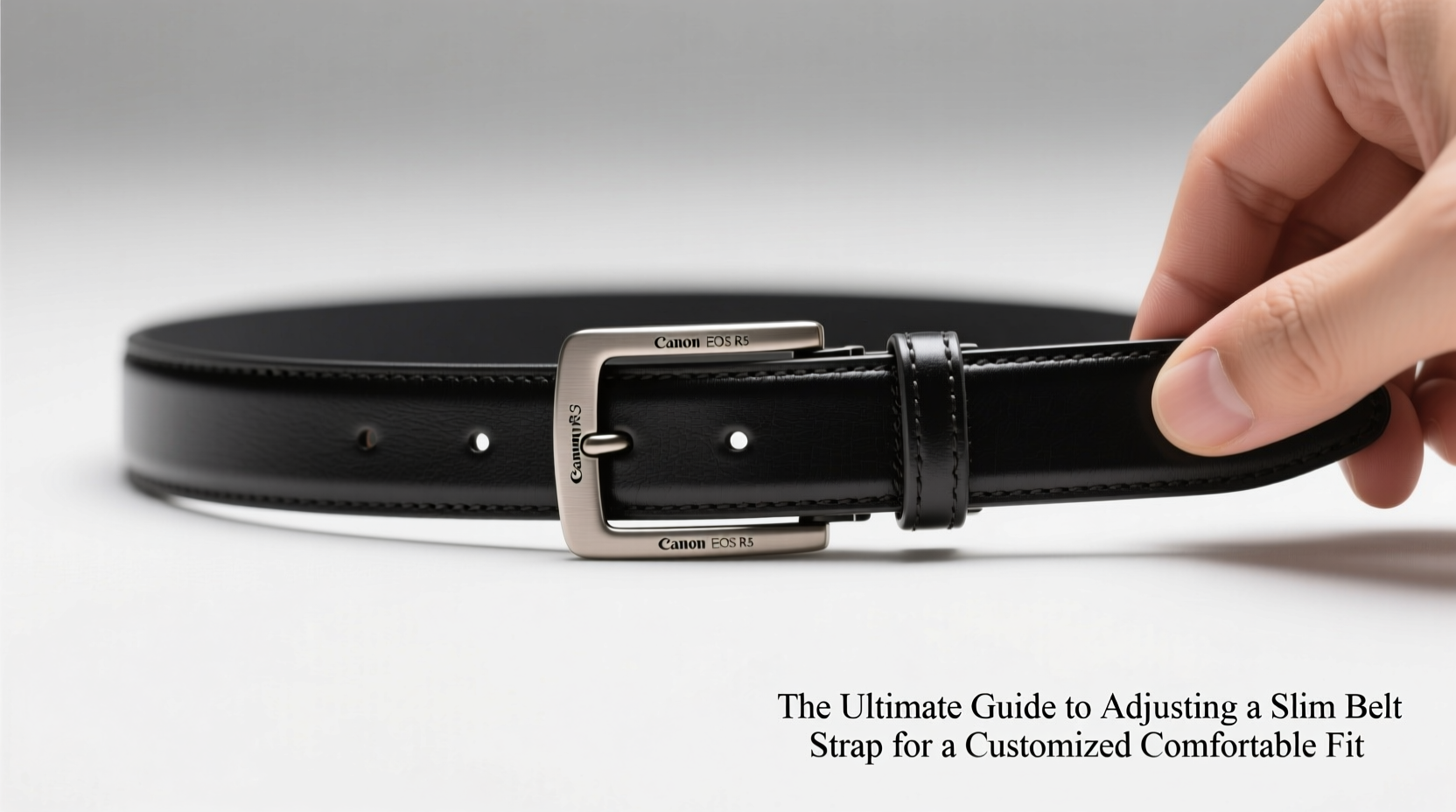
A poorly fitted belt can cause discomfort, restrict movement, or fail to perform its basic function. Too long, and the excess strap flaps around; too tight, and it digs into your waist. The ideal fit positions the buckle near the center hole, allowing room for slight adjustments based on clothing layers or body changes.
Slim belts, especially those under 1.25 inches wide, are particularly sensitive to fit issues. Their minimalist design means even a half-inch discrepancy can disrupt both function and aesthetics. A correctly adjusted slim belt lies flat against the waistband, holds pants securely without pressure points, and maintains a clean silhouette.
“Precision in belt fit reflects attention to detail—a hallmark of true style.” — Marcus Reed, Menswear Tailor & Fit Consultant
Step-by-Step Guide to Adjusting a Slim Belt Strap
Adjusting a slim belt depends on the material, closure type, and whether it’s designed for DIY modification. Follow this detailed process to ensure accuracy and longevity.
- Measure Your Waist Accurately
Use a soft measuring tape around your natural waistline—typically where you wear your pants. Breathe normally and don’t suck in. Note the measurement in inches. - Determine the Ideal Hole Placement
Put on the pants you’ll most often wear with the belt. Fasten them at your preferred tightness. Wrap the belt around and identify where the buckle pin lands. This spot should align with one of the existing holes or indicate where a new one should go. - Mark the Adjustment Point
If shortening is needed, fold the end of the belt back to the desired length. Use a fine-tip marker to mark where the new end will be cut. For adding holes, use a ruler and awl to mark the exact location. - Punch or Cut with Care
For new holes: Place a leather punch or sharp awl over the mark. Tap gently with a hammer until the hole is clean and round. For trimming: Use sharp utility shears or a rotary cutter on a cutting mat. Cut straight across to maintain symmetry. - Finish the Edge (Leather Only)
If you’ve shortened a leather belt, sand the cut edge lightly. Apply edge slicker or gum tragacanth to seal and polish. Buff with a cloth for a professional finish. - Test the Fit
Reattach the buckle if removed, or fasten the belt. Ensure smooth insertion through loops and verify that the middle hole provides optimal tension.
Material-Specific Adjustment Tips
Different materials respond uniquely to alteration. Understanding these differences prevents damage and ensures lasting results.
| Material | Adjustment Method | Common Pitfalls |
|---|---|---|
| Full-Grain Leather | Can be shortened or re-punched. Responds well to edge finishing. | Uneven cuts or rough edges can fray over time. |
| Nylon Webbing | Trim with heat-sealing tool or soldering iron to prevent fraying. | Cutting with scissors leads to unraveling. |
| Woven Fabric | Limited adjustability. Best modified by sewing or using a slide buckle. | Heat can melt synthetic fibers; avoid open flame. |
| Reversible Belts | Adjust both sides evenly. May require disassembly and re-gluing. | Misalignment ruins dual-color functionality. |
Real Example: Adjusting a Gifted Leather Belt
James received a high-quality Italian slim belt as a gift. While the craftsmanship was excellent, the belt ran long—he needed three extra holes beyond the last factory setting. Instead of returning it, he measured his waist, marked a new hole 1.5 inches past the end, and used a rotary hole punch to create a clean opening. He tested the fit with both jeans and dress slacks, confirming consistent performance. The result? A custom-tailored look without altering the original structure.
Do’s and Don’ts of Belt Adjustment
- Do measure twice before marking or cutting.
- Do use proper tools: leather punch, sharp blade, ruler, and awl.
- Do consider professional help for expensive or delicate belts.
- Don’t add multiple close-set holes—they weaken the strap.
- Don’t cut more than necessary; you can always remove more, but can’t restore lost material.
- Don’t ignore the keeper loop position after shortening.
Frequently Asked Questions
Can I shorten a slim belt without cutting it?
Yes. Some belts allow buckle replacement with adjustable side-release or slider mechanisms. Alternatively, folding the end and securing it with stitching or adhesive may work for casual use—but this affects appearance and durability.
How many holes should a properly adjusted belt have?
Ideally, five holes centered around your waist size. The third hole (middle) should be the primary fit point, giving two adjustments tighter and looser. Fewer holes reduce flexibility; more can compromise structural integrity.
Is it worth adjusting a cheap belt?
Only if the material is sound and the buckle functional. Low-cost belts often use bonded leather or thin webbing that degrades quickly after modification. Invest time only in quality pieces likely to last.
Checklist: Preparing to Adjust Your Slim Belt
- Confirm your accurate waist measurement.
- Gather tools: measuring tape, ruler, fine-tip marker, hole punch or cutter.
- Determine adjustment type: new hole, shortening, or buckle swap.
- Test current fit with typical outfits.
- Mark adjustment point conservatively—better to err on the longer side.
- Execute change slowly and inspect progress frequently.
- Verify final fit across multiple garments and sitting/standing positions.
“A belt should feel like a second skin—supportive, invisible, and perfectly aligned.” — Lila Chen, Fashion Ergonomics Researcher
Final Thoughts and Call to Action
Adjusting a slim belt strap isn’t just about function—it’s an act of personalization. In a world of mass production, taking the time to tailor even the smallest accessory demonstrates self-respect and sartorial intelligence. With the right approach, any slim belt can become a seamless extension of your daily comfort and style.
Whether you’re refining a designer piece or rescuing a slightly-off gift, the techniques outlined here empower you to take control of fit and function. Don’t settle for “close enough.” Precision matters.




 浙公网安备
33010002000092号
浙公网安备
33010002000092号 浙B2-20120091-4
Comments
No comments yet. Why don't you start the discussion?