
Premium leather goods adorned with a crocodile pattern are synonymous with luxury, craftsmanship, and status. From handbags and wallets to shoes and watch straps, items bearing this distinctive texture command high prices—and for good reason. However, the market is flooded with convincing imitations that mimic the look but lack the quality, durability, and value of genuine crocodile leather. Understanding how to differentiate between real and fake isn’t just about protecting your investment—it’s about appreciating true craftsmanship.
Authentic crocodile leather comes from specific reptile species such as the Nile crocodile, saltwater crocodile, or American alligator. Its rarity, regulated sourcing, and labor-intensive tanning process contribute to its prestige. But because demand exceeds supply, counterfeit versions have become increasingly sophisticated. This guide equips you with precise knowledge and practical tools to identify genuine crocodile-patterned leather with certainty—whether you're shopping in-store, online, or evaluating a vintage find.
Anatomy of Genuine Crocodile Leather Patterns
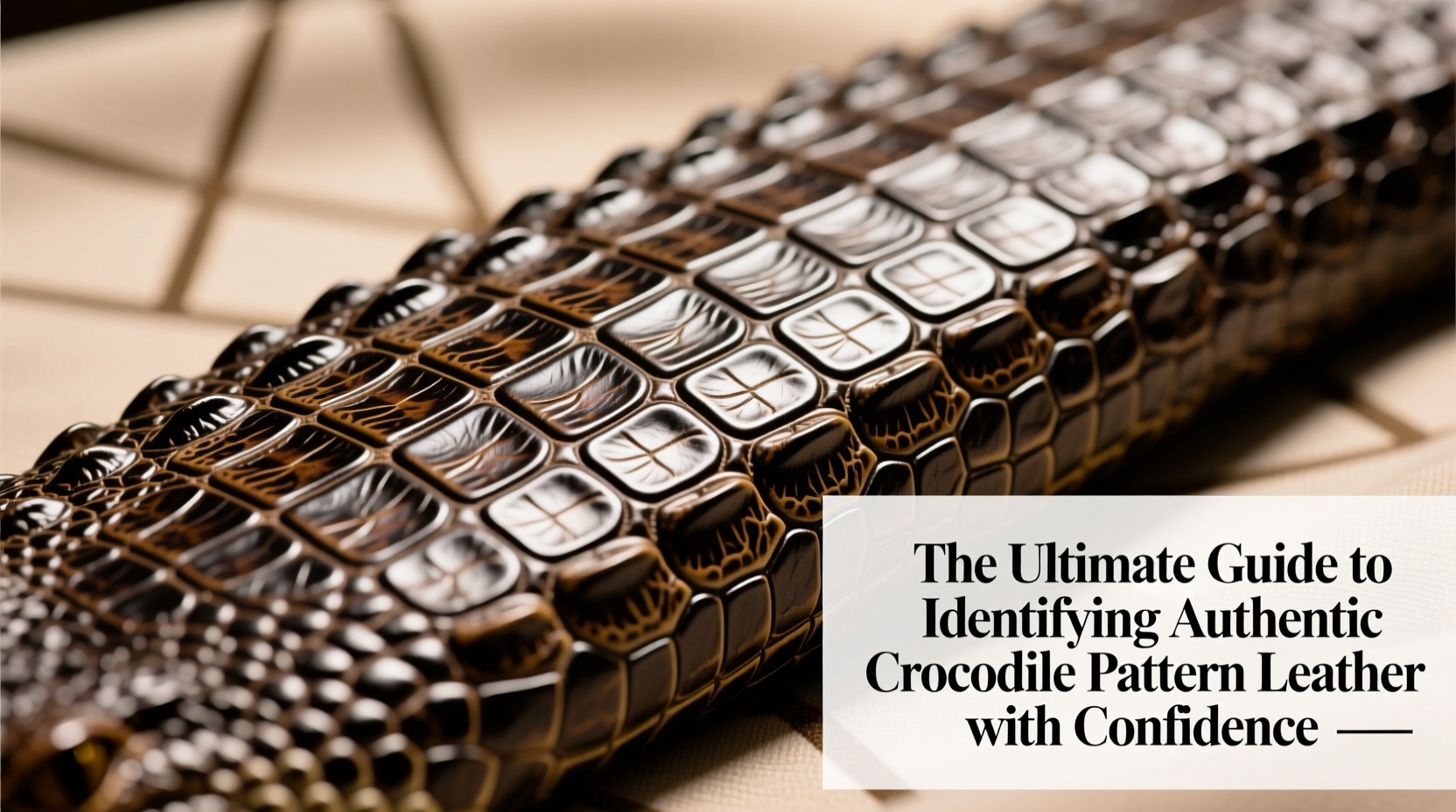
The first step in identification lies in understanding what makes a real crocodile skin pattern unique. Unlike mass-produced embossed leathers, natural crocodile hide features irregular, organic formations shaped by biology, not machinery.
Real crocodile scales are arranged in distinct zones:
- Dorsal (back) area: Large, rectangular osteoderms (bony plates under the skin) create a structured grid-like appearance.
- Abdominal region: Softer, smaller square-shaped scales with slight doming, often used in luxury accessories.
- Side panels: Transitional zones where scale size gradually shifts from large to small.
No two hides are identical. Slight asymmetry, variations in scale depth, and natural imperfections like healed scars or pigment differences are signs of authenticity. In contrast, synthetic prints repeat the same pattern across multiple products—a red flag upon close inspection.
Physical and Tactile Indicators of Authenticity
Sight alone isn’t enough. True verification requires engaging more than one sense. Here’s what to feel for when assessing crocodile leather:
- Texture variation: Genuine scales have subtle three-dimensionality. Run your fingers over the surface—you should detect gentle ridges and depressions corresponding to each scale’s raised edges and sunken center.
- Flexibility and grain integrity: Real crocodile leather flexes naturally without cracking. Fake embossed leather may stiffen or show paint peeling at stress points like corners or folds.
- Edge finish: On cut edges, authentic leather reveals fibrous layers beneath the surface. Imitations often have uniform, plastic-like cross-sections.
Another tactile clue is temperature response. Natural reptile leather feels cool to the touch initially and warms slowly with contact. Synthetic materials tend to match ambient temperature immediately.
Visual Inspection Checklist
Checklist: What to Look For
- ✅ Irregular, non-repeating scale pattern
- ✅ Slight variation in scale shape and size within the same piece
- ✅ Visible pores or micro-texture within individual scales
- ✅ Natural color gradients—not overly uniform dyeing
- ✅ Raised scale borders with defined depth
- ❌ No visible printing lines, pixelation, or glossy coating
- ❌ Absence of perfect symmetry across the item
Scientific & Practical Tests You Can Perform
While professional lab analysis offers definitive results, several accessible methods can help verify authenticity at home or in a retail setting.
1. The Heat Test (Use with Caution)
Genuine leather withstands moderate heat better than synthetic coatings. Gently hold a metal pin near—but not touching—a discreet area (like an inner seam). Real leather won’t emit a chemical smell. Avoid open flames; this test is only for detecting plastic fumes from polyurethane imitations.
2. Water Absorption Test
Place a single drop of water on an inconspicuous spot. Genuine crocodile leather will absorb moisture slowly over 5–15 seconds, darkening slightly. Faux leather typically beads up or causes no change. Note: Finished or sealed leathers may resist absorption, so interpret cautiously.
3. Magnification Analysis
Using a 10x loupe or macro smartphone lens, examine the surface closely. Authentic leather shows:
- Natural fissures and grain branching within scales
- Inconsistent pore distribution
- No evidence of mesh backing (common in bonded leather)
“Even the finest replicas fail to replicate the microscopic complexity of real reptile dermis.” — Dr. Lena Moreau, Material Scientist, Institute of Leather Technology
Comparative Analysis: Real vs. Common Imitations
| Feature | Authentic Crocodile Leather | Faux Embossed Leather | Bonded Leather |
|---|---|---|---|
| Pattern Repeatability | Unique per hide | Mass-repeated design | Sometimes varied, often stamped |
| Surface Texture | Naturally uneven, breathable | Synthetic sheen, rigid | Artificially textured, prone to flaking |
| Smell | Earthy, tannic aroma | Chemical or plastic odor | Musty or adhesive-like scent |
| Durability | High (with care) | Low to moderate | Poor—degrades quickly |
| Price Range (Wallet Example) | $800+ | $50–$150 | $30–$80 |
Note: Price alone isn’t foolproof—some counterfeits are sold at premium prices. Always combine cost assessment with physical evaluation.
Real-World Scenario: A Buyer’s Mistake Turned Lesson
Jessica, a collector based in Milan, purchased a “luxury” crocodile-print wallet online after being impressed by high-resolution photos and a branded dust bag. Within three weeks of use, the surface began flaking near the fold line. Upon closer inspection with a magnifier, she noticed the pattern repeated every 2.3 inches—a telltale sign of machine stamping. She contacted the seller, who admitted it was “genuine-looking synthetic.” Though not outright fraudulent, the listing lacked transparency.
After consulting a leather conservator, Jessica learned to inspect stitching tightness (real crocodile leather demands precision stitching due to rigidity), check for certification tags (CITES permits for exotic skins), and request video demonstrations from sellers showing flexibility and texture. She now inspects every potential purchase using a portable UV light to detect surface sealants common in fakes.
Frequently Asked Questions
Is all crocodile-patterned leather made from real crocodiles?
No. Most items labeled with a “crocodile pattern” use embossed cowhide or synthetic materials designed to resemble reptile skin. Only products explicitly stating “genuine crocodile leather” or specifying the species (e.g., *Crocodylus niloticus*) are made from actual crocodile hide.
Does real crocodile leather crack over time?
It can if improperly maintained. Exposure to dry environments, excessive sunlight, or lack of conditioning leads to dehydration and cracking. With proper care—using pH-balanced conditioners and storing in breathable cloth—authentic pieces remain supple for decades.
Are there ethical concerns with buying real crocodile leather?
Yes, but regulation exists. Legally traded crocodile leather comes from certified farms complying with CITES (Convention on International Trade in Endangered Species). Look for documentation or brand transparency regarding sourcing. Many luxury houses, including Hermès and Louis Vuitton, maintain strict traceability protocols.
Final Steps to Confident Identification
To summarize, confidently identifying authentic crocodile-patterned leather involves a layered approach:
- Observe the pattern for randomness and biological logic.
- Feel the texture for natural depth and flexibility.
- Inspect edges and seams for material consistency.
- Perform simple tests (water, smell, magnification).
- Verify provenance through brand reputation, price realism, and documentation.
When in doubt, consult a certified leather appraiser or reach out to organizations like the Society of Leather Technologists and Chemists. Knowledge is your best defense against deception.
Conclusion
Recognizing authentic crocodile pattern leather is a skill rooted in observation, experience, and respect for craftsmanship. It empowers you to make informed decisions, avoid costly mistakes, and truly appreciate the artistry behind luxury goods. Whether you're investing in a timeless accessory or preserving a family heirloom, these insights ensure your choices reflect both taste and truth.




 浙公网安备
33010002000092号
浙公网安备
33010002000092号 浙B2-20120091-4
Comments
No comments yet. Why don't you start the discussion?