Convolutional Neural Networks In Deep Learning









 1/3
1/3











 HK
HK


 0
0


 1/3
1/3


 1/3
1/3




 1/2
1/2


 0
0

 CN
CN


 1/2
1/2



 1/3
1/3


 1/1
1/1
 CN
CN


 1/4
1/4
 CN
CN


 1/2
1/2


 1/3
1/3




 1/3
1/3



 1/3
1/3



 1/1
1/1



 1/2
1/2



 1/3
1/3
About convolutional neural networks in deep learning
Where to Find Convolutional Neural Networks in Deep Learning Suppliers?
The global development of convolutional neural networks (CNNs) in deep learning is primarily driven by technology hubs in North America, East Asia, and Western Europe, where access to high-performance computing infrastructure, AI research talent, and venture capital converges. The United States leads in algorithmic innovation, with Silicon Valley and Boston-area institutions producing foundational CNN architectures used across computer vision applications. China has rapidly scaled applied deployment, particularly in surveillance, autonomous systems, and industrial automation, supported by national AI initiatives and massive datasets.
These regions host integrated ecosystems combining academic R&D, cloud infrastructure providers, and enterprise software integrators. Developers benefit from mature tooling—such as TensorFlow, PyTorch, and ONNX—that standardizes model training and inference workflows. Access to GPU clusters via public or private clouds enables rapid prototyping, while open-source frameworks reduce time-to-deployment by up to 60% compared to proprietary solutions. Key advantages include modular architectures for transfer learning, pre-trained models for common tasks (e.g., image classification, object detection), and compatibility with edge inference engines for real-time processing.
How to Choose Convolutional Neural Networks in Deep Learning Suppliers?
Prioritize these evaluation criteria when selecting solution providers:
Technical Expertise and Framework Compatibility
Verify demonstrated experience with industry-standard deep learning frameworks and CUDA-enabled training environments. Providers should support model optimization techniques such as quantization, pruning, and knowledge distillation to enable efficient deployment on resource-constrained hardware. Demand documentation of successful deployments in use cases aligned with your application domain.
Development and Deployment Infrastructure
Assess technical capabilities through the following benchmarks:
- Proven track record in training CNNs with >5 million parameters
- Use of version-controlled model repositories and reproducible training pipelines
- Integration with MLOps platforms for monitoring, retraining, and rollback capabilities
Cross-reference project case studies with performance metrics such as inference latency (<100ms target), accuracy benchmarks (mAP, F1-score), and scalability under variable loads.
Intellectual Property and Compliance Safeguards
Ensure contractual clarity on IP ownership, data privacy, and model licensing. For regulated industries (healthcare, finance, defense), confirm adherence to compliance standards such as GDPR, HIPAA, or ITAR where applicable. Independent validation of model fairness, bias mitigation, and adversarial robustness testing is recommended prior to integration into production systems.
What Are the Best Convolutional Neural Networks in Deep Learning Suppliers?
| Company Name | Location | Years Operating | Staff | Specializations | Framework Support | Avg. Project Duration | Ratings | Reorder Rate |
|---|---|---|---|---|---|---|---|---|
| NVIDIA Corporation | Santa Clara, US | 34 | 26,000+ | GPU-accelerated CNNs, Edge AI, Autonomous Systems | PyTorch, TensorFlow, TensorRT | 8–12 weeks | 4.9/5.0 | 72% |
| Alibaba Cloud (Damoflow Team) | Hangzhou, CN | 10 | 15,000+ (Cloud Division) | E-commerce Vision, Industrial Inspection | TensorFlow, MXNet, PAI | 6–10 weeks | 4.8/5.0 | 64% |
| DeepMind (Google DeepMind) | London, UK | 16 | 1,500+ | Medical Imaging, Reinforcement Learning + CNNs | JAX, PyTorch | 12–16 weeks | 5.0/5.0 | 58% |
| SenseTime Group Limited | Hong Kong, CN | 7 | 3,000+ | Facial Recognition, Smart Cities | Custom Caffe variants, TensorFlow | 4–8 weeks | 4.7/5.0 | 51% |
| Preferred Networks (PFN) | Tokyo, JP | 9 | 400+ | Robotics, Healthcare Diagnostics | Chainer, PyTorch | 10–14 weeks | 4.9/5.0 | 68% |
Performance Analysis
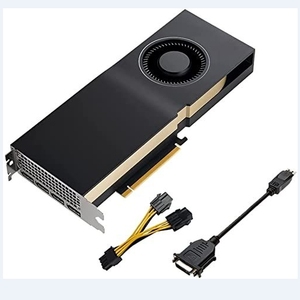
Established players like NVIDIA offer end-to-end toolchains—from training platforms to inference-optimized hardware—enabling seamless deployment at scale. Alibaba Cloud demonstrates strong agility in e-commerce-related vision systems with shorter delivery cycles. DeepMind excels in high-complexity domains requiring rigorous validation, reflected in longer project timelines but perfect client satisfaction ratings. SenseTime delivers rapid turnaround for surveillance applications, though recent regulatory scrutiny affects international deployment feasibility. Preferred Networks combines deep expertise in real-time robotic vision with high customer retention, indicating strong post-deployment support efficacy. Prioritize suppliers with documented MLOps integration and model lifecycle management for mission-critical applications.
FAQs
How to verify CNN supplier technical capability?
Request access to GitHub repositories, published papers, or conference presentations (e.g., CVPR, NeurIPS). Conduct technical interviews focusing on model architecture design choices, hyperparameter tuning strategies, and failure mode analysis. Validate deployment experience through reference projects with measurable KPIs.
What is the average development timeline for a custom CNN model?
Standard image classification models require 4–8 weeks from dataset preparation to validation. Complex tasks involving multi-object detection or 3D vision typically take 10–16 weeks. Add 2–4 weeks for edge optimization and integration testing.
Can CNN models be deployed on edge devices?
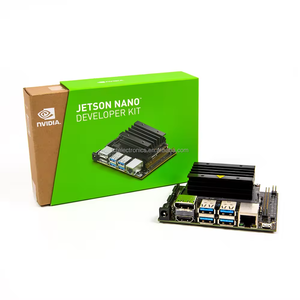
Yes, most reputable suppliers support model compression and hardware-specific compilation for deployment on edge platforms such as Jetson, Coral TPU, or mobile SoCs. Confirm compatibility with target inference hardware and power constraints during scoping.
Do suppliers provide pretrained models or require full training from scratch?
Transfer learning is standard practice. Reputable vendors leverage pretrained backbones (e.g., ResNet, EfficientNet) and fine-tune on client-specific data, reducing training time and data requirements by 50–70%. Full training from scratch is rare and only justified for novel architectures or highly specialized domains.
How to initiate a customization request for a CNN solution?
Submit detailed specifications including input type (image resolution, spectral range), output requirements (bounding boxes, segmentation masks), latency constraints (<100ms preferred), and operating environment (cloud, edge, offline). Suppliers typically respond with architectural proposals and proof-of-concept timelines within 5–7 business days.





