Cnn Neural Net



 0
0



 0
0


 1/3
1/3






 CN
CN


 1/3
1/3
 CN
CN




 1/5
1/5

 1/1
1/1

 0
0
 CN
CN


 0
0


 1/1
1/1



 1/19
1/19


 1/1
1/1


 0
0


 1/28
1/28


 1/3
1/3


 0
0





 1/3
1/3


 1/1
1/1
About cnn neural net
Where to Find CNN Neural Net Suppliers?
No verified suppliers for CNN neural net systems are currently listed in industrial sourcing databases. Unlike physical machinery, convolutional neural network (CNN) solutions are typically software-based AI frameworks or integrated hardware-software stacks developed by technology firms rather than traditional manufacturing entities. As such, they do not conform to conventional supplier cluster models seen in industrial equipment sectors.
Global development of CNN technologies is concentrated in high-tech innovation hubs—primarily in China’s Beijing-Shenzhen-Hangzhou corridor, the United States’ Silicon Valley, and Germany’s Munich-Stuttgart region. These ecosystems combine semiconductor fabrication, embedded systems engineering, and machine learning research capabilities. However, production does not occur in vertically integrated facilities with standardized output metrics, making traditional sourcing benchmarks—such as factory area or monthly unit volume—inapplicable.
How to Choose CNN Neural Net Suppliers?
Selecting a provider requires rigorous technical and operational assessment:
Technical Compliance
Ensure adherence to recognized AI development standards, including IEEE 1855-2016 for neural network modeling and ISO/IEC 23053:2022 for AI system lifecycle management. For deployment in regulated industries (e.g., medical imaging, autonomous vehicles), verify compliance with domain-specific certifications such as FDA 510(k) clearance, IEC 62304 for health software, or EN 50128 for railway applications.
Development Capability Audits
Evaluate core competencies through:
- Minimum 3-year track record in deploying CNN architectures (e.g., ResNet, VGG, EfficientNet)
- Dedicated R&D teams comprising data scientists and embedded AI engineers (minimum 15% of total staff)
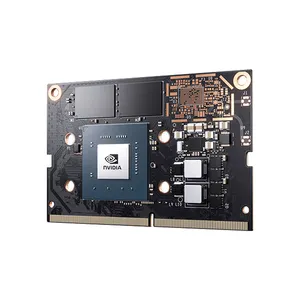
- Proven experience in model optimization techniques: quantization, pruning, and edge deployment on platforms like NVIDIA Jetson, Google Coral, or ARM Ethos
- Access to annotated datasets exceeding 100,000 labeled samples per project domain
Cross-reference GitHub repositories, published whitepapers, or third-party benchmark results (e.g., MLPerf) to validate performance claims. Confirm inference latency, accuracy rates, and power efficiency under real-world conditions.
Transaction Safeguards
Require contractual guarantees covering IP ownership, data privacy (GDPR, CCPA), and post-deployment support. Use milestone-based payments tied to deliverables such as model training completion, validation testing, and field integration. Prioritize suppliers offering containerized deployments (Docker/Kubernetes) and API documentation for seamless integration. Independent code audits and penetration testing are recommended before full-scale adoption.
What Are the Best CNN Neural Net Suppliers?
No supplier data is available for CNN neural net providers within this dataset. The absence of structured vendor profiles—including company name, location, team size, delivery performance, or response times—prevents comparative analysis. Buyers must rely on alternative discovery channels such as academic collaborations, AI accelerator programs, or industry consortia (e.g., Partnership on AI, Edge AI Alliance) to identify qualified developers.
Performance Analysis
Without verifiable supplier metrics, procurement decisions should emphasize technical due diligence over commercial indicators. Preference should be given to organizations demonstrating reproducible research outputs, transparent model governance, and documented deployment case studies. In the absence of reorder rates or on-time delivery statistics, evaluate reliability through peer-reviewed publications, conference participation (e.g., NeurIPS, CVPR), and open-source contributions.
FAQs
How to verify CNN neural net supplier reliability?
Conduct technical audits assessing model version control, training data lineage, and bias mitigation protocols. Request access logs for previous deployments and review incident response records. Validate team credentials via LinkedIn or ORCID profiles. Third-party verification from accredited labs (e.g., NIST-traceable testing) enhances trust in performance claims.
What is the average sampling timeline?
A proof-of-concept (PoC) implementation typically takes 4–8 weeks, depending on dataset complexity and customization level. Basic image classification models may deploy in 3 weeks; multi-class object detection with real-time inference extends to 10 weeks. Data preprocessing, labeling, and hyperparameter tuning account for 60–70% of initial development time.
Can suppliers ship CNN neural net solutions worldwide?
Deployment is digital and location-agnostic, provided export controls are observed. U.S. Department of Commerce regulations (EAR) may restrict transfer of advanced AI algorithms to certain jurisdictions. Confirm compliance with BIS licensing requirements when transferring dual-use technologies. Cloud-hosted models require adherence to regional data sovereignty laws.
Do manufacturers provide free samples?
Free PoCs are occasionally offered for high-potential clients, typically limited to pre-trained models on standard datasets (e.g., ImageNet). Full custom development incurs upfront costs averaging $15,000–$50,000, recoverable against larger contracts. Open-source alternatives (e.g., TensorFlow Lite, PyTorch Mobile) serve as zero-cost evaluation options.
How to initiate customization requests?
Submit detailed specifications including input modality (image/video/thermal), resolution range, target inference speed (<100ms preferred), supported hardware platforms, and environmental constraints (temperature, power budget). Reputable vendors respond with architecture proposals, data annotation plans, and integration roadmaps within 5 business days.





