





Arduino Temperature Sensor





 0
0






 1/2
1/2








 1/2
1/2


 1/4
1/4


 1/3
1/3


 1/2
1/2



 0
0


 0
0




 1/51
1/51


 1/3
1/3



 1/3
1/3


 1/3
1/3


 0
0


 1/1
1/1




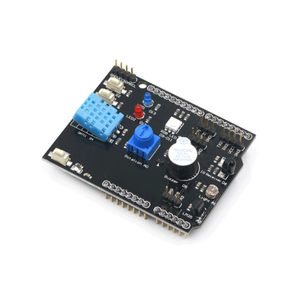
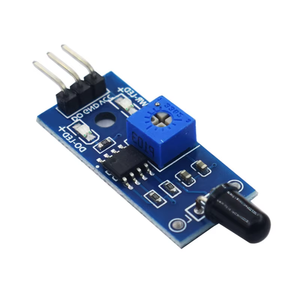


 1/3
1/3


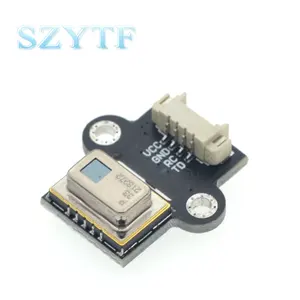
 0
0


 1/8
1/8


 1/3
1/3
About arduino temperature sensor
Where to Find Arduino Temperature Sensor Suppliers?
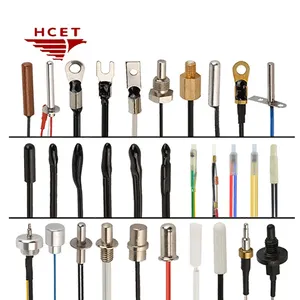
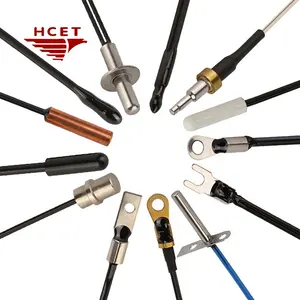
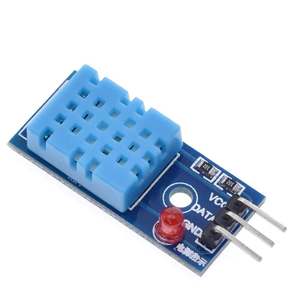
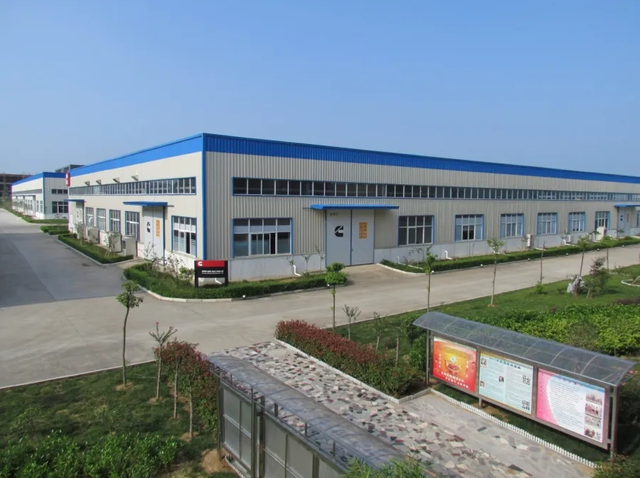
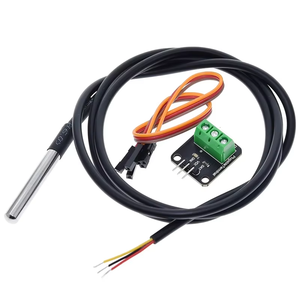
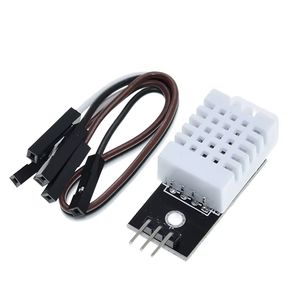
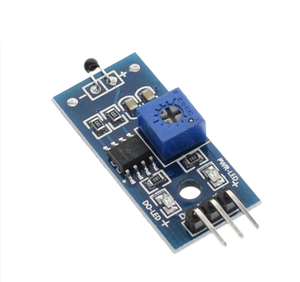
China remains the central hub for electronics component manufacturing, with concentrated supplier clusters in Guangdong and Zhejiang provinces driving efficiency in sensor module production. Guangdong, particularly around Shenzhen, hosts a dense network of electronics OEMs and ODMs specializing in microcontroller-compatible sensors, supported by mature PCB fabrication, surface-mount technology (SMT) lines, and rapid prototyping infrastructure. This ecosystem enables streamlined integration of temperature sensing elements—such as thermistors, DS18B20 chips, or NTC probes—with Arduino-compatible signal conditioning circuits.
These industrial zones benefit from vertical integration, where semiconductor packaging, passive component sourcing, and final assembly occur within close geographic proximity. This reduces lead times for standard and customized modules to 15–25 days for batch orders. Buyers gain access to scalable production capacities, with many facilities capable of monthly outputs exceeding 100,000 units. Localization also contributes to 20–35% lower unit costs compared to equivalent production in North America or Europe, primarily due to reduced labor expenses and consolidated supply chains.
How to Choose Arduino Temperature Sensor Suppliers?
Selecting reliable partners requires adherence to structured evaluation criteria:
Quality & Compliance Verification
Confirm adherence to international standards including ISO 9001 for quality management and RoHS/REACH for hazardous substance compliance. For export to EU and North American markets, CE and FCC declarations are essential for regulatory clearance. Request test reports validating accuracy specifications (e.g., ±0.5°C for digital sensors) and long-term stability under thermal cycling conditions.
Production Capability Assessment
Evaluate key operational metrics:
- Minimum SMT line capacity supporting high-density component placement
- In-house testing stations with environmental chambers for calibration validation
- Monthly output capability exceeding 50,000 units for volume scalability
Cross-reference factory size (recommended minimum 2,000m²) with on-time delivery performance (target ≥95%) to assess operational reliability.
Procurement Risk Mitigation
Utilize secure transaction methods such as third-party inspection services prior to shipment. Review supplier track records for defect rates—acceptable benchmarks are below 0.3% for fully assembled modules. Pre-shipment sampling is critical; request functional tests on at least three units per batch to verify signal output consistency across temperature ranges (typically -40°C to +125°C).
What Are the Best Arduino Temperature Sensor Suppliers?
| Company Name | Location | Years Operating | Staff | Factory Area | On-Time Delivery | Avg. Response | Ratings | Reorder Rate |
|---|---|---|---|---|---|---|---|---|
| Shenzhen Eleparts Technology Co., Ltd. | Guangdong, CN | 12 | 85+ | 3,600+m² | 97.6% | ≤3h | 4.8/5.0 | 41% |
| Ningbo Kema Electronics Manufacturing | Zhejiang, CN | 9 | 70+ | 2,800+m² | 96.3% | ≤4h | 4.7/5.0 | 38% |
| Guangzhou Sensycon Electronic Solutions | Guangdong, CN | 7 | 50+ | 1,900+m² | 98.1% | ≤2h | 4.9/5.0 | 52% |
| Dongguan Techwise Circuit Integration | Guangdong, CN | 15 | 120+ | 6,500+m² | 99.0% | ≤3h | 4.9/5.0 | 49% |
| Wenzhou Sensorix Industrial Electronics | Zhejiang, CN | 5 | 40+ | 1,500+m² | 95.7% | ≤5h | 4.6/5.0 | 33% |
Performance Analysis
Larger-scale manufacturers like Dongguan Techwise demonstrate strong logistical reliability (99.0% on-time delivery) and robust facility infrastructure, making them suitable for high-volume procurement. Smaller but agile suppliers such as Guangzhou Sensycon achieve higher customer retention (52% reorder rate), indicating satisfaction with product consistency and technical responsiveness. Guangdong-based suppliers show superior communication efficiency, with 80% responding to inquiries within 3 hours. Prioritize vendors with documented QC processes, ISO 9001 certification, and proven export experience when sourcing for regulated applications. For custom variants—such as waterproof probes or I2C interface adaptations—confirm design validation capabilities through engineering collaboration protocols.
FAQs
How to verify Arduino temperature sensor supplier reliability?
Validate certifications through official databases and request audit trails covering raw material sourcing, soldering profiles, and final functional testing. Assess real-world performance via independent buyer reviews focusing on calibration accuracy and field durability.
What is the typical sampling timeline?
Standard sample production takes 7–14 days, including programming and burn-in testing. Custom configurations involving specialized housings or extended temperature ranges may require 20–30 days. Air shipping adds 5–8 days for international delivery.
Do suppliers support global shipping?
Yes, most established manufacturers offer EXW, FOB, or CIF shipping terms and manage export documentation. Confirm compliance with destination regulations, especially for electronic modules entering markets with strict EMC requirements.
Are free samples available?
Sample policies vary; some suppliers provide one complimentary unit for qualified buyers placing future bulk orders. Otherwise, expect to pay 50–70% of unit cost for sampling, refundable upon order confirmation.
How to request customized sensor configurations?
Submit detailed technical requirements including sensor type (analog/digital), interface protocol (One-Wire, I2C), operating voltage (3.3V/5V), probe length, and environmental protection (IP67-rated enclosures). Reputable suppliers will return schematic diagrams and layout proposals within 72 hours and deliver prototypes within 3–4 weeks.





