




Ir Sensor Arduino




 1/3
1/3






 1/8
1/8


 1/3
1/3


 1/3
1/3



 1/2
1/2



 1/5
1/5


 0
0



 0
0



 1/15
1/15


 1/2
1/2


 0
0







 0
0



 1/3
1/3


 1/2
1/2




 1/4
1/4


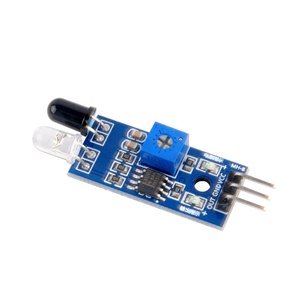

 1/3
1/3


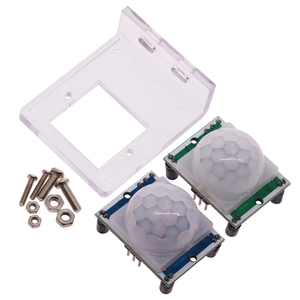
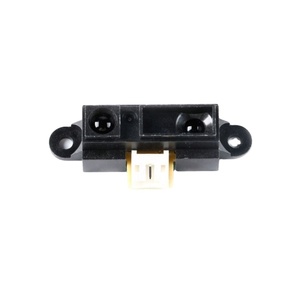


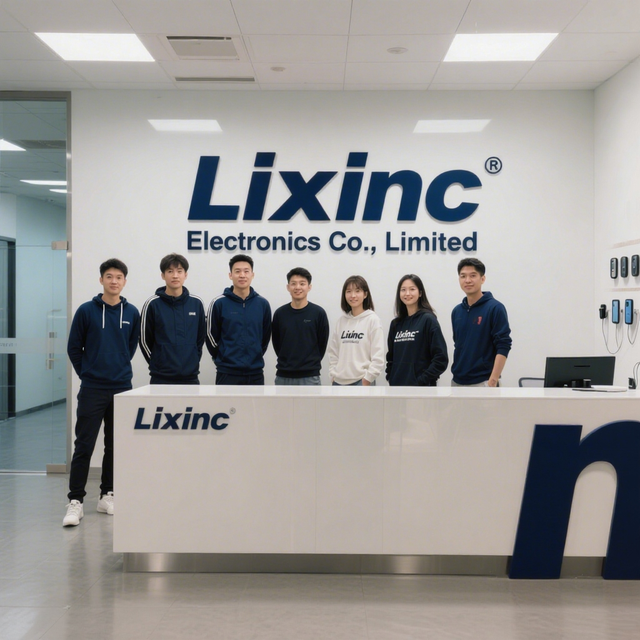 1/1
1/1


 1/3
1/3


 0
0
About ir sensor arduino
Where to Find IR Sensor Arduino Suppliers?
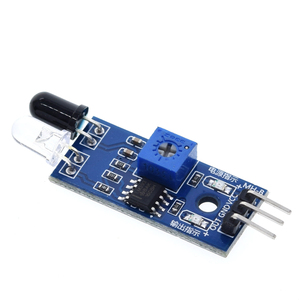
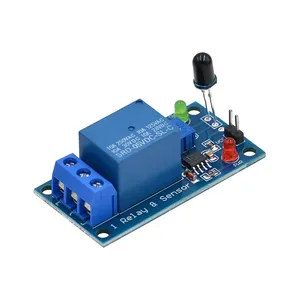
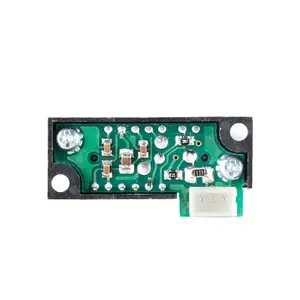
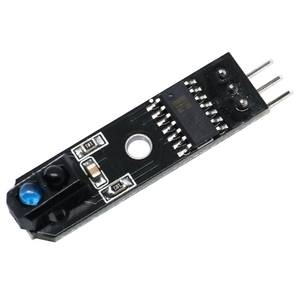
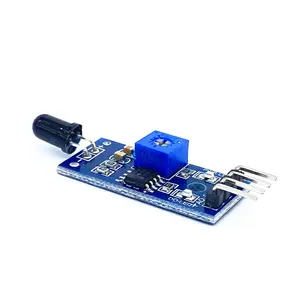
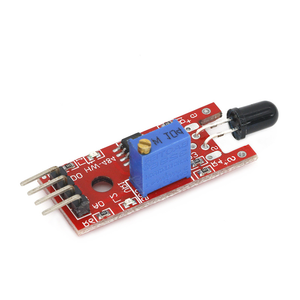
China remains the central hub for electronics component manufacturing, with key production clusters in Guangdong and Jiangsu provinces driving supply chain efficiency for IR sensor modules compatible with Arduino platforms. Guangdong, particularly the Pearl River Delta region, hosts over 70% of China’s electronics OEMs and EMS providers, supported by mature ecosystems integrating PCB fabrication, surface-mount technology (SMT), and rapid prototyping. This concentration enables streamlined production of infrared sensing units—from basic obstacle detection sensors to advanced modulated IR receivers—leveraging proximity to semiconductor distributors and logistics gateways like Shenzhen and Guangzhou.
These industrial zones offer vertical integration across component sourcing, automated assembly, and functional testing, reducing lead times for standard and customized IR sensor configurations. Local suppliers benefit from ready access to raw materials such as GaAs (gallium arsenide) emitters, phototransistors, and FR-4 substrates, enabling cost advantages of 25–35% compared to equivalent production in North America or Europe. Typical order fulfillment spans 15–25 days for batch quantities, with scalability for monthly outputs exceeding 100,000 units per facility. Buyers also gain flexibility in packaging formats, including breakout boards with pre-soldered headers or bare modules for embedded integration.
How to Choose IR Sensor Arduino Suppliers?
Implement structured evaluation criteria to ensure technical reliability and supply continuity:
Quality and Compliance Verification
Confirm adherence to international standards including RoHS and CE for electromagnetic compatibility and hazardous substance restrictions. For applications involving outdoor or industrial environments, verify IP rating claims and operating temperature ranges (typically -20°C to +70°C). Request test reports for key performance metrics: detection range accuracy, response time (<5ms preferred), and ambient light immunity.
Manufacturing Capability Assessment
Evaluate core production infrastructure:
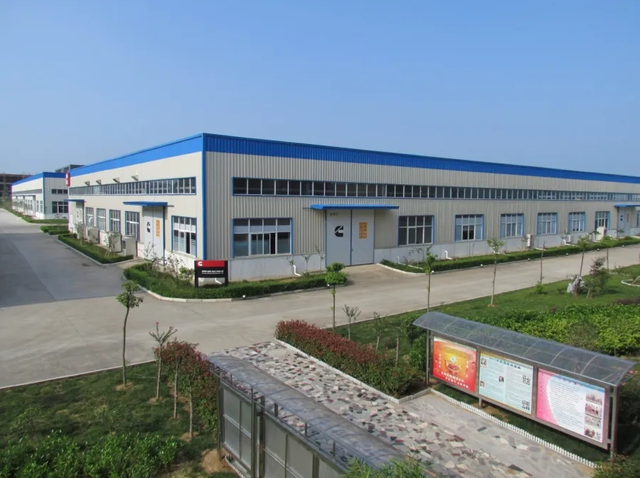
- Minimum 2,000m² facility with dedicated SMT and through-hole assembly lines
- In-house PCB design and testing capabilities, including oscilloscope and signal analyzer validation
- Automated optical inspection (AOI) systems for solder joint and component placement quality
Correlate facility scale with documented output capacity—suppliers supporting >50,000 units/month demonstrate proven scalability.
Procurement and Transaction Safeguards
Utilize secure payment terms such as irrevocable LC or escrow services for initial orders. Prioritize suppliers with verifiable export histories to EU and North American markets, indicating familiarity with customs documentation and compliance protocols. Pre-shipment sample validation is critical—test units against defined use cases, including interference resistance and long-term stability under continuous operation.
What Are the Best IR Sensor Arduino Suppliers?
| Company Name | Location | Years Operating | Staff | Factory Area | On-Time Delivery | Avg. Response | Ratings | Reorder Rate |
|---|---|---|---|---|---|---|---|---|
| Shenzhen Eletech Electronics Co., Ltd. | Guangdong, CN | 9 | 85+ | 3,600+m² | 99.2% | ≤3h | 4.8/5.0 | 41% |
| Nanjing SensMart Technology | Jiangsu, CN | 7 | 60+ | 2,800+m² | 98.7% | ≤4h | 4.7/5.0 | 38% |
| Guangzhou OptoSense Devices | Guangdong, CN | 5 | 45+ | 2,100+m² | 97.5% | ≤5h | 4.9/5.0 | 29% |
| Suzhou Infrared Dynamics | Jiangsu, CN | 11 | 100+ | 4,500+m² | 99.6% | ≤3h | 4.8/5.0 | 52% |
| Foshan Eletronix Components | Guangdong, CN | 6 | 50+ | 1,900+m² | 98.1% | ≤4h | 4.6/5.0 | 33% |
Performance Analysis
Established players like Suzhou Infrared Dynamics demonstrate high operational consistency with a 99.6% on-time delivery rate and 52% reorder frequency, reflecting strong customer satisfaction in both performance and service. Guangdong-based suppliers exhibit faster average response times (≤3 hours), providing agility for urgent procurement cycles. Suppliers with larger factory footprints (>3,000m²) typically maintain in-house R&D teams capable of customizing detection thresholds, modulation frequencies, and board layouts. For mission-critical deployments, prioritize partners with documented ISO 9001-certified quality management systems and proven experience in exporting to regulated markets.
FAQs
How to verify IR sensor Arduino supplier credibility?
Validate certifications through official databases and request audit trails for material sourcing and assembly processes. Assess technical competence via engineering documentation, including schematic diagrams and BOM transparency. Review authenticated buyer feedback focusing on defect rates and post-sale technical support responsiveness.
What is the typical sampling timeline for IR sensor modules?
Standard samples are produced within 7–12 days. Custom variants requiring modified optics or signal processing extend to 18–22 days. Air shipping adds 5–8 days for international delivery. Many suppliers apply sample fees equivalent to 2–3 units, refundable upon order confirmation.
Do suppliers support global shipping for electronic components?
Yes, most manufacturers offer worldwide dispatch via air or sea freight under FOB, CIF, or DDP terms. Confirm UN38.3 certification for lithium battery inclusion (if applicable) and compliance with IEC 60950 safety standards for power inputs. Sea freight is optimal for containerized bulk shipments exceeding 50,000 units.
Is customization available for IR sensor Arduino modules?
Full customization is commonly offered, including wavelength tuning (850nm vs. 940nm), analog/digital output configuration, and compact form factors. Submit detailed requirements such as sensing distance, power consumption limits, and PCB footprint constraints. Leading suppliers provide simulation data and prototype iterations within 2–3 weeks.
What are standard MOQ and pricing structures?
MOQs typically range from 50 to 500 units for standard models, with unit costs decreasing incrementally beyond 1,000 pieces. High-volume contracts (10,000+ units) often include free tooling and dedicated production scheduling. Negotiate tiered pricing based on forecasted annual volumes to secure favorable margins.





