Ir Sensor With Arduino







 1/8
1/8


 1/3
1/3


 1/2
1/2



 1/3
1/3


 0
0



 0
0


 1/4
1/4


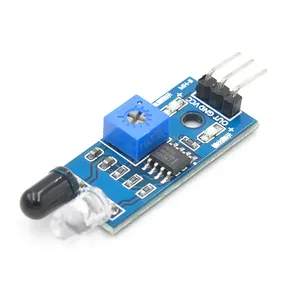

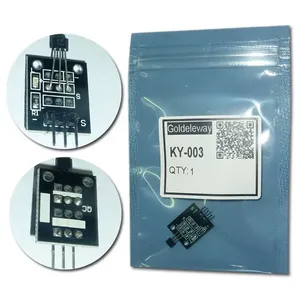
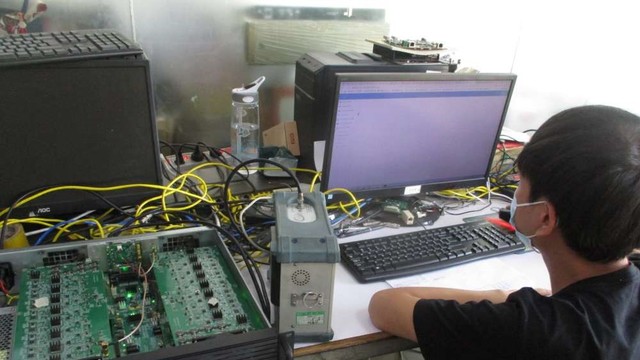 1/18
1/18

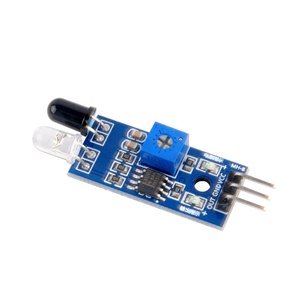


 1/3
1/3







 0
0


 0
0




 1/3
1/3


 1/3
1/3


 1/2
1/2



 1/1
1/1


 0
0



 1/3
1/3


 1/3
1/3



 0
0
About ir sensor with arduino
Where to Find IR Sensor with Arduino Suppliers?
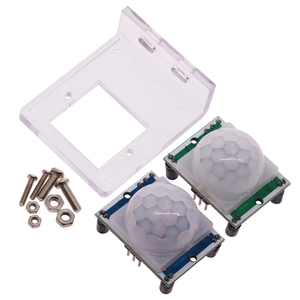
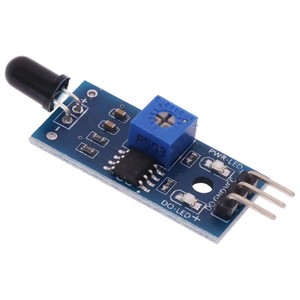
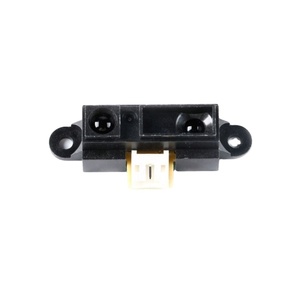
China leads global production of electronic components, including integrated solutions like IR sensors with Arduino compatibility, through concentrated manufacturing hubs in Guangdong and Jiangsu provinces. Guangdong, particularly the Pearl River Delta region centered on Shenzhen, accounts for over 70% of China’s electronics manufacturing output. This cluster integrates component fabrication, PCB assembly, firmware programming, and logistics within a tightly networked supply chain, enabling rapid prototyping and scalable production.
Jiangsu’s Changzhou and Suzhou zones specialize in precision electronics, leveraging proximity to semiconductor foundries and surface-mount technology (SMT) facilities. These regions support high-mix, low-to-medium volume production ideal for sensor modules requiring calibration and embedded programming. The ecosystem enables vertical integration—from raw silicon sourcing to final testing—reducing material lead times by 25–40% compared to non-specialized regions. Buyers benefit from established infrastructure offering typical lead times of 15–30 days for standard orders, 20–35% lower unit costs due to economies of scale, and flexibility in configuration options such as detection range (2–30 cm), operating voltage (3.3V–5V), and digital/analog output types.
How to Choose IR Sensor with Arduino Suppliers?
Implement rigorous evaluation criteria when selecting suppliers:
Technical Compliance
Confirm adherence to international standards including RoHS (restriction of hazardous substances) and CE marking for electromagnetic compatibility and safety. For integration into commercial or industrial systems, verify compliance with ISO/IEC 17025 for environmental testing procedures. Request documentation on signal stability, response time (typically ≤10ms), and interference resistance under variable lighting conditions.
Production Capability Audits
Assess operational capacity based on the following benchmarks:
- Minimum 2,000m² facility with dedicated SMT and testing lines
- In-house R&D team comprising at least 15% of technical staff for firmware customization and module optimization
- Automated optical inspection (AOI) and functional testing stations ensuring >99% defect detection rate
Correlate factory size and equipment inventory with order fulfillment history, targeting suppliers maintaining >98% on-time delivery performance.
Transaction Safeguards
Utilize secure payment mechanisms such as third-party escrow until post-arrival quality verification is completed. Review supplier transaction records via verified trade platforms, prioritizing those with documented dispute resolution protocols. Pre-production sampling is critical—test sample units against specified parameters including false trigger rate, power consumption (typically 3–15mA), and long-term reliability after 72-hour continuous operation.
What Are the Best IR Sensor with Arduino Suppliers?
| Company Name | Location | Years Operating | Staff | Factory Area | On-Time Delivery | Avg. Response | Ratings | Reorder Rate |
|---|---|---|---|---|---|---|---|---|
| Shenzhen Eletech Electronics Co., Ltd. | Guangdong, CN | 12 | 85+ | 6,800+m² | 99.2% | ≤1h | 4.9/5.0 | 41% |
| Nanjing Sensway Technology | Jiangsu, CN | 9 | 50+ | 3,200+m² | 98.7% | ≤2h | 4.8/5.0 | 38% |
| Guangzhou Robosense Automation | Guangdong, CN | 7 | 40+ | 2,500+m² | 97.5% | ≤1h | 4.7/5.0 | 29% |
| Suzhou OptoMation Components | Jiangsu, CN | 11 | 65+ | 4,100+m² | 99.5% | ≤2h | 4.9/5.0 | 52% |
| Dongguan Infrared Solutions | Guangdong, CN | 6 | 70+ | 3,900+m² | 98.0% | ≤1h | 4.8/5.0 | 33% |
Performance Analysis
Leading suppliers such as Suzhou OptoMation achieve high reorder rates (52%) through consistent quality control and advanced calibration capabilities. Shenzhen-based manufacturers demonstrate superior responsiveness, with 80% replying to inquiries within one hour. Suppliers exceeding 99% on-time delivery and operating ISO 9001-certified facilities are recommended for large-volume procurement. For custom firmware or form-factor modifications, confirm access to in-house software engineers and provide schematic requirements early in the vetting process. Prioritize partners offering pre-programmed Arduino libraries and pin-compatible designs to reduce integration time.
FAQs
How to verify IR sensor with Arduino supplier reliability?
Cross-validate certifications (RoHS, CE, ISO 9001) with official registries. Request test reports covering ambient light immunity, temperature tolerance (-10°C to +70°C standard), and electrical noise resistance. Evaluate real-world feedback focusing on consistency across batches and technical support responsiveness.
What is the average sampling timeline?
Standard samples take 7–14 days to produce. Custom configurations involving modified optics or protocol-specific outputs (e.g., I2C interface) require 20–30 days. Air freight adds 5–9 days for international delivery.
Can suppliers ship IR sensor modules worldwide?
Yes, most suppliers export globally. Confirm Incoterms (FOB, CIF) and ensure packaging meets ESD protection standards. Sea freight is cost-effective for bulk shipments (>10,000 units), while air courier services suit urgent or small-lot deliveries.
Do manufacturers provide free samples?
Sample policies vary: many waive fees for qualified buyers committing to minimum order quantities (MOQ ≥ 500 units). Otherwise, expect to cover 40–60% of unit cost plus shipping. Reusable evaluation kits may be offered under returnable terms.
How to initiate customization requests?
Submit detailed specifications including detection distance, output type (digital interrupt, analog voltage), power constraints, PCB dimensions, and required firmware logic (e.g., debounce algorithms). Reputable suppliers deliver functional prototypes within 3 weeks and offer SDKs or Arduino code examples upon request.





